Showing posts with label agriturismo. Show all posts

Sunday, March 11, 2012

Ribollita: 3rd (or 4th) time's a charm

By now, you know Pamela Sheldon Johns, right? She's the American author of a whole shelf of Italian cookbooks who settled in Tuscany over ten years ago after she and her husband, an artist, bought an olive grove outside Montepulciano. Johns turned the guest house into a B & B, Poggio Etrusco, and began teaching cooking classes to groups of American visitors.

Her latest book, enthusiastically reviewed on Cornichon last month, is titled Cucina Povera. Unlike books filled with fancy recipes and exotic ingredients, it celebrates (if that's the right word) the simplest preparations, the cuisine of privation.

TheTuscan philosophy is exemplified by the successive uses of its basic vegetable soup, minestra di verdure. Gently sweat a sofrito of onions, carrots and celery in a bit of olive oil. One by one, add vegetables, from hard to soft: cavolo nero (dark kale, also called locinato), potatoes, broccoli stems, chopped stems of mustard greens, zucchini, the green leaves, eventually some roughly chopped canned tomatoes and cooked cannelini. Don't add liquid until the very end. Specific vegetables aren't as important as balance: sweet (herbs like parsely and celery), aromatic (thyme, fennel) and bitter (mustard greens).
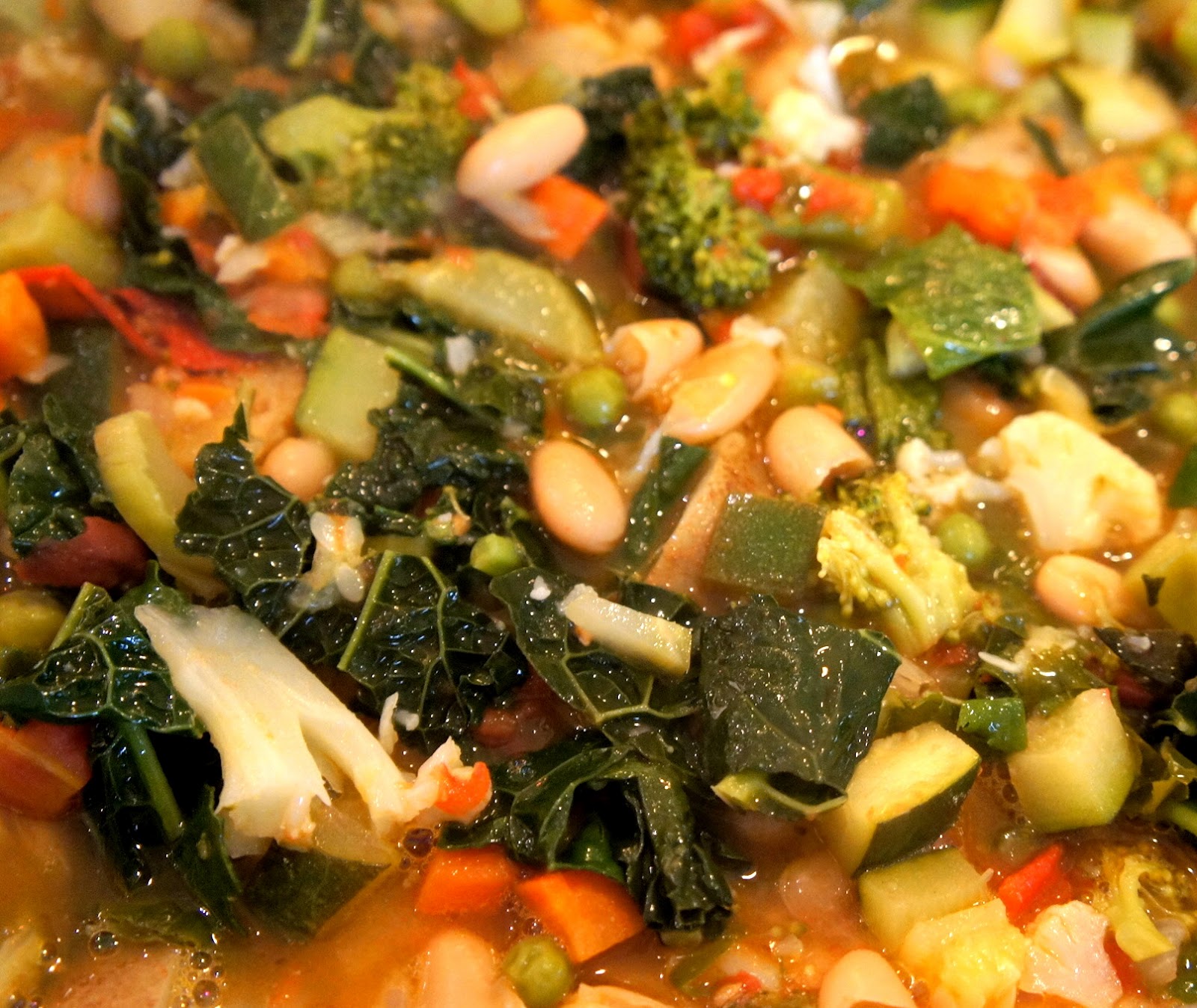
If you add hot water or stock, the flavor stays in the vegetables. If you use cold water, the flavors will leach into the liquid. That's what you want.

The first day you have the minestra di verdura, your baseline vegetable soup, drizzled just before serving with extra virgin olive oil. The second day, you slice up your old, dried bread and layer it with the soup, and it becomes a minestra di pane. Tuscan bread is made without salt, so it dries out quickly. If you make this dish at home, you'll need to dry out your bread in a warm oven.

The third day, you add a bit more liquid and a bit more bread and bake it in the oven. That's minestra di pane al forno. It's the very incarnation of a country dish, flavorful and belly-filling, made from nothing, feeding both body and soul for days on end.

And on the fourth day, you take the leftover baked soup out of the pot, brown it in a skillet and eat it with a knife and fork. This is the ultimate ribollita, "recooked" vegetable stew.

Johns got as far as the "bread soup" stage at a two-hour cooking class last week at Diane's Market Kitchen in downtown Seattle. "You have so much more here in the Northwest than we do in Italy," Johns told her students, referring to the abundance of the farmers markets. It would have been unimaginable to the Tuscans she wrote about in Cucina Povera, who scraped by on nothing. And yet, they would agree with what the cobbler in Montepulciano said, "We were better off when we were worse off."

Diane's Market Kitchen, 1101 Post Avenue, Seattle, WA 98104 (206) 624-6114 
Poggio Etrusco via FoodArtisans.com

Tuesday, November 29, 2011

Cooking at the Top of the World

Ciociarria.JPG

CASTRO DEI VOLSCI, Italy--Welcome news on the travel front: Casa Gregorio, a bed & breakfast and cooking school here in the countryside south of Rome, is bringing style and vitality to this perfectly restored medieval village.

Castro church at dawn.JPGThis area, known as the Ciociaria, is a long valley between Rome and Naples, hemmed in by steep, forest-covered hills (the Apennines--Italy's spine--to one side, a coastal range to the other) and saw some of the heaviest fighting during World War Two at Monte Cassino. (In the shameful aftermath of the Allied victory, renegade Morroccan troops pillaged the countryside; Vittorio De Sica's movie Two Women, with Sophia Loren's Oscar-winning role as the mother of a brutalized teenager, was called La Ciociara in Italian.)

The Ciociaria is often overlooked by travelers drawn the romance of Tuscany, to the north, or the glamour of the Amalfi Coast, to the south. In fact, the corridor is traversed by the A1 motorway; Italy's fastest train, the Frecciarossa, makes the 150-mile run between Rome and Naples down the center of the Ciociaria, in a just over an hour. Yet the Ciociaria was named an area of national interest for its panoramic views and fine food.

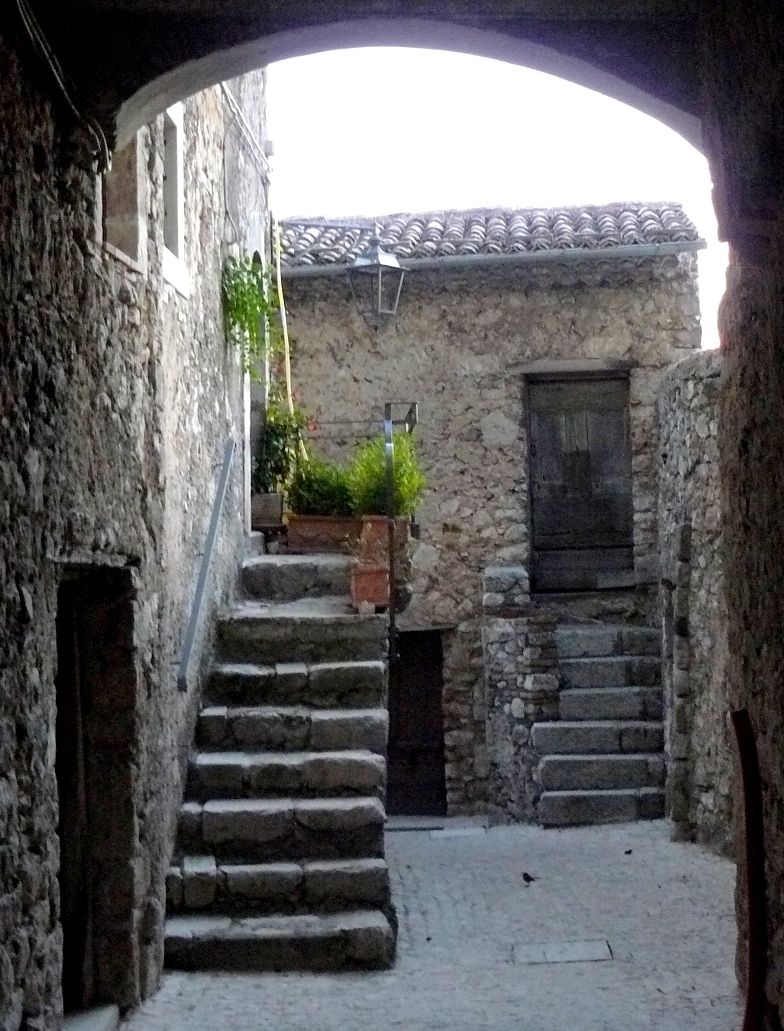
Doorway in Castro.JPGCastro dei Volsci--the stronghold of the Volsci clan back in the 15th and 16th centuries--sits atop one of the hills overlooking the valley. The village itself is a meticulously restored community of 300 or so inside the walls and a couple thousand folks who live on surrounding farms. A minibus comes up from the valley several times a day; private cars park outside the walls. There's a post office, a bakery, a couple of shops and cafes, and then there's Casa Gregorio, which combines a taverna for the locals (open weekends for now, soon to open daily), a professional kitchen, elegantly appointed living quarters and five luxurious guest rooms with private baths.

It's taken Gregory Aulensi three years to restore the property, which, ironically, he never set out to purchase. A successful decorator in Florida, he had decided to move to Rome in search of a simpler life. His father, though, had been born in Castro dei Volsci, and one day Gregory returned to the village for a wedding. The property next door to his father's house happened to be for sale: an interconnected series of houses, workshops and terraces built into the village walls, 12,000 square feet in all. The price was no more than a studio apartment in Rome, so, in the Italian tradition of spontaneity, Gregory made the life-changing decision to buy it.

Kitchen at Casa Gregorio.JPGNow he's offering cooking classes in a perfectly equipped kitchen to his B&B guests, who also get his personal attention throughout their six-night programs. You don't need a car of your own; Gregory's vehicles are comfortable sedans and minivans. You don't need to be a professional chef, either; the local women who come in to demonstrate pasta-making or vegetable carving are patient to a fault. Visits to a vineyard and an olive mill are part of the program as well. And if you happen to be there over a weekend, you can stop in at the agriturismo at the bottom of the hill, Il Rusponte, and enjoy the copious farmhouse lunch we described in a post back in October.

Gregory has launched an ambitious cultural heritage program for "his" village, which has even attracted the attention of Italy's RAI television network. The video is here, picturesque scenery, muddy buffalo herd, cooking class and all, though it's in Italian.

Bookings through The International Kitchen, which made arrangements for my visit.

Friday, October 28, 2011

Down on the Farm, It Really Is Farm-Fresh

Borgoluce farm w San Salvatore castle.JPG
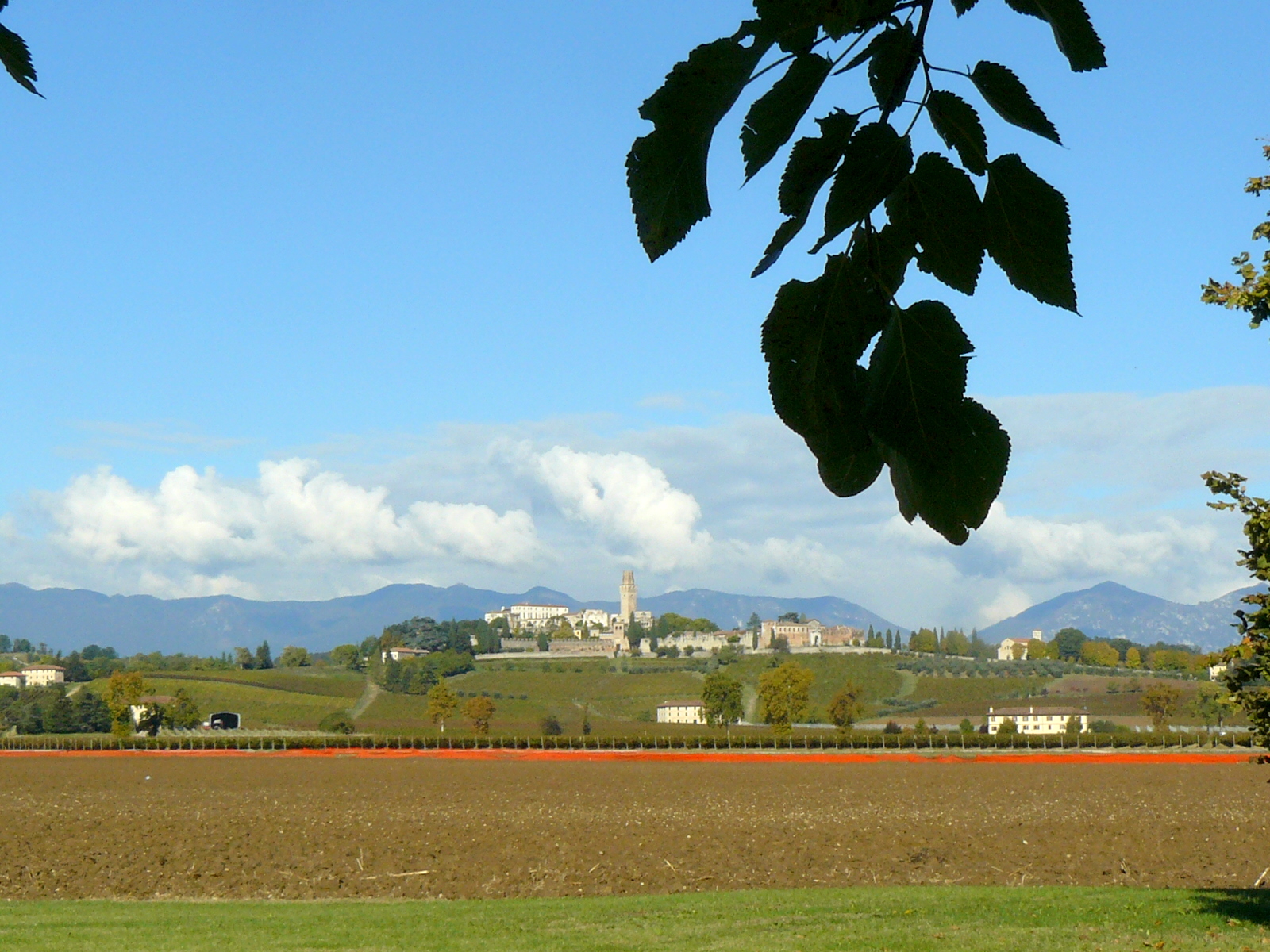
Castello San Salvatore tops the village of Susegana, overlooking the Borgoluce estate

SUSEGANA, Italy--Call it "Field-to-Plate" or "Farm-to-Fork," it's a literal KM-0 meal, kilometer zero.

You can only do this when you're actually having lunch and dinner on the farm, eating what comes out of the ground, off the fields, and from the livestock. You don't feel guilty wasting the planet's resources because these two related farms, Collalto and Bertoluce, here in the Veneto region of northeastern Italy, produce literally everything they serve: flour for bread and pasta, vegetables, meat, cheese, chestnuts, even the power needed to keep the lights on. (An earlier post describes the biomass co-generation process, which literally turns a daily ton of buffalo dung into a daily megawatt of power.) The properties have been in the Collalto family for literally a thousand years, part of a princely estate based at the Castello San Salvatore that dominates the adjacent village of Susanega.

The family's most recent leader, Prince Manfredo di Collalto, by all accounts a brilliant diplomat, instilled in his five daughters a spirit of humble yet forward-looking stewardship that has kept the 4,000-acre farm intact and prosperous. (All of King County has only 50,000 acres of farmland, spread between 1,800 properties, less than 30 acres apiece.) Where others might have sold off acreage to restore the family castle, say, Collalto has remained intact. In fact, it is a model of a vertically integrated farm, with wood chips from its forests used for fuel; grapes from its vineyards used for the region's prestigious Prosecco di Conegliano DOCG; herds of pigs and beef; butchering and cheese-making operations; mushrooms, chestnuts, walnuts, all from this Garden of Venice.

Prince Manfredo died prematureily in 2004, leaving the estate to his widow, Princess Maria de la Trinidad di Collalto, Castillo y Moreno and their five daughters. The Collalto estate is run by Maria's oldest daughter Isabella, who gave up a career in international relations with the European Union to assume hands-on management. The Bertoluce property is run by LOdovico Giustiniani, husband of the youngest daughter and an agronomist by training (and with a noble heritage of his own; one of his ancestors held the title of Doge of Venice). It's clearly an enterprise that occupies the entire family.

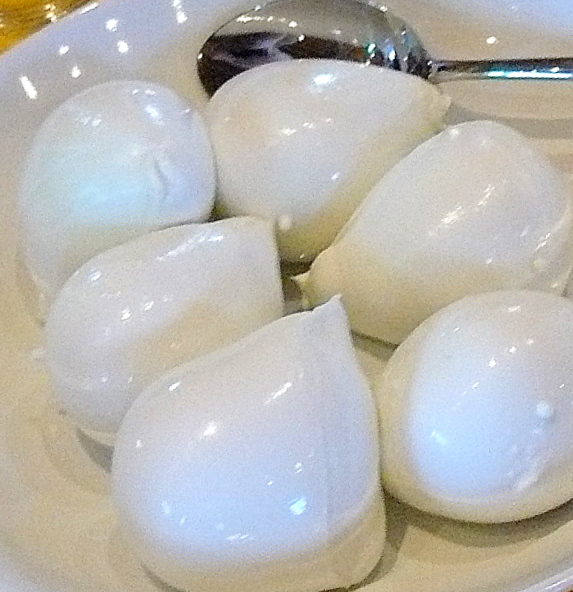
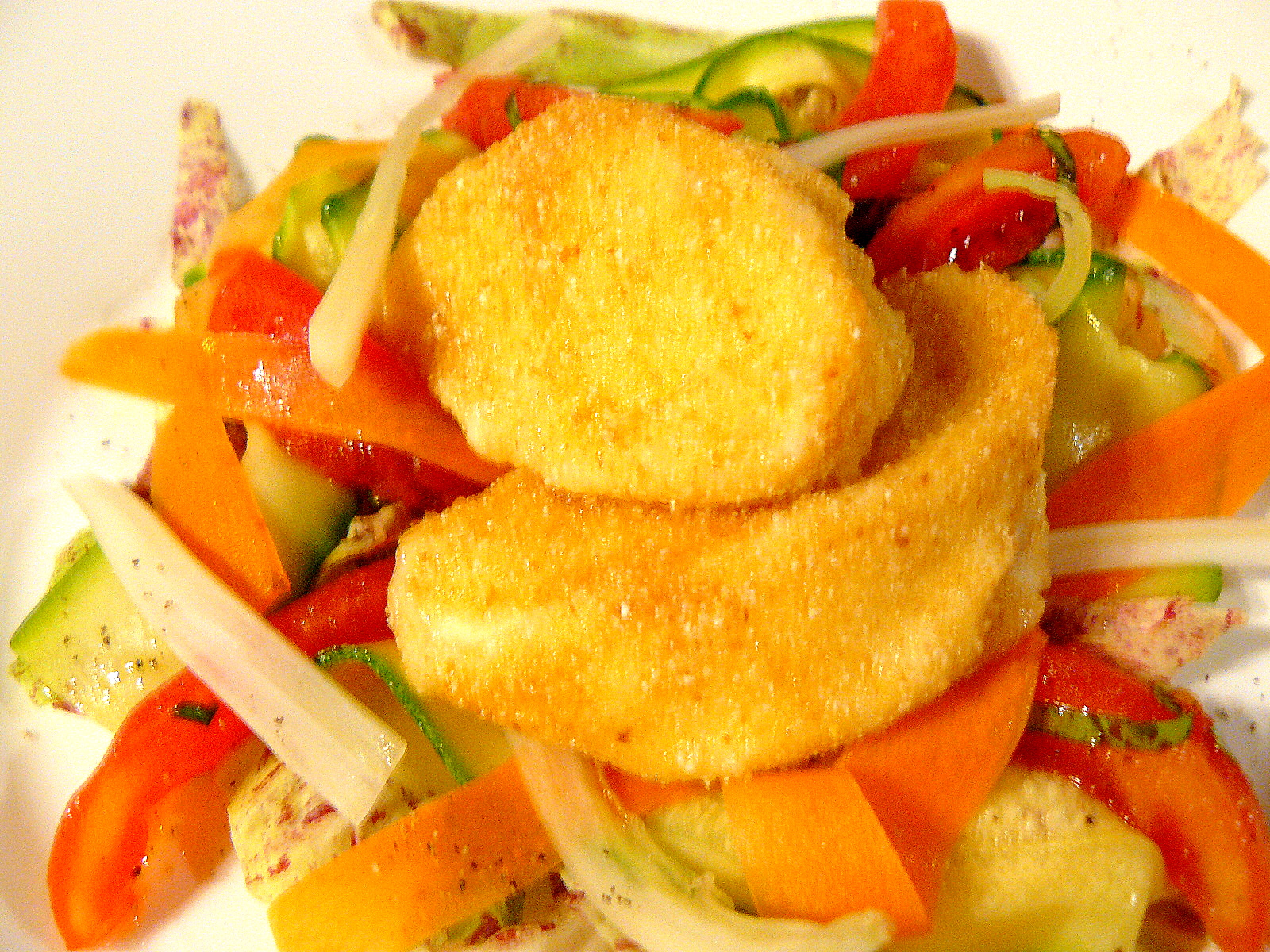
Mozzarella di Bufala.JPGSo what's for dinner? We start with a rich "cappuccino" of chestnuts, two swallows and it's gone. Then some mozzarella di bufala, stuffed with an anchovy, breaded with polenta and quickly fried. It has a superb delicacy and a chewy, elastic texture. Then a pumpkin soup enriched with a dollop of ricotta, followed by a pork tenderloin with chestnuts, and, finally, a typical local dessert, invented in Treviso in the 1960s, tiramisù.

"We did't want to bring the so-called industrial model to agriculture," Giustiniani tells me. "Instead, we intend to maintain the diversity of this property. With everything we do here, we communicate the landscape and respect the earth."

Stuffed buffalo mozzarella.JPGHow exactly does one "communicate the landscape"? Well, with farmhouse dinners like this, for example. Within the next year, Bertoluce will open its own Locanda, or country restaurant, and will serve meals like this to the general public for an all-inclusive price (wine, taxes, service) for $40 to $50. It's not big-city haute cuisine, of course, but healthy and hearty, astonishingly fresh, and incredibly tasty.

The only holdup: running upgraded electric service into the ancient stone building which will house the Locanda. The public utility--the same outfit that buys a megawatt of power a day from Bertoluce's biomass co-generation plant --has given its approval. And because Bertoluce is reliable supplier and a solid citizen, the Italian bureaucracy promised to expedite the installation of the new power lines "within the next 12 months."

Can anything be done to nudge the bureaucracy and speed up the locanda's construction? Giustiniani is far too polished a diplomat to divulge his strategy. But it doesn't hurt that the farm is one of the most popular shopping destinations in the area, with a steady stream of cars pulling up in front of Borgoluce's farmhouse store to buy cryovac cuts of pork and beef (everything from traditional steaks and chops to organ meats), bottles of prosecco, flour, nuts, and the semingly endless styles of cheese from that dairy herd of buffalo.

Monday, October 17, 2011

Italy in Mind

Sunday lunch at a farmhouse in the countryside 90 minutes southeast of Rome. It's almost a cliché, a scene you've watched in countless movies; just close your eyes and imagine the scene.


There are long tables under a pergola, there is sunshine, there is a medieval hilltop village in the distance. There is music (a gent playing a rustic bagpipe called zampogna), there is the cheerful sound of children playing soccer, there is wine, and, of course, there is food. A seemingly endless procession of food!

Assorted antipasto plates to start: slices of prosciutto and coppa, fresh ricotta, an older ricotta salata, home-baked bread, roasted peppers, a frittata, a potato salad, grilled eggplant, bruschetta with fresh tomatoes, bruschetta with arugula and cheese, cannellini beans...I confess to losing track.

Then comes pasta. Pacchetti (wide noodles stuffed with cheese, baked in the oven), strozzapreti amatriciana (thick noodles--priest stranglers--in a tomato sauce with guanciale, pork jowl), oricchietti (shell-shaped pasta) with artichoke hearts.


Then a couple of local specialties, braised goat (utterly delicious) and lumache, snails in tomato sauce (you pull the meat out with a toothpick).

Finally, some cookies for dessert. This was at an agriturismo (farmhouse inn, two guest rooms and a restaurant that uses almost exclusively the production of its own land) called Il Rusponte.

The price for the feast, which included a carafe of house red and a shot of house-made grappa with the coffee, all served by cheerful waitresses, was 35 euros per person (about $50), everything included. If you'd had a similar meal in a big-city restaurant, you'd pay three or four times as much.

The zampogna guy, on the other hand, was freelance. He showed up and played for the fun of it, then passed around his hat. Wake up? Surprise, you were awake the whole time!

- Posted using BlogPress from my iPad