By now, you know Pamela Sheldon Johns, right? She's the American author of a whole shelf of Italian cookbooks who settled in Tuscany over ten years ago after she and her husband, an artist, bought an olive grove outside Montepulciano. Johns turned the guest house into a B & B, Poggio Etrusco, and began teaching cooking classes to groups of American visitors.
Her latest book, enthusiastically reviewed on Cornichon last month, is titled Cucina Povera. Unlike books filled with fancy recipes and exotic ingredients, it celebrates (if that's the right word) the simplest preparations, the cuisine of privation.
TheTuscan philosophy is exemplified by the successive uses of its basic vegetable soup, minestra di verdure. Gently sweat a sofrito of onions, carrots and celery in a bit of olive oil. One by one, add vegetables, from hard to soft: cavolo nero (dark kale, also called locinato), potatoes, broccoli stems, chopped stems of mustard greens, zucchini, the green leaves, eventually some roughly chopped canned tomatoes and cooked cannelini. Don't add liquid until the very end. Specific vegetables aren't as important as balance: sweet (herbs like parsely and celery), aromatic (thyme, fennel) and bitter (mustard greens).
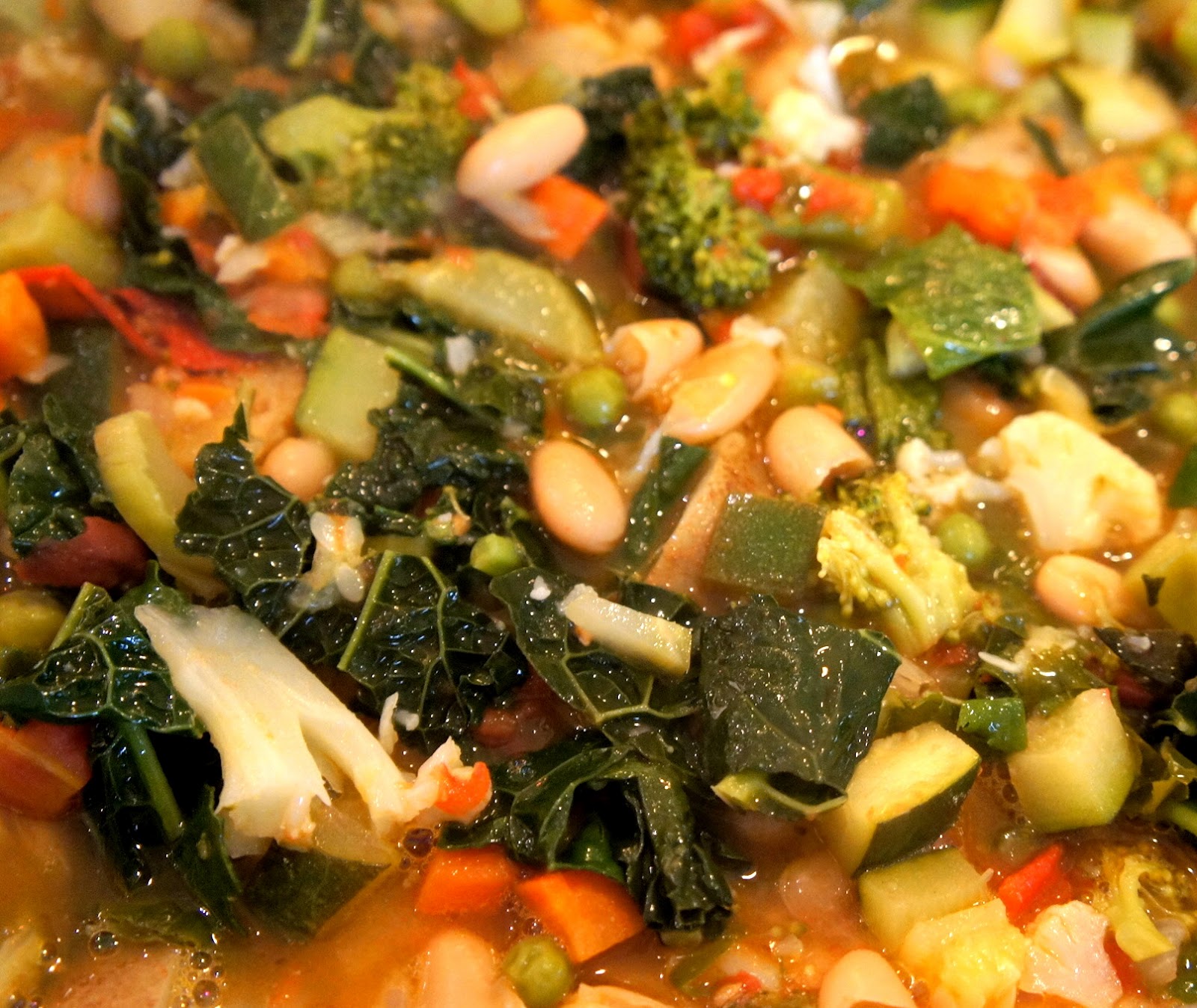
If you add hot water or stock, the flavor stays in the vegetables. If you use cold water, the flavors will leach into the liquid. That's what you want.
The first day you have the minestra di verdura, your baseline vegetable soup, drizzled just before serving with extra virgin olive oil. The second day, you slice up your old, dried bread and layer it with the soup, and it becomes a minestra di pane. Tuscan bread is made without salt, so it dries out quickly. If you make this dish at home, you'll need to dry out your bread in a warm oven.
The third day, you add a bit more liquid and a bit more bread and bake it in the oven. That's minestra di pane al forno. It's the very incarnation of a country dish, flavorful and belly-filling, made from nothing, feeding both body and soul for days on end.
And on the fourth day, you take the leftover baked soup out of the pot, brown it in a skillet and eat it with a knife and fork. This is the ultimate ribollita, "recooked" vegetable stew.
Johns got as far as the "bread soup" stage at a two-hour cooking class last week at Diane's Market Kitchen in downtown Seattle. "You have so much more here in the Northwest than we do in Italy," Johns told her students, referring to the abundance of the farmers markets. It would have been unimaginable to the Tuscans she wrote about in Cucina Povera, who scraped by on nothing. And yet, they would agree with what the cobbler in Montepulciano said, "We were better off when we were worse off."
Diane's Market Kitchen, 1101 Post Avenue, Seattle, WA 98104 (206) 624-6114
Poggio Etrusco via FoodArtisans.com
Showing posts with label farmhouses. Show all posts
Sunday, March 11, 2012
Sunday, November 27, 2011
The Masserias: Puglia's Fortified Farms
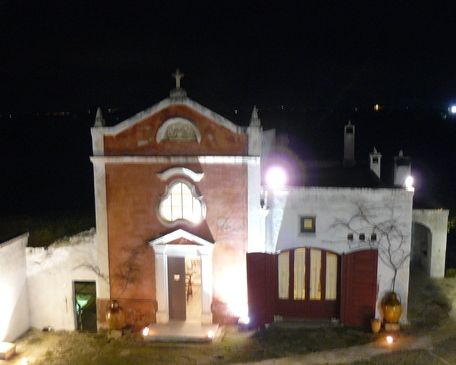
PUGLIA, Italy--You arrive over a road whose pavement is, shall we say, rustic, as it traverses a grove of ancient olive trees with trunks so twisted they could be posters for a menacing horror movie. You bluff your way past the gate (honk, wait for it to open; US border security should be so lucky!) and pull into the parking lot of the Masseria Torre Coccaro, one of several dozen masserias, historic farmhouse properties on the lowlands facing the Adriatic.
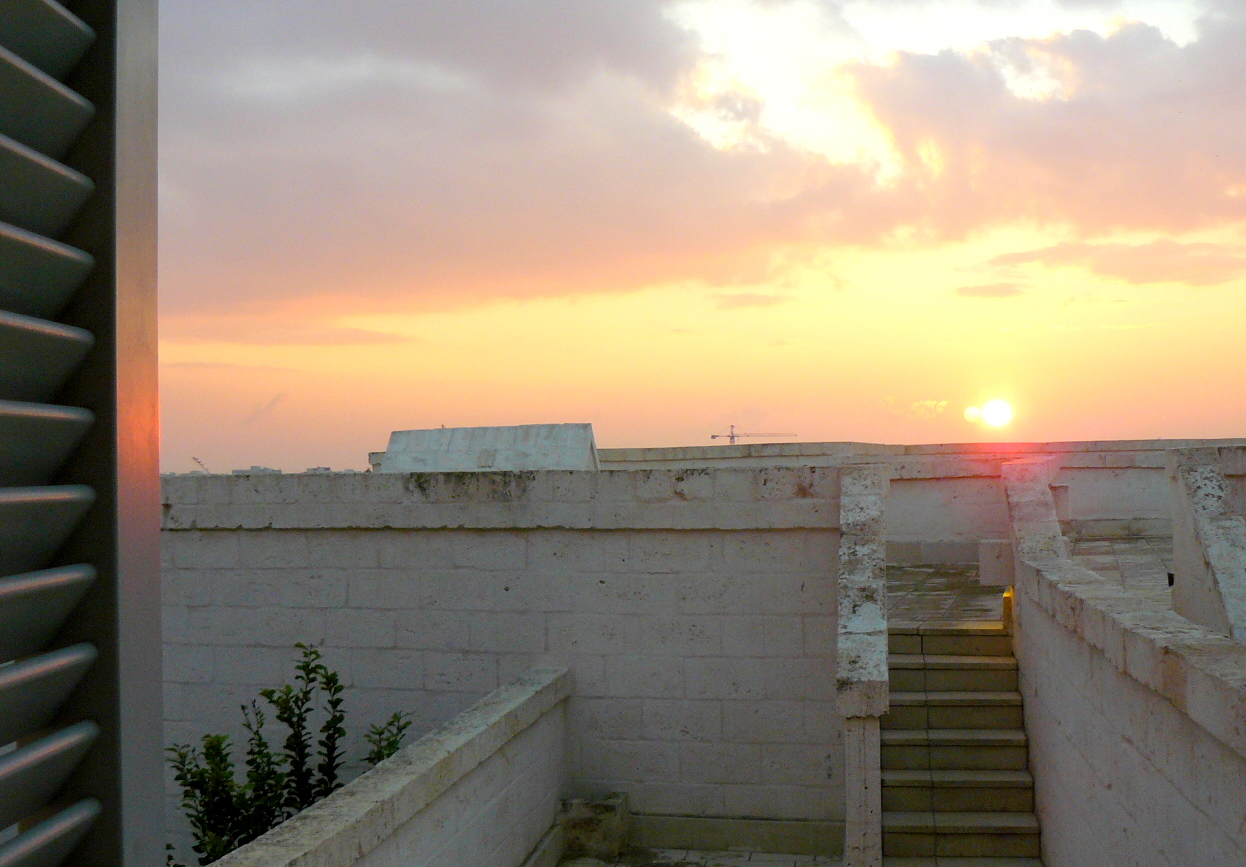
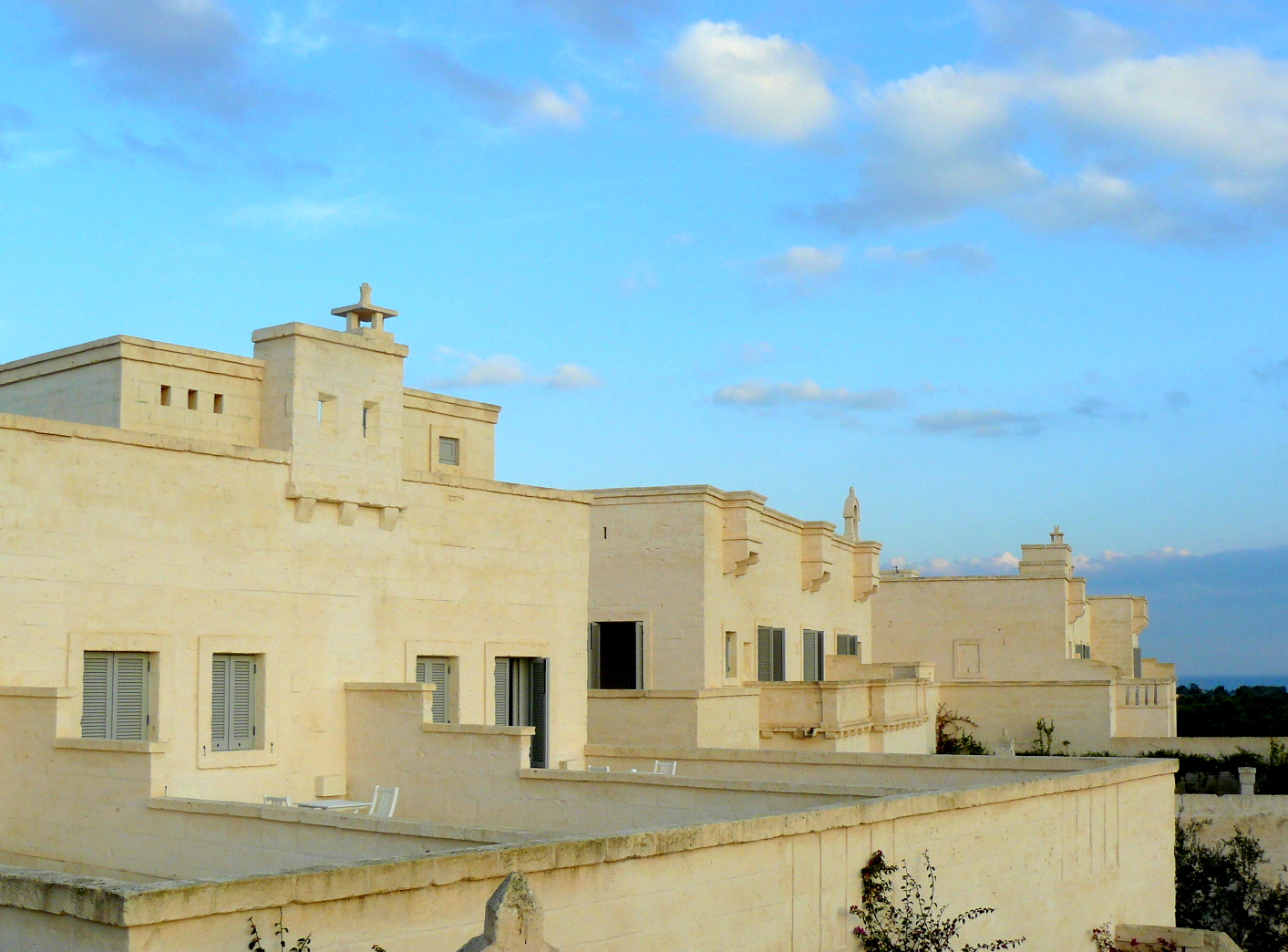
Not all are genuinely old, though. Borgo Egnazia (in the photos at top & bottom) is a two-year-old movie-set of a village built, literally from the ground up, with the local beige-white limestone. The owner, Aldo Melpignano, is said to have designed the Borgo himself, adding a cluster of villas surrounding the central "fort.." Local designer Pino Brescia decorated the expanses with vast quantities of unexpected objects (bottles, keys, laddders, old newspapers, twigs and branches, candles, birdcages). Marble hallways lead to cavernous rooms with high-tech lighting (which I couldn't figure out), high-thread-count sheets, and phones that rang on their own in the middle of the night. The Borgo's spa catalog ("Vair") is a study in psychobabble, with two dozen treatments getting their own names in ancient dialect ("Loma Kian") and descriptions ("..inspired by Orthobionomy"; "....will help you fall like raindrops on your back...to reconnect to your emotions." Not cheap, eather: a manicure is nearly $100.
Okay, I'm not the target market. Unfair to complain. Point being, though, that Puglia may be the far southeastern tip of Italy, only 25 miles across the Aegean Sea from Greece and Albania, but it's thoroughly modern when it comes to upscale accommodation and luxury services.
Note: My trip to Puglia was sponsored by the Italian Travel Promotion Council in conjunction with Italy's Natonal Tourist Board.
Subscribe to:
Comments (Atom)