Showing posts with label hilltop villages. Show all posts

Tuesday, November 29, 2011

Cooking at the Top of the World

Ciociarria.JPG

CASTRO DEI VOLSCI, Italy--Welcome news on the travel front: Casa Gregorio, a bed & breakfast and cooking school here in the countryside south of Rome, is bringing style and vitality to this perfectly restored medieval village.

Castro church at dawn.JPGThis area, known as the Ciociaria, is a long valley between Rome and Naples, hemmed in by steep, forest-covered hills (the Apennines--Italy's spine--to one side, a coastal range to the other) and saw some of the heaviest fighting during World War Two at Monte Cassino. (In the shameful aftermath of the Allied victory, renegade Morroccan troops pillaged the countryside; Vittorio De Sica's movie Two Women, with Sophia Loren's Oscar-winning role as the mother of a brutalized teenager, was called La Ciociara in Italian.)

The Ciociaria is often overlooked by travelers drawn the romance of Tuscany, to the north, or the glamour of the Amalfi Coast, to the south. In fact, the corridor is traversed by the A1 motorway; Italy's fastest train, the Frecciarossa, makes the 150-mile run between Rome and Naples down the center of the Ciociaria, in a just over an hour. Yet the Ciociaria was named an area of national interest for its panoramic views and fine food.
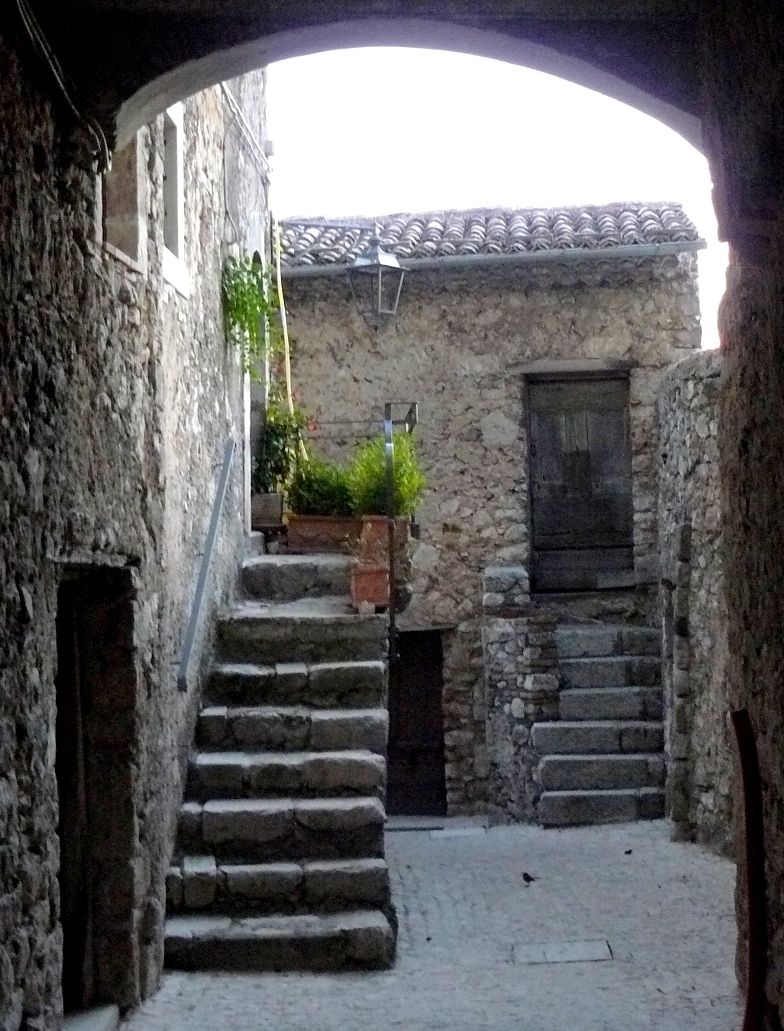
Doorway in Castro.JPGCastro dei Volsci--the stronghold of the Volsci clan back in the 15th and 16th centuries--sits atop one of the hills overlooking the valley. The village itself is a meticulously restored community of 300 or so inside the walls and a couple thousand folks who live on surrounding farms. A minibus comes up from the valley several times a day; private cars park outside the walls. There's a post office, a bakery, a couple of shops and cafes, and then there's Casa Gregorio, which combines a taverna for the locals (open weekends for now, soon to open daily), a professional kitchen, elegantly appointed living quarters and five luxurious guest rooms with private baths.

It's taken Gregory Aulensi three years to restore the property, which, ironically, he never set out to purchase. A successful decorator in Florida, he had decided to move to Rome in search of a simpler life. His father, though, had been born in Castro dei Volsci, and one day Gregory returned to the village for a wedding. The property next door to his father's house happened to be for sale: an interconnected series of houses, workshops and terraces built into the village walls, 12,000 square feet in all. The price was no more than a studio apartment in Rome, so, in the Italian tradition of spontaneity, Gregory made the life-changing decision to buy it.

Kitchen at Casa Gregorio.JPGNow he's offering cooking classes in a perfectly equipped kitchen to his B&B guests, who also get his personal attention throughout their six-night programs. You don't need a car of your own; Gregory's vehicles are comfortable sedans and minivans. You don't need to be a professional chef, either; the local women who come in to demonstrate pasta-making or vegetable carving are patient to a fault. Visits to a vineyard and an olive mill are part of the program as well. And if you happen to be there over a weekend, you can stop in at the agriturismo at the bottom of the hill, Il Rusponte, and enjoy the copious farmhouse lunch we described in a post back in October.

Gregory has launched an ambitious cultural heritage program for "his" village, which has even attracted the attention of Italy's RAI television network. The video is here, picturesque scenery, muddy buffalo herd, cooking class and all, though it's in Italian.

Bookings through The International Kitchen, which made arrangements for my visit.

Friday, November 18, 2011

Puglia: Ancient Stones, Modern Poltics

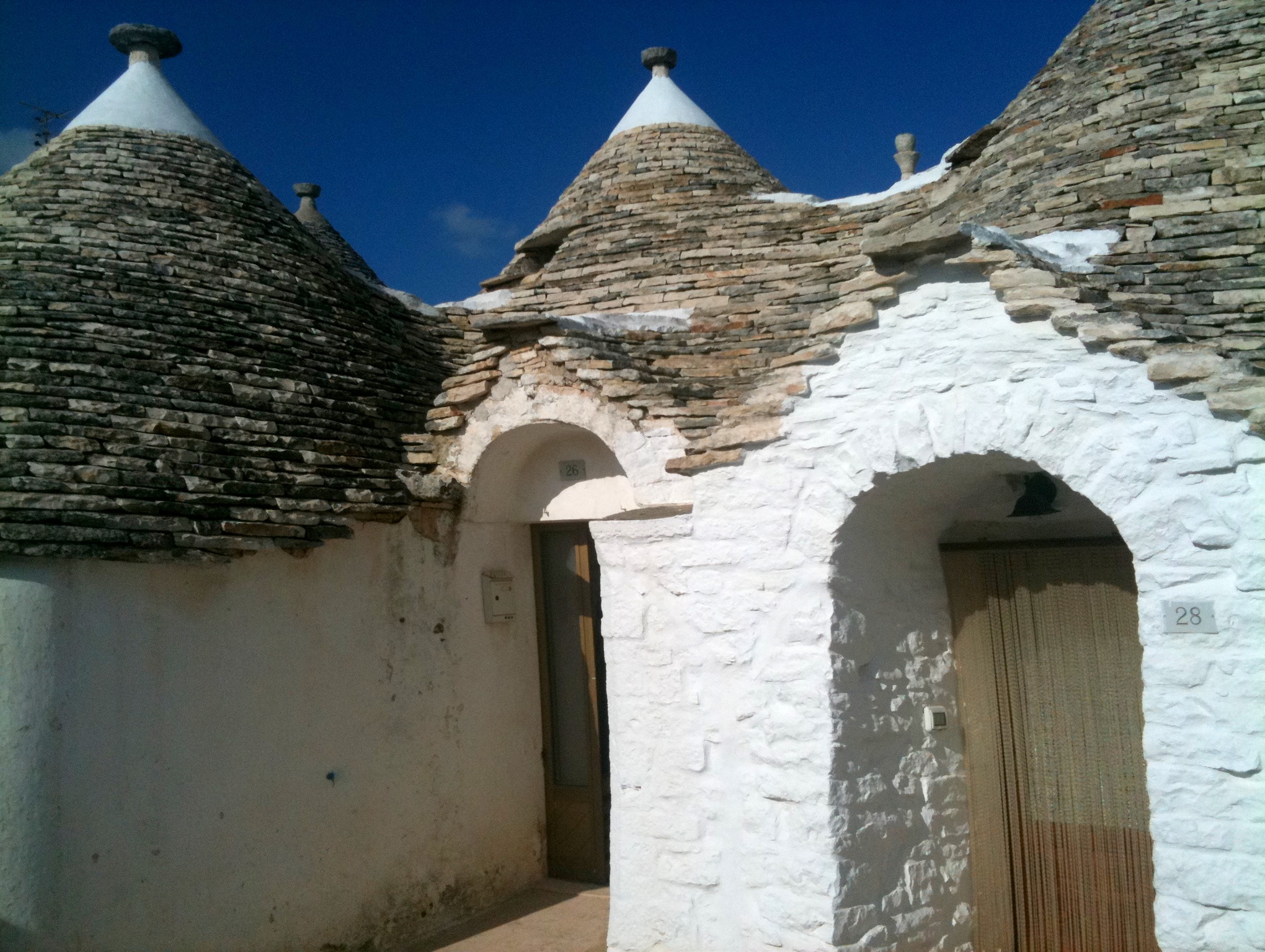
Trulli in Alberobello.jpg

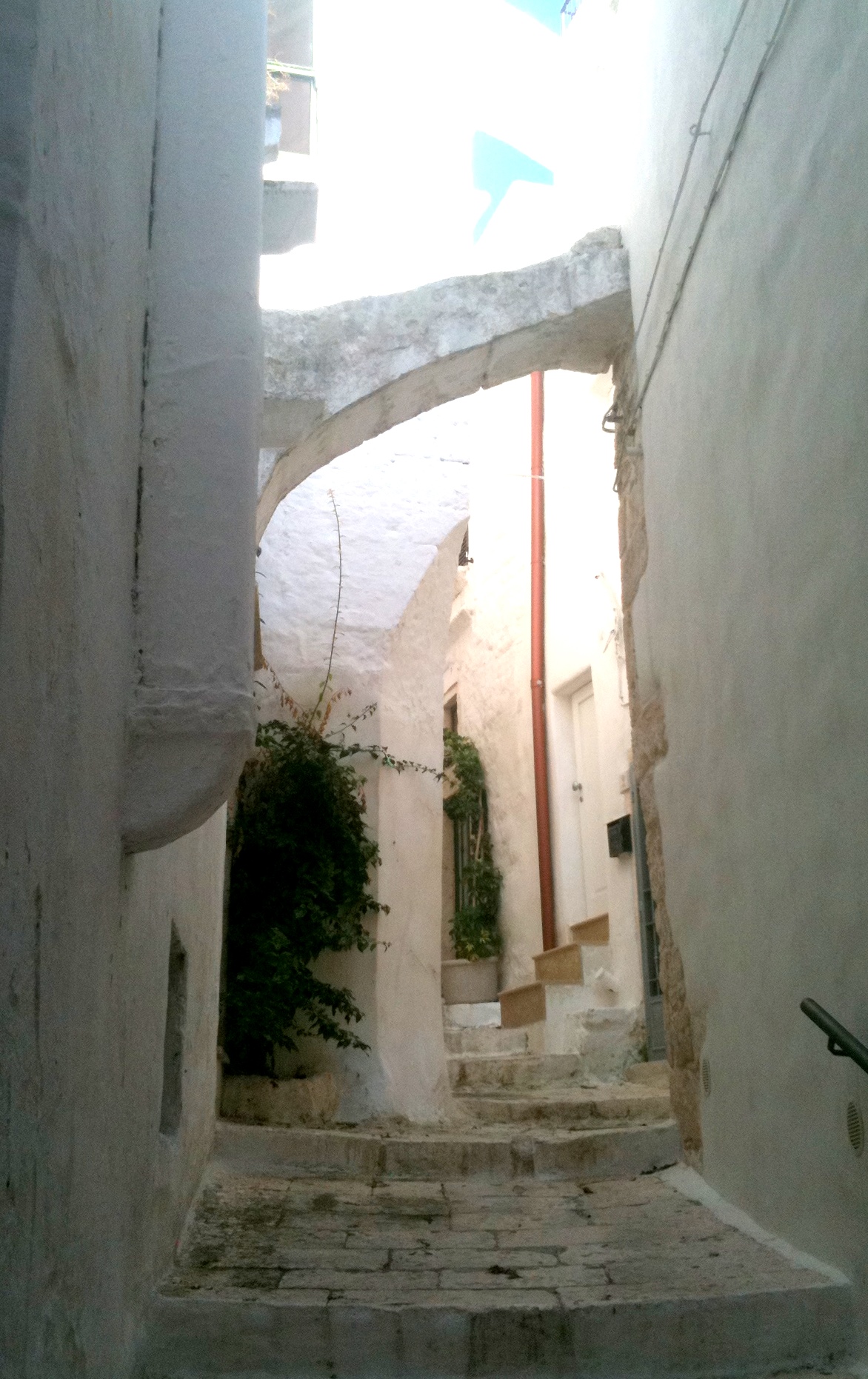
Conical, slate-roofed houses called Trulli in the UNESCO world-herItage village of Alberobello. Below, an alleyway in the hilltop town of Ostuni

PUGLIA, Italy--The good news, it's safe to say, is that right-wing Berlusconi bimbo Michaela Vittoria Brambilla is no longer Italy's minister of tourism. The one-time TV reporter, known for her long legs, red hair and fiery disposition, had been roundly criticized for spending eight million euros on a useless website (italia.it), and was never able to articulate why Italy desperately needs to promote intself as a tourism destination. Some 20 years ago, in a public vote, self-satisfied Italians even voted to do away with a formal tourism agency, forgetting that vacation expenditures and taxes contributed by visitors provide essential funding for basic local nservices. Within a short time, Italy was overtaken by France as the world's most popular tourist destination, and tourism outside the Rome-Florence-Venice corridor has stagnated. Here in Puglia, the heel of the Italian boot, a 45-minute flight from Rome, it's mostly sun-bathing German families lying cheek by jowl along the sunny Adriatic beaches. There's hope--not a lot, but hope nonetheless--that the new guy, a 73-year-old industrial engineer without political experience named Piero Gnudi, will "get it," but Gnudi management career was running Italy's national electric utility, a classic top-down hierarchy that bears little resemblance to the "herding cats" model of international tourism. In fact, managing a state monopoly is poor preparation for the competition Italy faces in troubled economic times: it's probably the most expensive destination in the Mediterranean (compared with France, Spain, Croatia, Greece, or Turkey), although this corner of the country can at least boast that it's affordable. Compared to Tuscany, anyway.

Nichi Vendola, the popular governor of Puglia, has expressed cautious support for the new Monti administration. An earring-wearing member of the left-wing Green party, he has a wider vision than most: Puglia is a gateway to the eastern Mediterranean; its stones speak many languages, its olive trees outnumber its citizens by 12 to 1. His deputy for tourism, Silvia Godelli, speaks of the region's attractions: its light, its flavors and smells, its antiquities. But only 25,000 of Puglia's 4 million visitors are Americans; it's not an easy sell

Americans spent $80 billion on overseas vacations last year, and there isn't one who doesn't want to visit Italy (according to the polls, ideally within the next couple of years) And Italy meets the three top criteria for a foreign destination (safe, affordable, scenic). That's why Italy's national tourist board, ENIT, and the Italian Travel Promotion Council (an association of 19 American tour operators) have sponsored this symposium for travel agents: so they'll know more about Puglia and convince more of their clients to come here.

Alleyway in Ostuni.jpgAll this as prelude to the scenery.

Take Ostuni, for example. You look at the narrow streets, whitewashed walls, and bright blue sky, and you might think you're on a Greek island in the middle of the Aegian. But no, the water out there, less than five miles away, is the Adriatic. The town is called Ostuni, a fortified town in the Middle Ages atop a limestone cliff, settled since prehistoric times. The influence of Greek architecture is understandable, as are design elements from North Africa.

Half an hour away, atop the Murgia plain, you find several hundred peculiar cylindrical dwellings called Trulli, with cone-shaped roofs are built without mortar from slabs of limestone. They're not like teepees or the chimney-houses of eastern Turkey; there's a separate stack at the side to vent the kitchens. You can buy your own trullo, should you want to abide by the strict historic-preservation standards, for 100 grand. A studio in one of the white-washed buildings of Ostuny, on the other hand, runs about twice that.

Saturday, October 18, 2008

The Painted Walls of Dozza

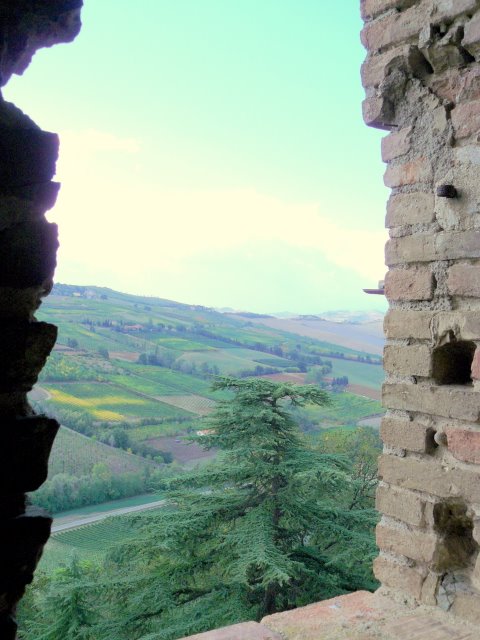
View%20from%20tower.JPG
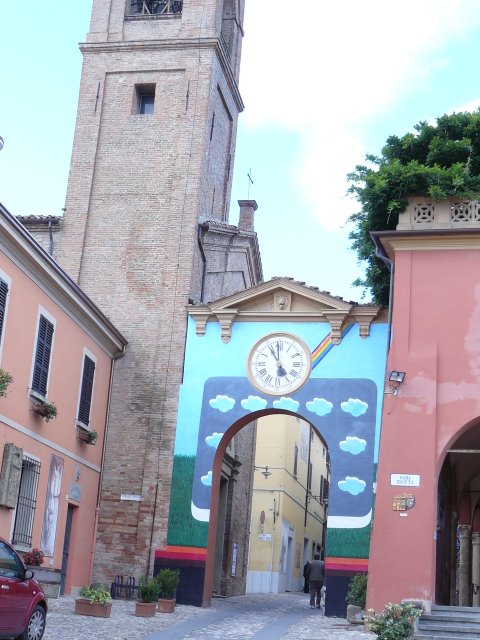
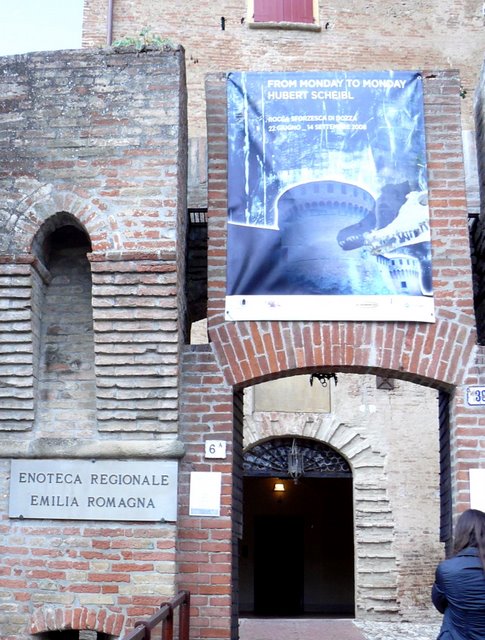
Dozza%20town%20gate.JPGEntrance%20to%20Enoteca.JPG
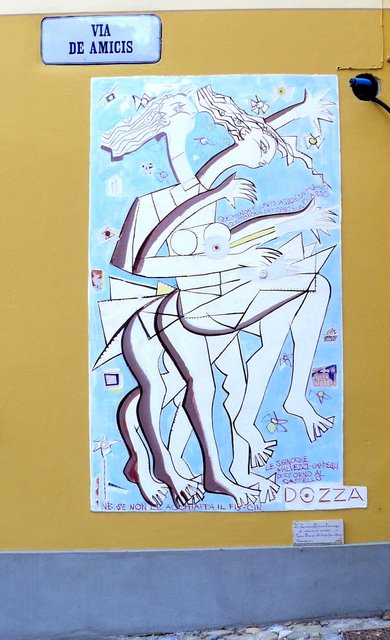
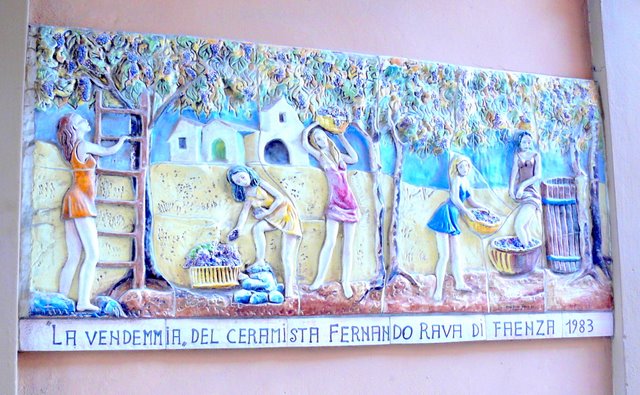
In a region dotted with perfect hilltop villages, Dozza stands out. It's a given that the view from its tower would extend across the vineyards and north to the Alps, almost a no-brainer that the 30-year-old Enoteca Regionale dell'Emilia-Romagna would be located within the Rocca Sforzesca (fortress) itself. But what makes Dozza unique is its biennial festival of the painted wall, when artists are invited to express themselves directly on the ancient doors, alley ways, arches, and public passages of the tiny village.

Dozza%20wall.JPGAs for the Enoteca, it's an administrative center for hundreds of participating wineries as well as a well-stocked showcase and well-run wine bar that's open to the public. Yes, there's a knowledgeable sommelier on hand (800 labels, after all, not to mention olive oil, balsamic vinegar and grappa!) They face the same challenges as industry associations everywhere: representing growers with a dizzying number of grape varieties and wine styles, defending Emilia-Romagna's 18 DOC and DOCG appellations, even as legislation later this decade sweeps all the traditional nomenclature into DOP (Protected Denomination of Origin). There's optimism that the new DOP (already in use for agricultural products) will simplify matters; we hope so. Every provincial subzone of the region clings passionately to its traditions, reluctant to compromise "authenticity" with innovation, even when it's clear (to an outsider) that there's too much, say, lightly sparkling lambrusco and malvasia and not enough full-bodied barbera and bonarda. But the market for wine throughout Italy is defined by its local food, and Emilia-Romagna is no different. The prosciutto and coppa of Parma, one cannot deny, are absolutely delightful with lambrusco; the castrato (gelded lamb) of Romagna finds its perfect match with the light-bodied sangiovese grown nearby.

Campanilismo, what we'd call provincialism, is alive and well here, frustrating as hell most of the time, yet providing the reassurance of a foot planted firmly in the past. The Enoteca Regionale sponsored my trip to Italy as part of an effort to communicate the vast improvement in local wines. No argument, even though it sometimes seems their drive for quality is at odds with the very system they're promoting.

Vendemmia%20wall%20in%20Dozza.JPG

Tuesday, October 14, 2008

Italian Character, Italian Characters

Graziella%20w%20Peti%20Trufi%20%26%20Barbarossa.JPG

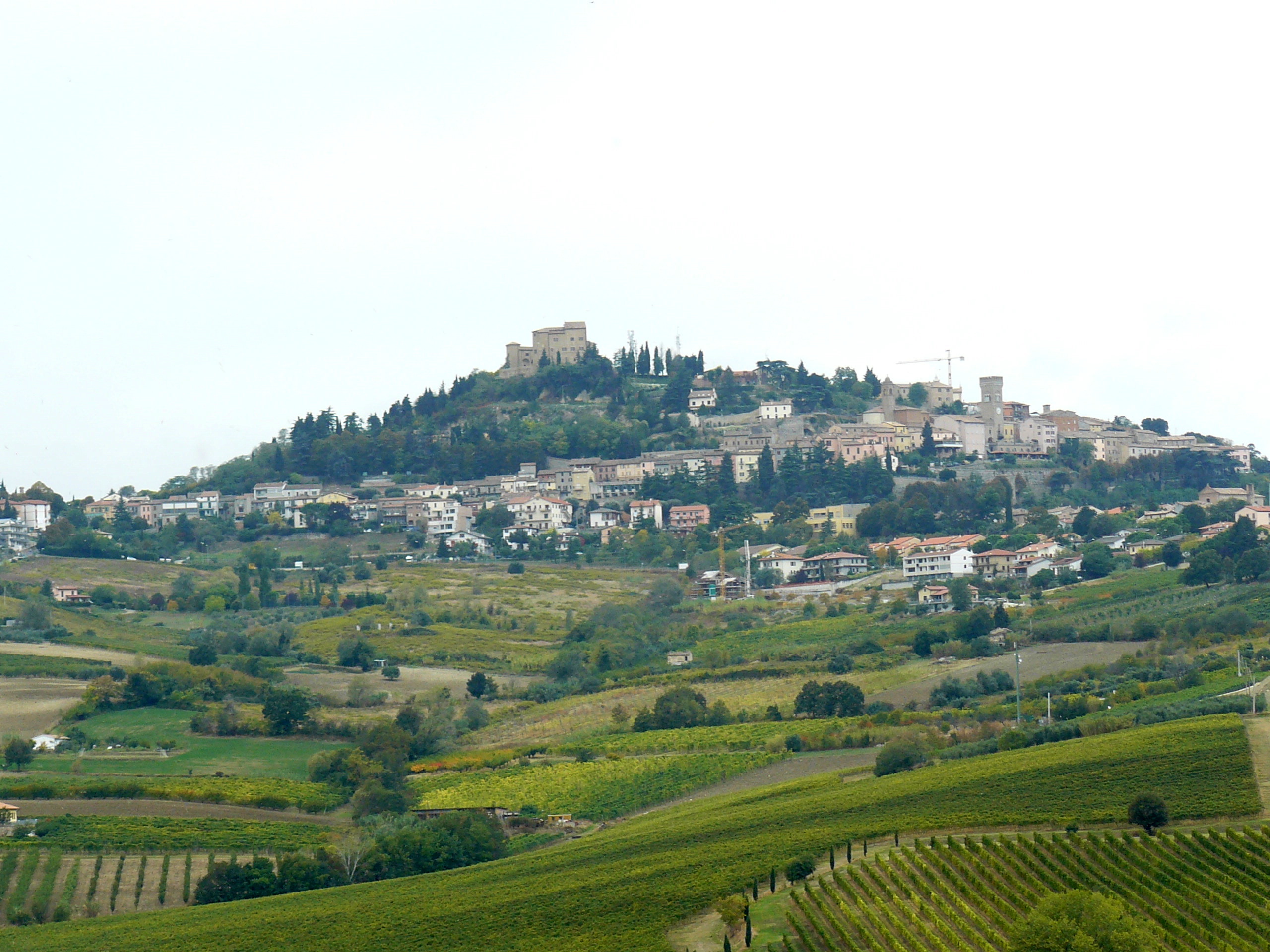
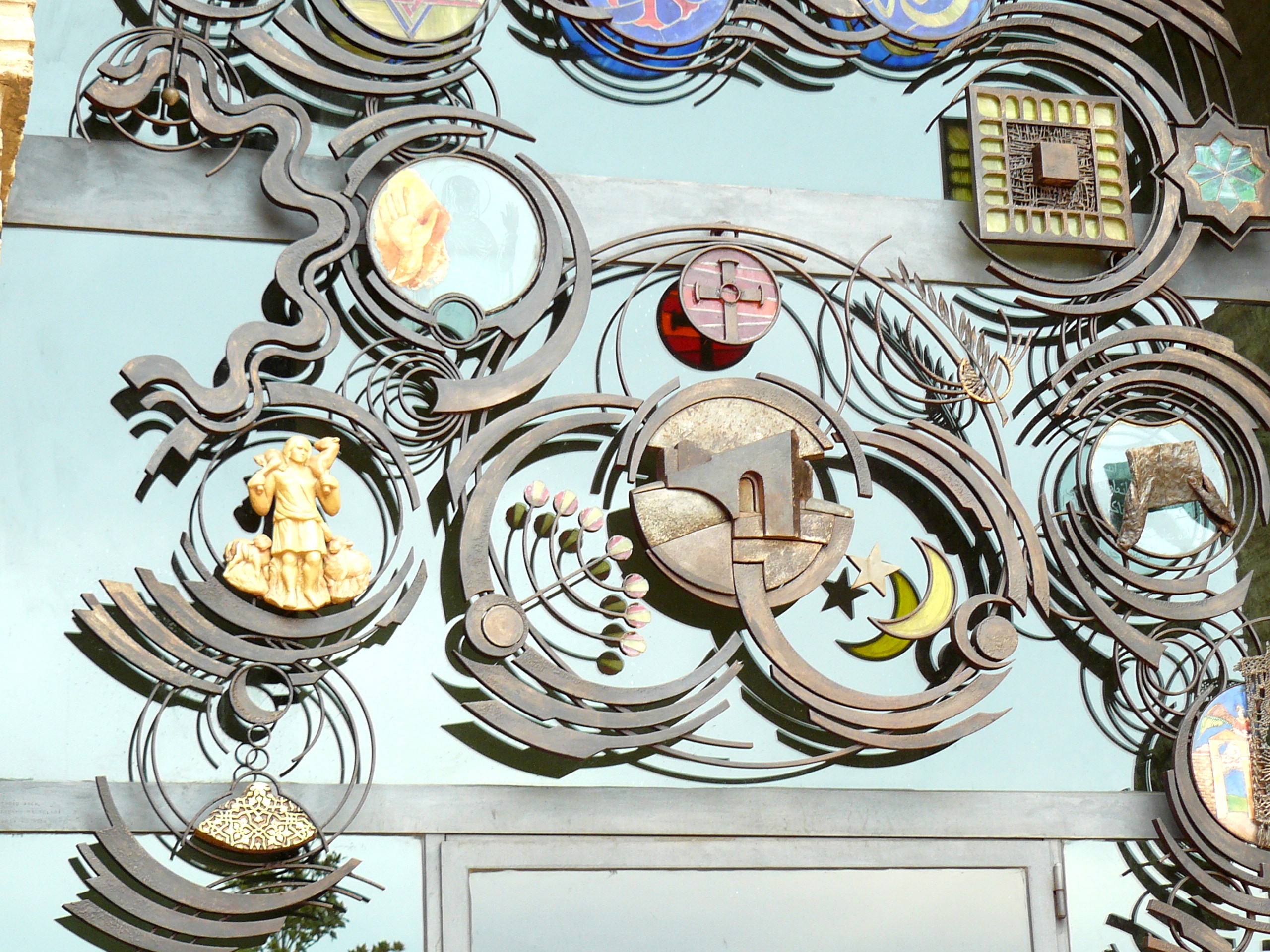
Tasting%20at%20Campo%20del%20Sole.JPGBERTINORO, Italy--We're at the eastern end of the vineyards of Emilia-Romagna.The village itself is medieval, with a castle that houses, of all things, an interfaith museum. Its exhibits are devoted to the world's three great monothestic religions and reconciles Jewish, Christian and Islamic teachings.

Below the walls lies a spanking new winery, Campo del Sole, a huge investment by the Isoldi family. Their wine maker, Stefano Salvini, has worked all over the world, including stints at Mondavi and Sebastiani; he's got a consulting gig right now in Georgia. Their vineyards are immaculate, their ambitions high. Modern techniques, clean-finishing wines, not a bad one among them. There's a budget for marketing; Campo del Sole's bringing its road show to Seattle in February.

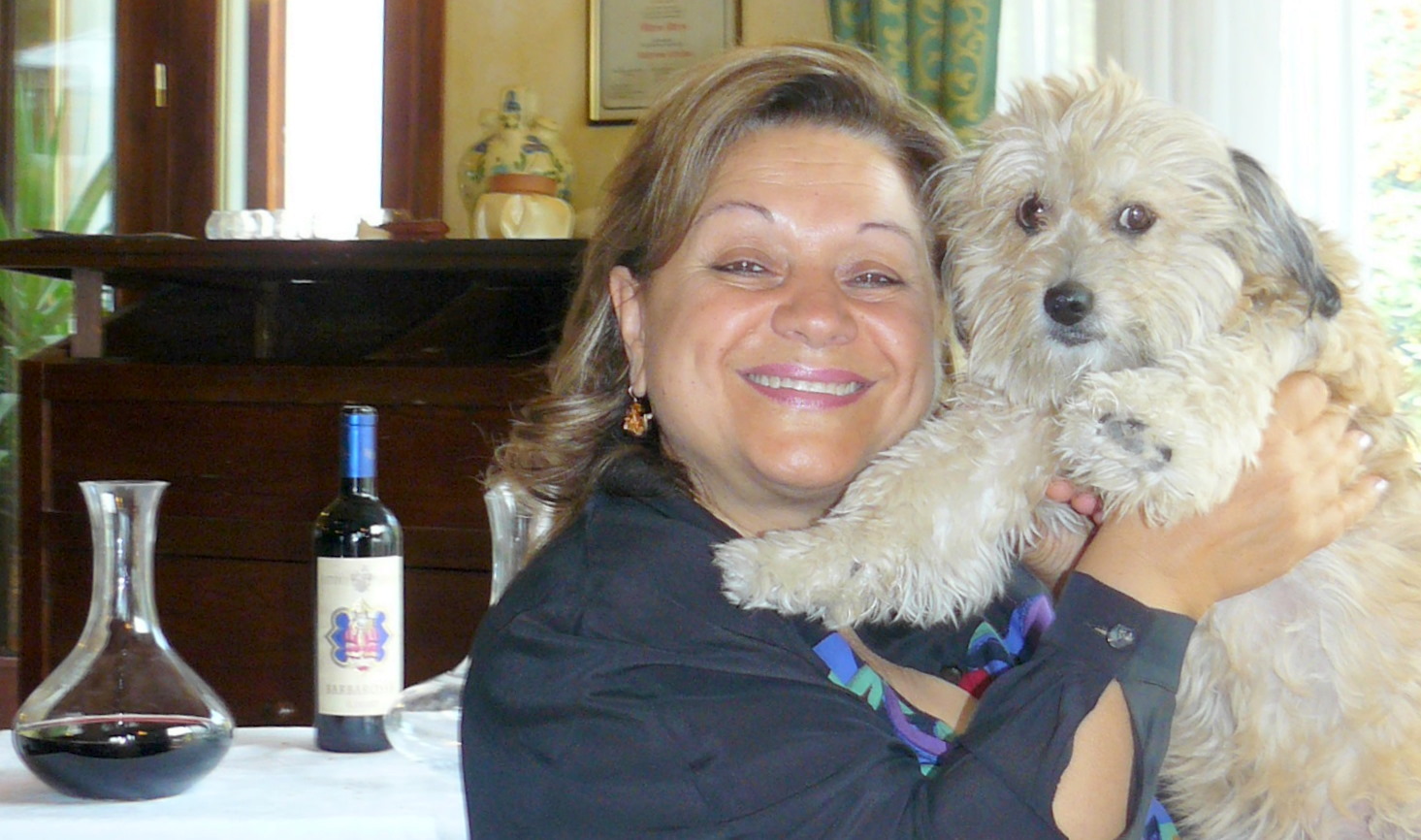
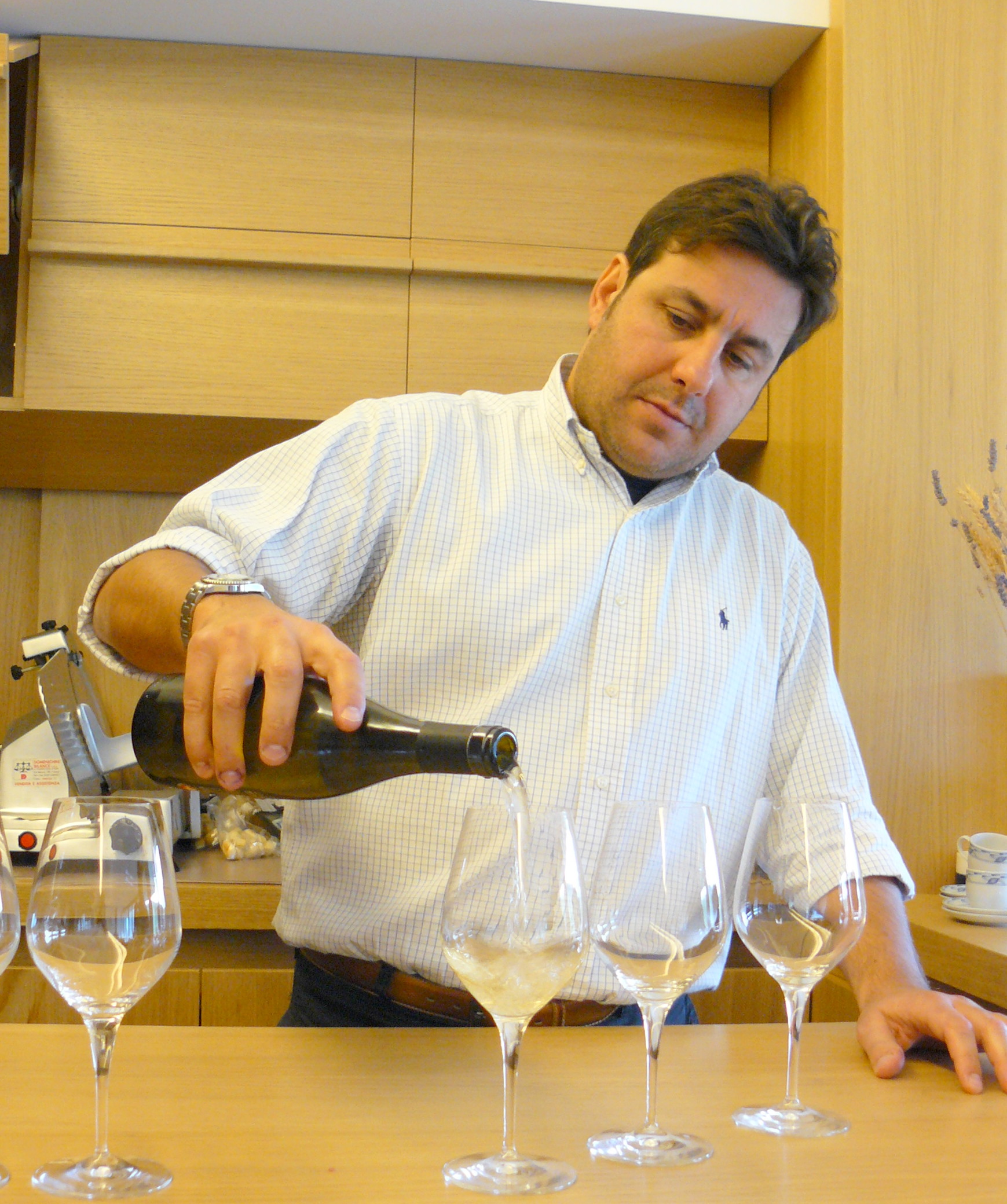
Higher on the hill, Fattoria Paradiso's been around since the 15th century. Graziella Prezzi has taken over from her father, who brought the winery back to prominence. She's a political powerhouse and former president of Italy's Women In Wine. Mario Batali shot an episode of his TV show here. She's got traditional wines from sangiovese and albana, new styles ("concept wines") and unique wines, best of all being barbarosso, a long-lived red variety. Danny Kaye was particularly taken with it. Graziella's beloved dog, Peti Trufi, is a foundling.

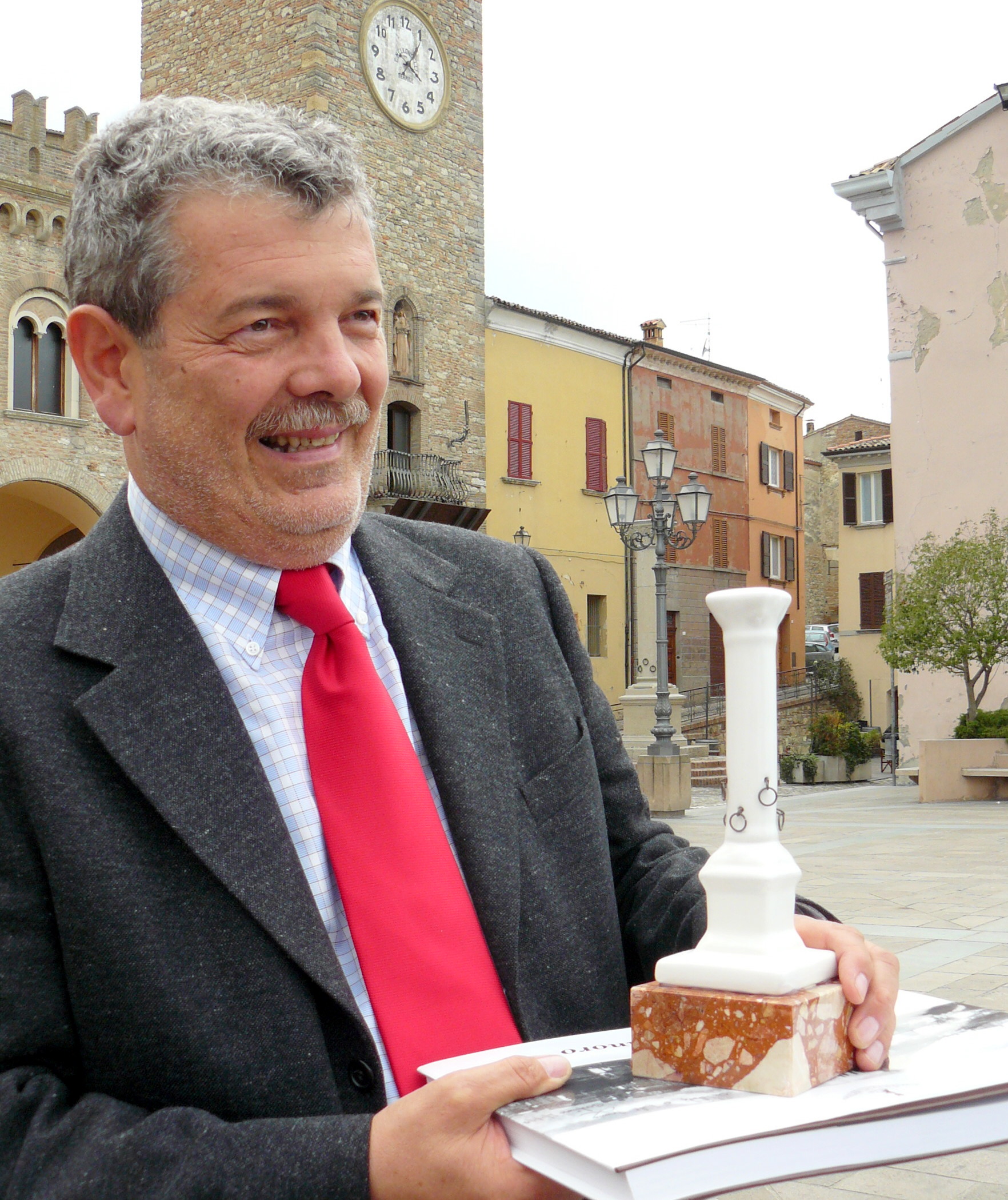
Bertinoro has a long tradition of hospitality. Local families would fight for the privilege of welcoming strangers, finally building a column festooned with "anonymous" rings. Upon tying up, travelers would be hosted by the family whose ring they were using. The mayor, Nevio Zaccarelli, tracked us down on the square and presented us with a replica of Bertinoro's famous hitching post.

Top: Graziella Prezzi and her dog, with bottle of Barbarossa in background. Side: Stefano Salvini. Below: Bertinoro hillside, mayor Nevio Zaccarelli, doorway detail of interfaith museum.

Bertinoro.JPG 
Mayor%20of%20Bertinoro.JPG Door%20detail%2C%20Interfaith%20Museum.JPG

Friday, October 3, 2008

When in Romagna ... Fill 'er Up!


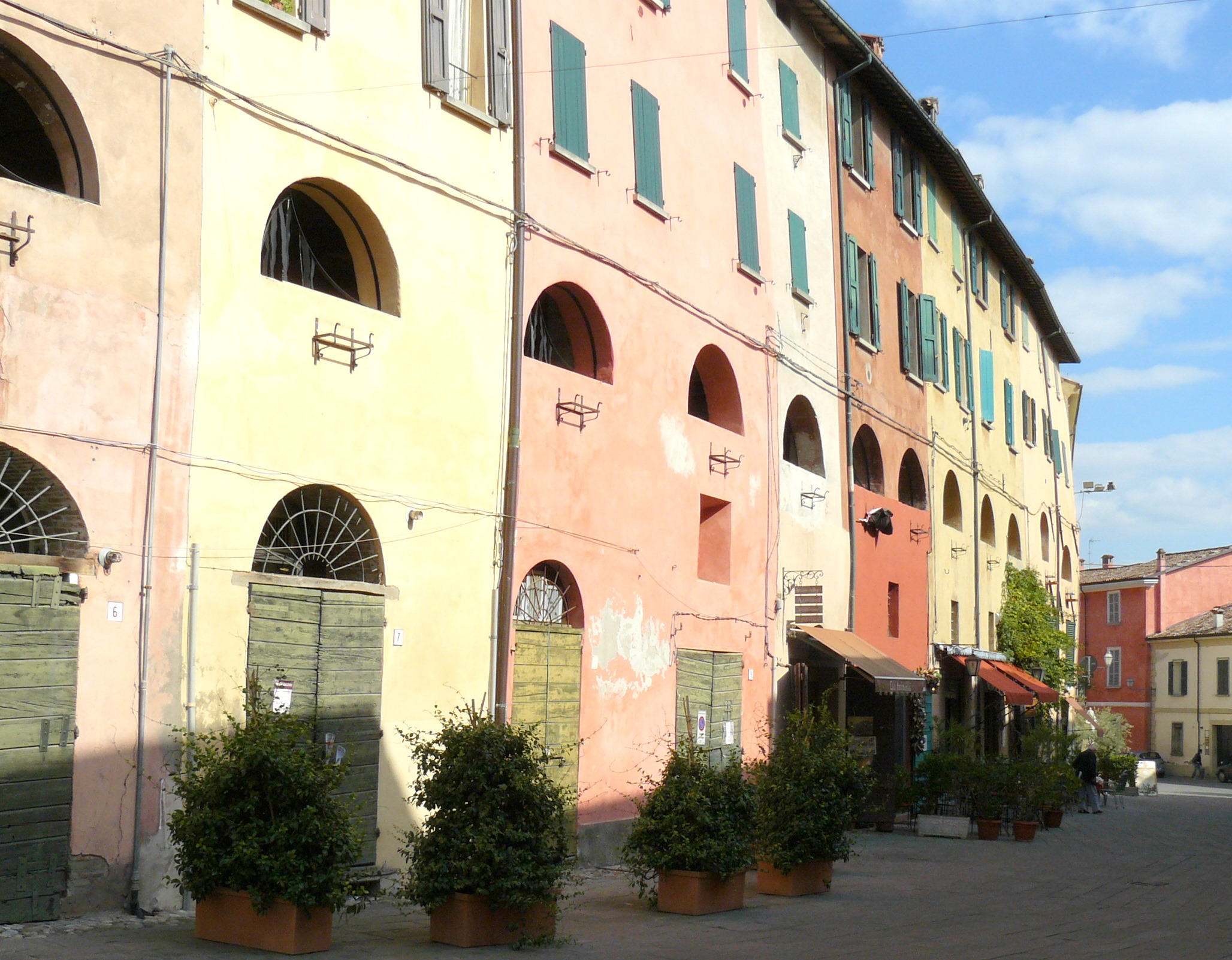
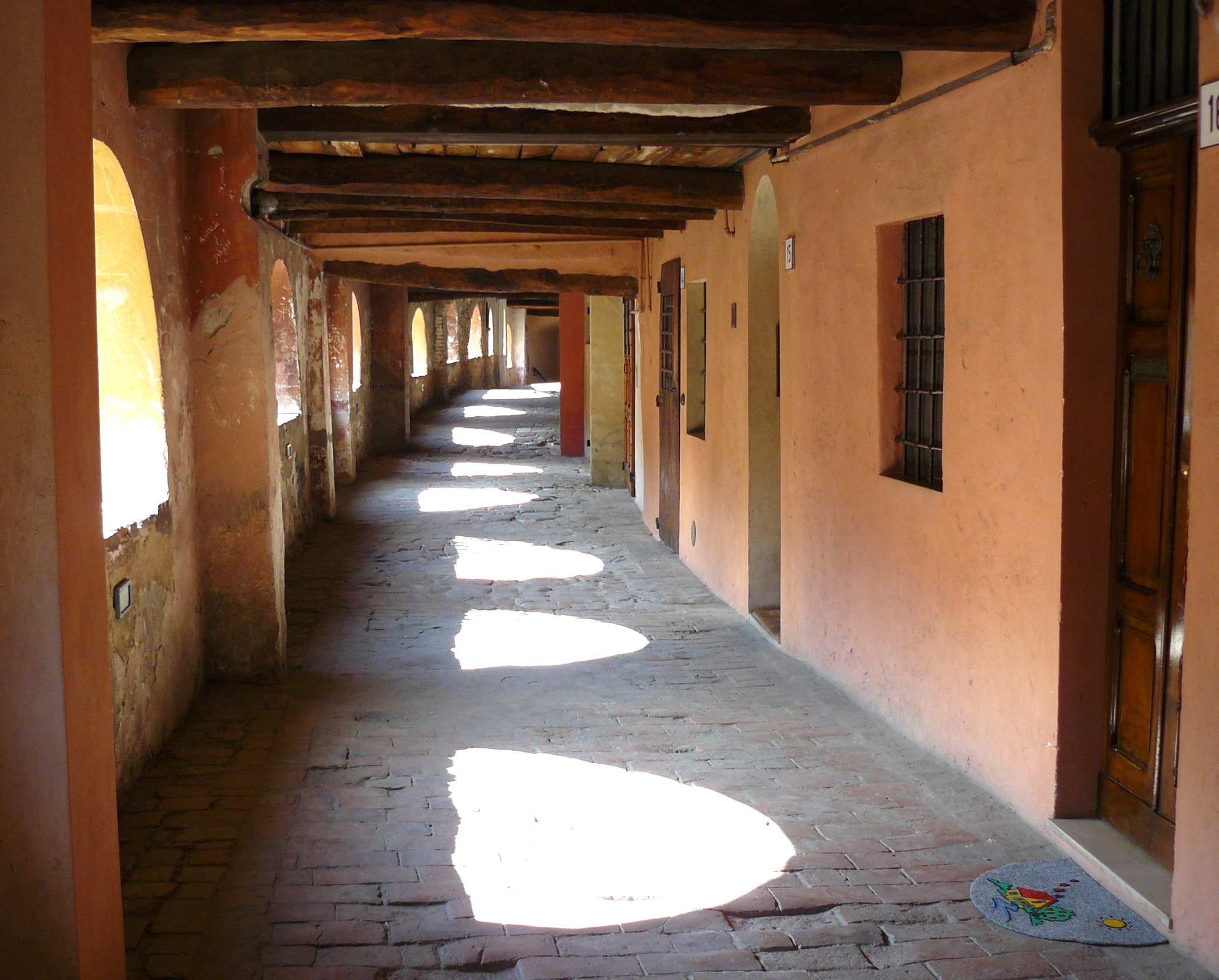
EMILIA-ROMAGNA, Italy--Medieval village of Brisighella , a hilltop town in the Appenines, southeast of Bologna, southwest of Ravenna. Charming "Donkey Street" has old stables on ground floor (to house the animals who worked the chalk quarries), newly desirable  lodgings in the covered passageway upstairs.

 Donkey%20Street%20upstairs.JPG

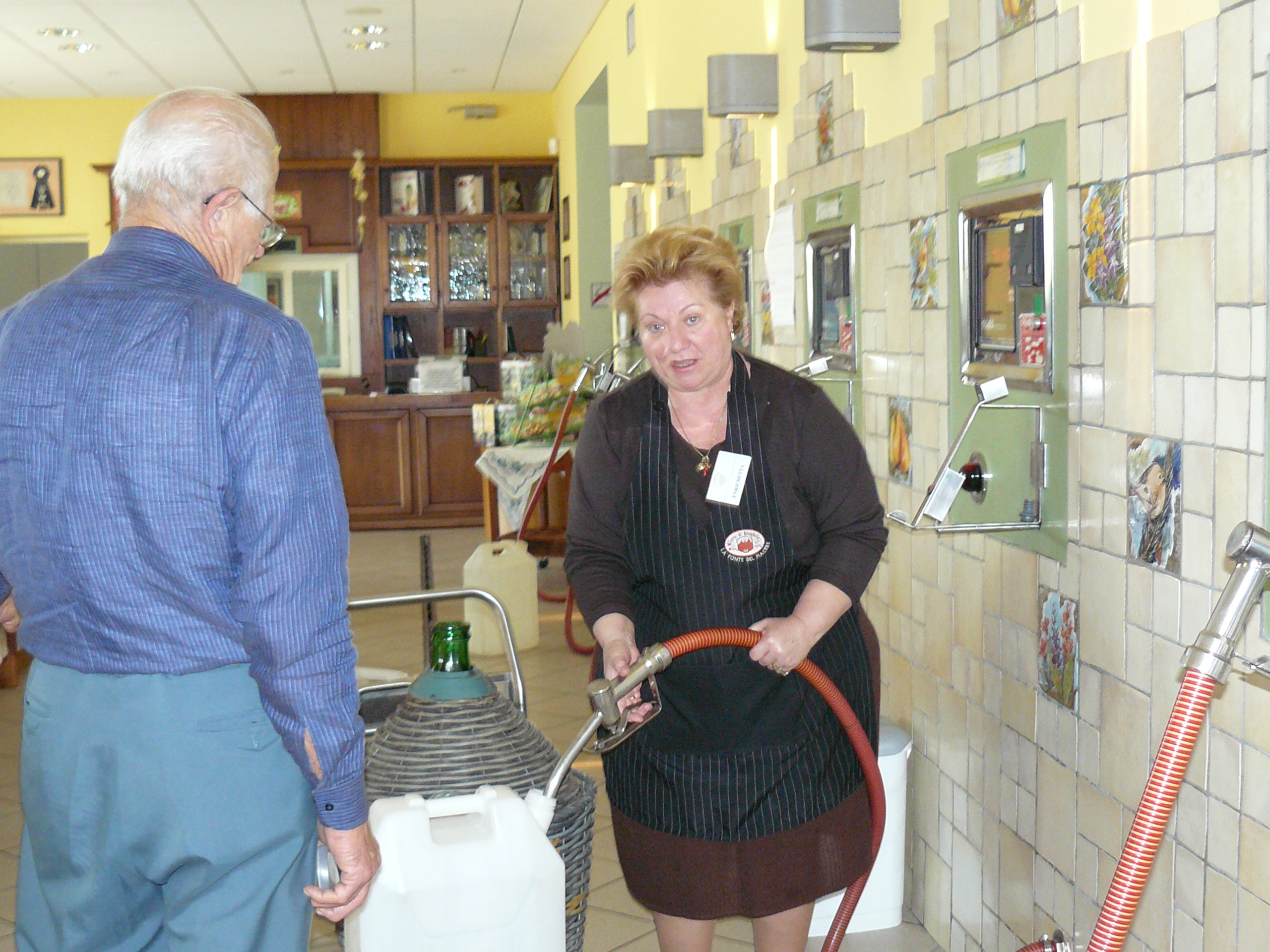
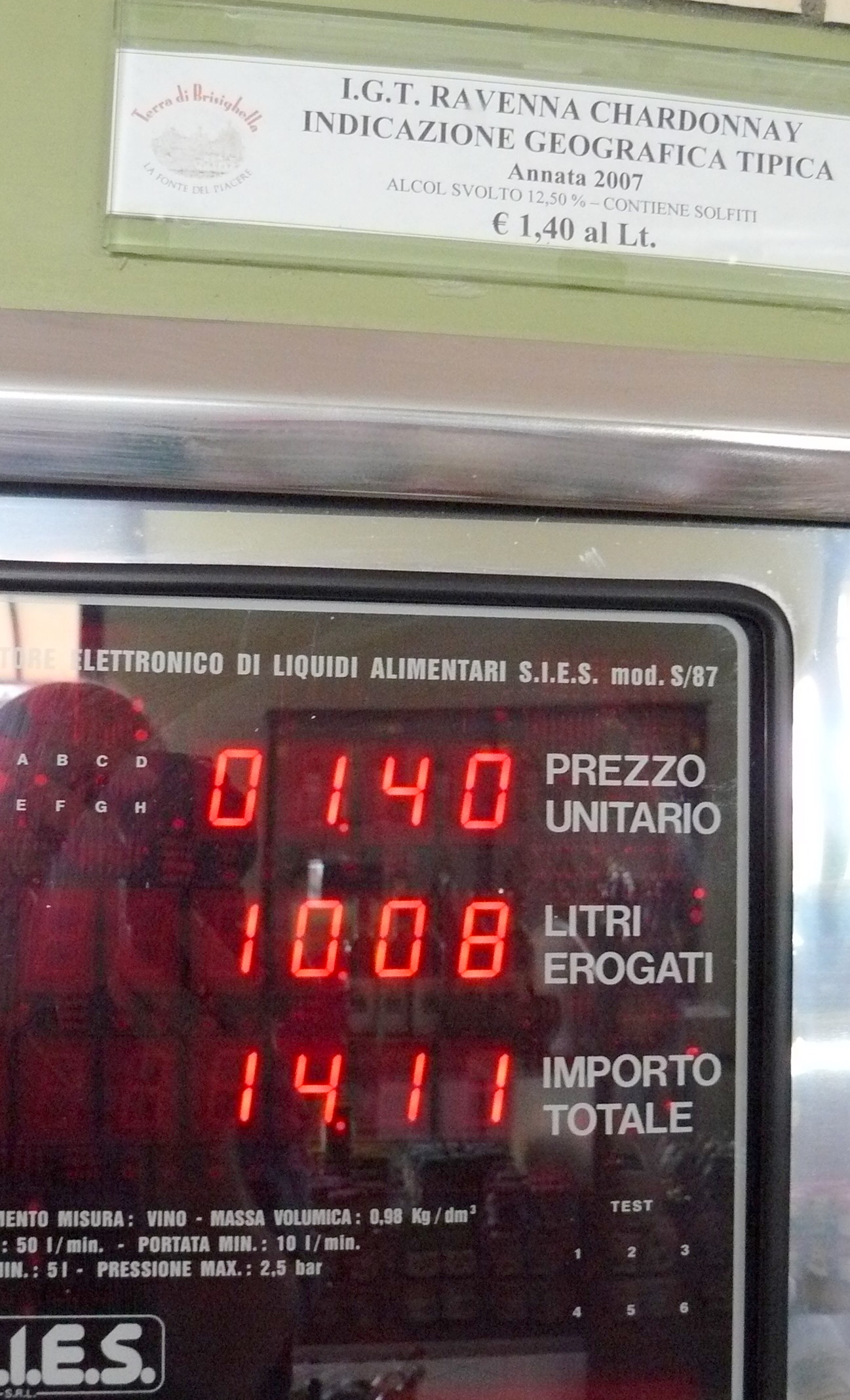
Just outside town, the cooperative sells olive oil (local orchards are famous) and, of course, wine. But it's not a shop for tourist so much as a filling station for the folks who live here and trundle their casks and demijohns through the double doors. Cheapest is trebbiano at one euro per liter (roughly $1.20 a bottle). Chardonnay, sangiovese, etc., also available at slightly higher price. (Hey! This is a good thing, practiced by coops everywhere. Drains off lesser quality juice, saves cost of bottling for folks who drink plenty of wine every day. Too bad nothing like this in US.) The olive oil is 11 euros per liter, which is, surprisingly, more than you'd pay at Trader Giuseppe or Whole Paycheck.

And by the way, petrol goes for almost $9 a gallon here. And people heart Obama.


Chard%20pump.JPG