Showing posts with label Puglia. Show all posts

Sunday, November 27, 2011

The Masserias: Puglia's Fortified Farms

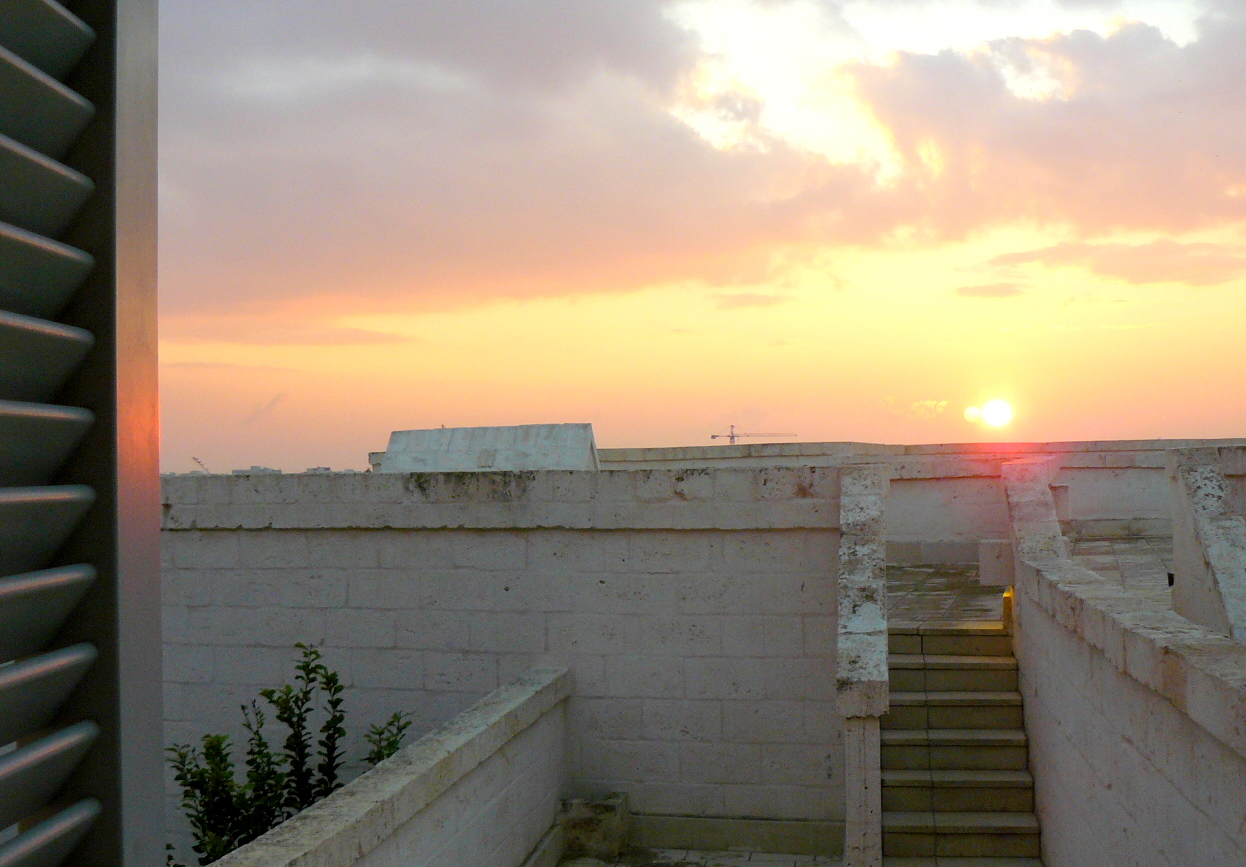
Sunrise at Borgo Egnazia.JPG

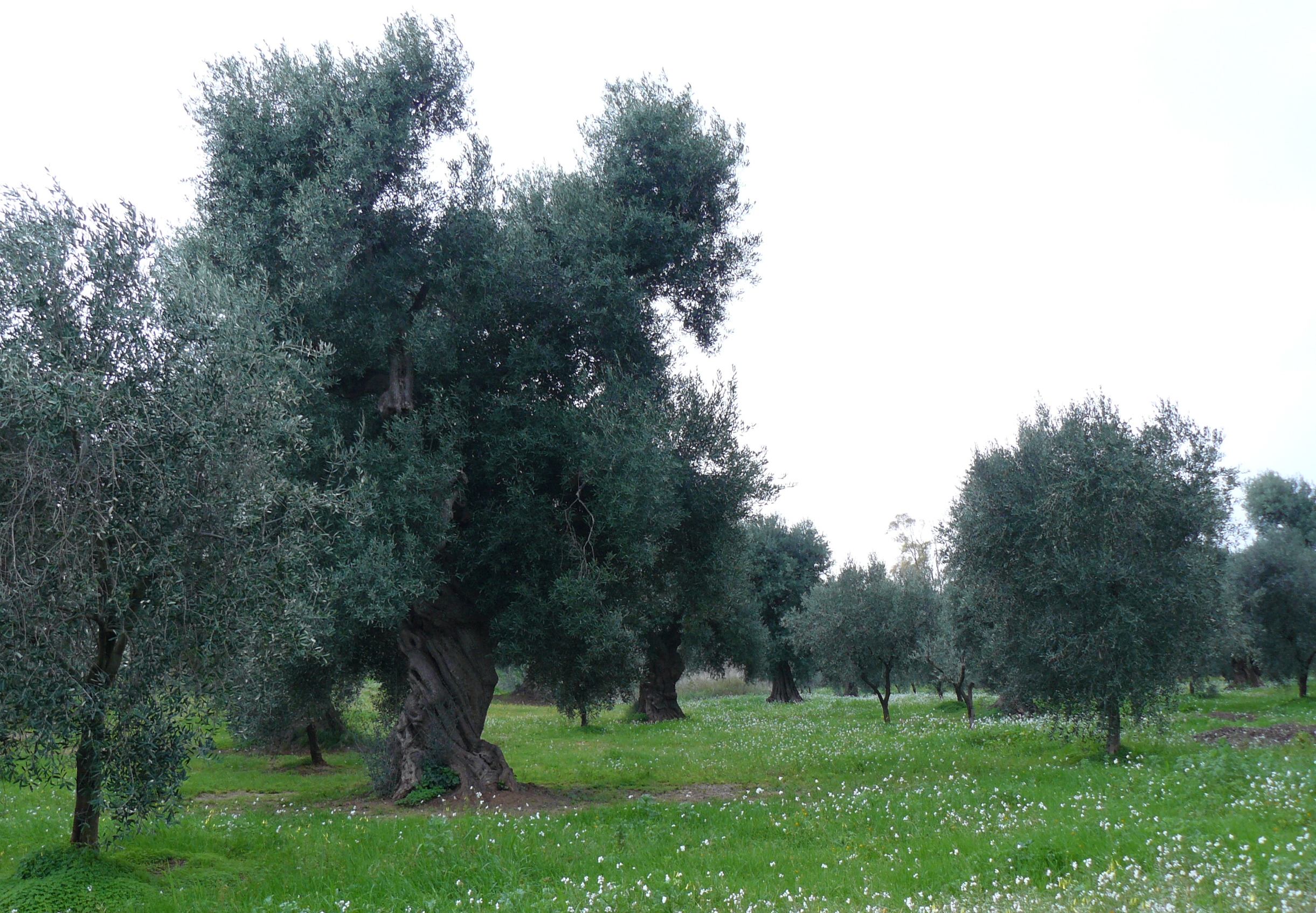
PUGLIA, Italy--You arrive over a road whose pavement is, shall we say, rustic, as it traverses a grove of ancient olive trees with trunks so twisted they could be posters for a menacing horror movie. You bluff your way past the gate (honk, wait for it to open; US border security should be so lucky!) and pull into the parking lot of the Masseria Torre Coccaro, one of several dozen masserias, historic farmhouse properties on the lowlands facing the Adriatic.
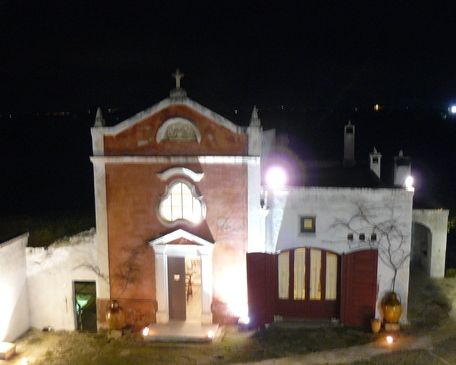
Chapel at Masserie Torre Coccaro-thumb-560x420-1420.jpgPirates were once a real threat along the coast, so the farms and villages tend to be based a few kilometers inland. There's a Fort Apache or Alamo feel to these masserias, many of them refurbished as four- and five-star hotels for tourists, with plenty of banquet space for local weddings and conventions, sometimes with golf courses attached, often with a stretch of private beach (reached by shuttle bus).

Not all are genuinely old, though. Borgo Egnazia (in the photos at top & bottom) is a two-year-old movie-set of a village built, literally from the ground up, with the local beige-white limestone. The owner, Aldo Melpignano, is said to have designed the Borgo himself, adding a cluster of villas surrounding the central "fort.." Local designer Pino Brescia decorated the expanses with vast quantities of unexpected objects (bottles, keys, laddders, old newspapers, twigs and branches, candles, birdcages). Marble hallways lead to cavernous rooms with high-tech lighting (which I couldn't figure out), high-thread-count sheets, and phones that rang on their own in the middle of the night. The Borgo's spa catalog ("Vair") is a study in psychobabble, with two dozen treatments getting their own names in ancient dialect ("Loma Kian") and descriptions ("..inspired by Orthobionomy"; "....will help you fall like raindrops on your back...to reconnect to your emotions." Not cheap, eather: a manicure is nearly $100.

Okay, I'm not the target market. Unfair to complain. Point being, though, that Puglia may be the far southeastern tip of Italy, only 25 miles across the Aegean Sea from Greece and Albania, but it's thoroughly modern when it comes to upscale accommodation and luxury services.

Note: My trip to Puglia was sponsored by the Italian Travel Promotion Council in conjunction with Italy's Natonal Tourist Board.
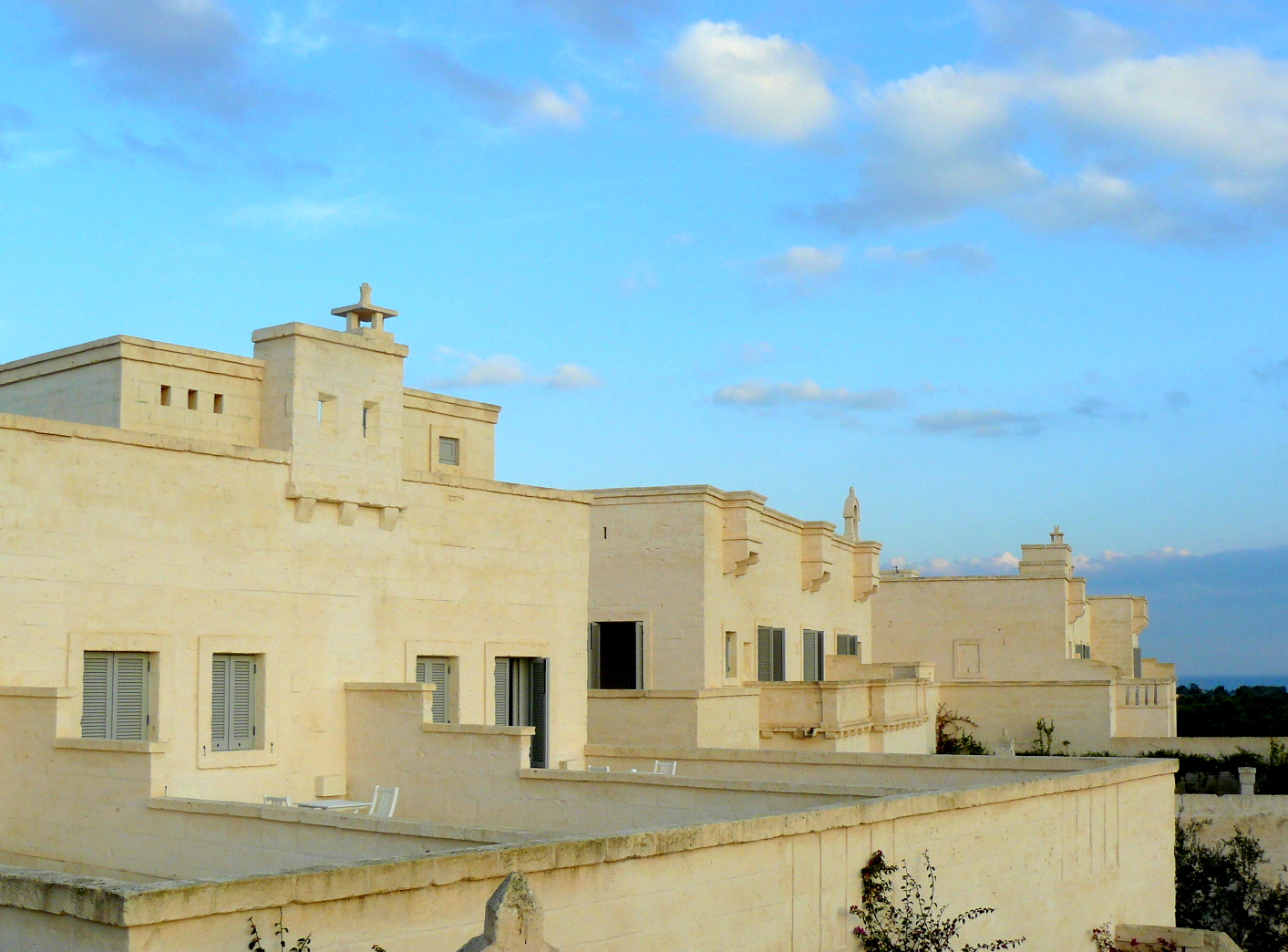
Borgo in Puglia.JPG

Sunday, November 20, 2011

Italy Needs a New Pair of Shoes

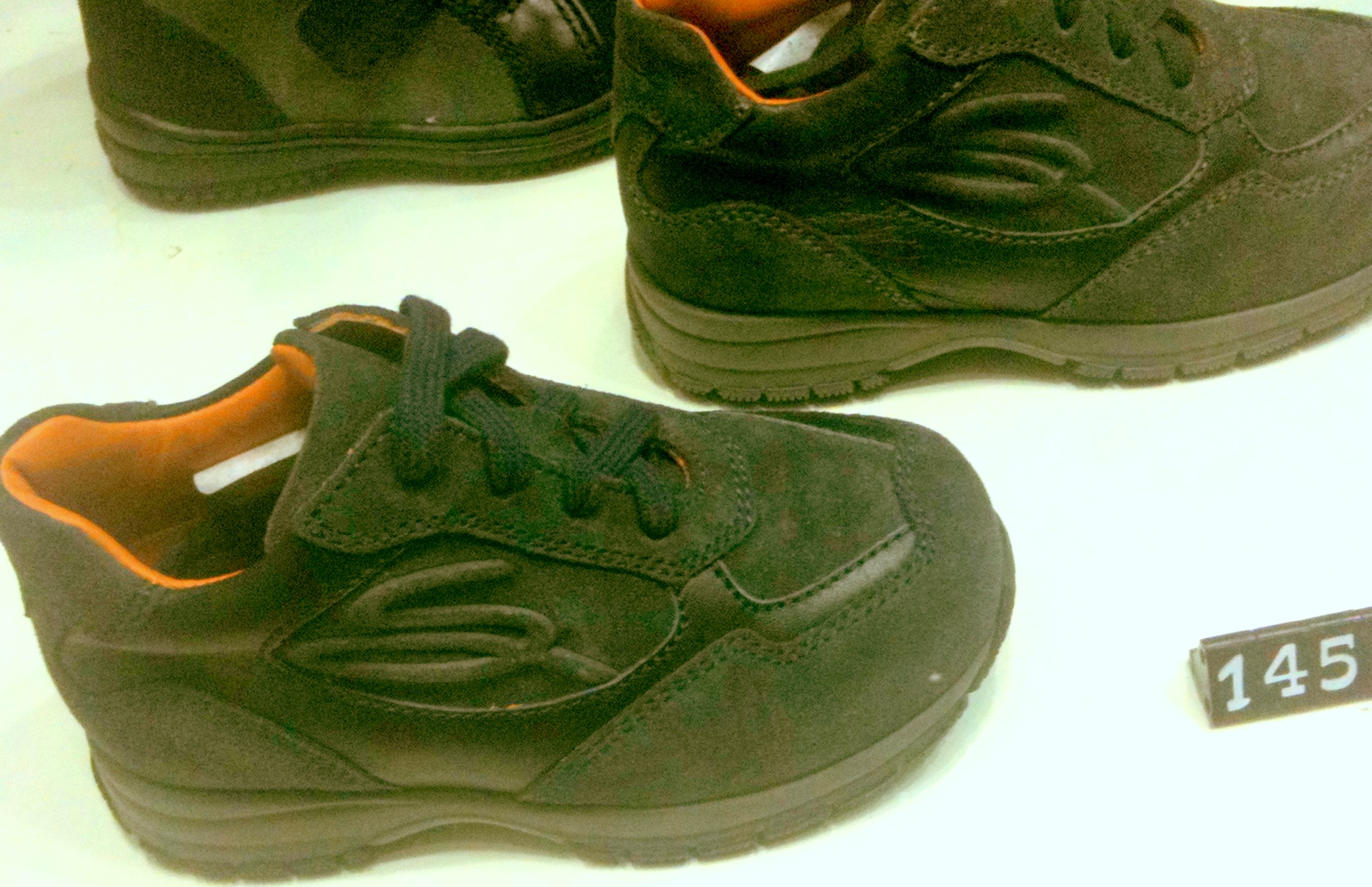
Shoes in Bari.jpg

Italy, baby, you need a new pair of shoes. We know that, and we're doing what we can to get you some. But not these, not at those prices. Look: 145 euros is 200 dollars and change. You can't afford them on your own, and there's no way we can pay those prices to bail you out.

--Photo taken Friday night in Bari, the capital of Italy's Puglia region, where I was a guest at a symposium sponsored by the Italian Government Tourist Board and the Italian Travel Promotion Council.

Outrageous prices for shoes (and $800 or so for off-the-rack men's shoes in Rome is not unusual) would be hard to justify in the most prosperous of economies. Italy is just the latest European country to find that consumer spending is no help when the bond markets lose confidence.

One fix is to promote international tourism, especially to undervalued destinations like Puglia, the heel of the boot. Amazing art and architecture have been here for centuries, but to build five-star accommodations you need to create five-star demand, which is why the ITPC brings several hundred travel agents, tour operators and journalists to Italy every year.

These are momentous times for Italy's travel industry. We've commented before on the challenges faced by Italy, which comptetes with Spain, France, Croatia, Greece, Turkey, Israel, Egypt and Morocco for visitors to the Mediterranean. Then the Puglia region, little known outside Europe, which competes with the picturesque Cinque Terre, the glamorous Amalfi Coast, the art cities of Emilia-Romagna, the splendors of Florence, the glory of Venice. Doesn't help that Trenitalia just cut 30 trains a week of high-speed inter-city service to Puglia.

The question is whether the technocrat Piero Gnudi, the new minister of tourism & sports in the post-Berlusconi cabinet of Maro Monti, can do what's necessary to re-energize Italy's moribund tourism sector. His predecessor, a right-wing TV reporter ("Berlusconi bimbo") and animal-rights advocate named Michaela Vittoria Brambilla, was so tone-deaf when it came to tourism that she proposed banning the colorful Palio--run every August on the cobblestone streets of Siena--because it was "cruel" to the horses.

As an industry, tourism is made up of thousands of independent businesses, from hotel chains to private citizens who rent out their villas, from local tourist bureaus to bus companies. (Even stores that sell hiking gear to visitors.) Getting everyone to agree on a strategy and a marketing campaign is like herding cats.

So maybe Gnudi is the right guy after all. Electric utilities know what's happening on the ground level, monitor the output of every transformer at every neighborhood substation. Gnudi ran Italy's NL for a decade, so maybe he's the right man to give the system a jolt. He's not going to worry about horseshoes.

Friday, November 18, 2011

Puglia: Ancient Stones, Modern Poltics

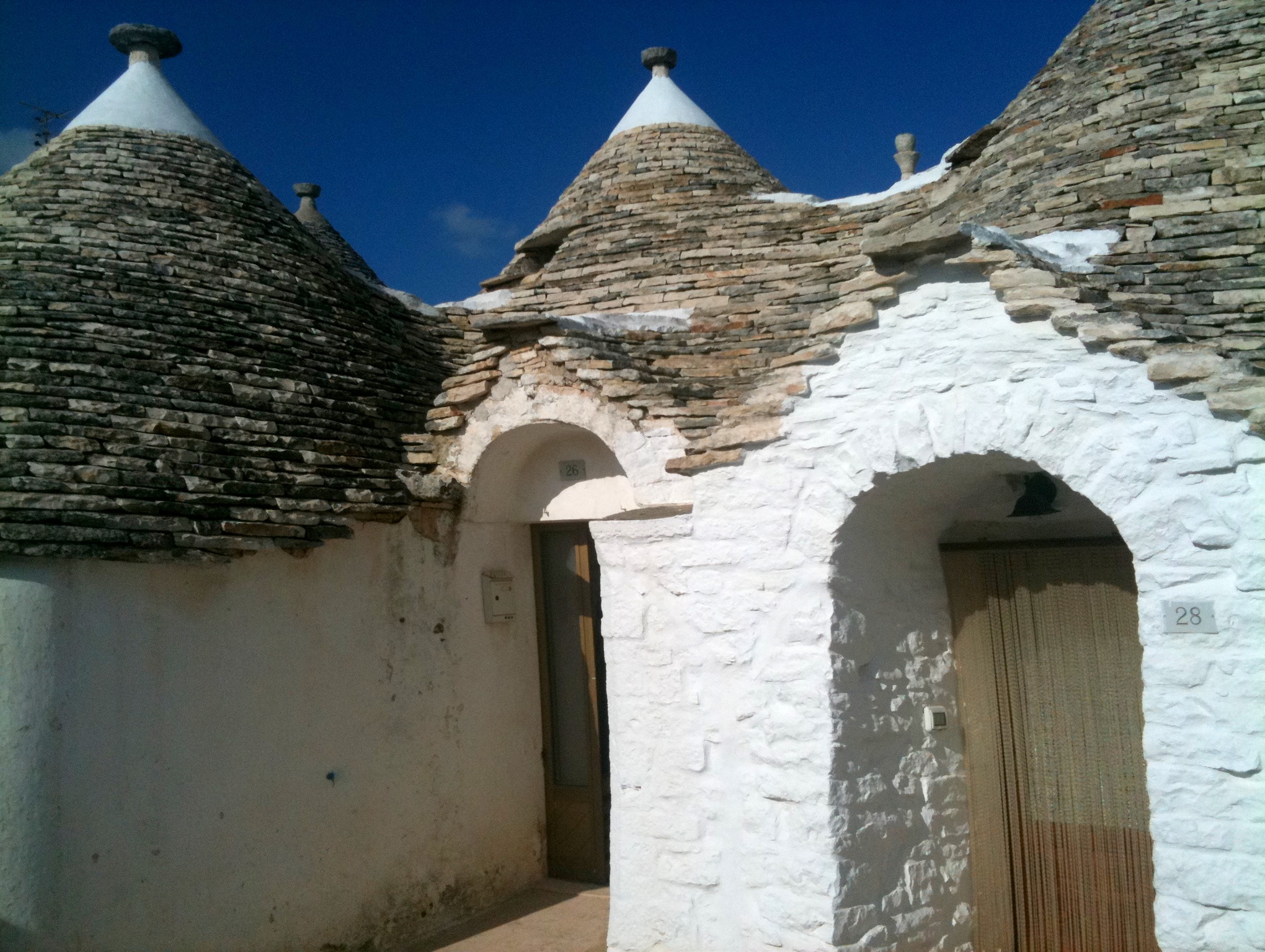
Trulli in Alberobello.jpg

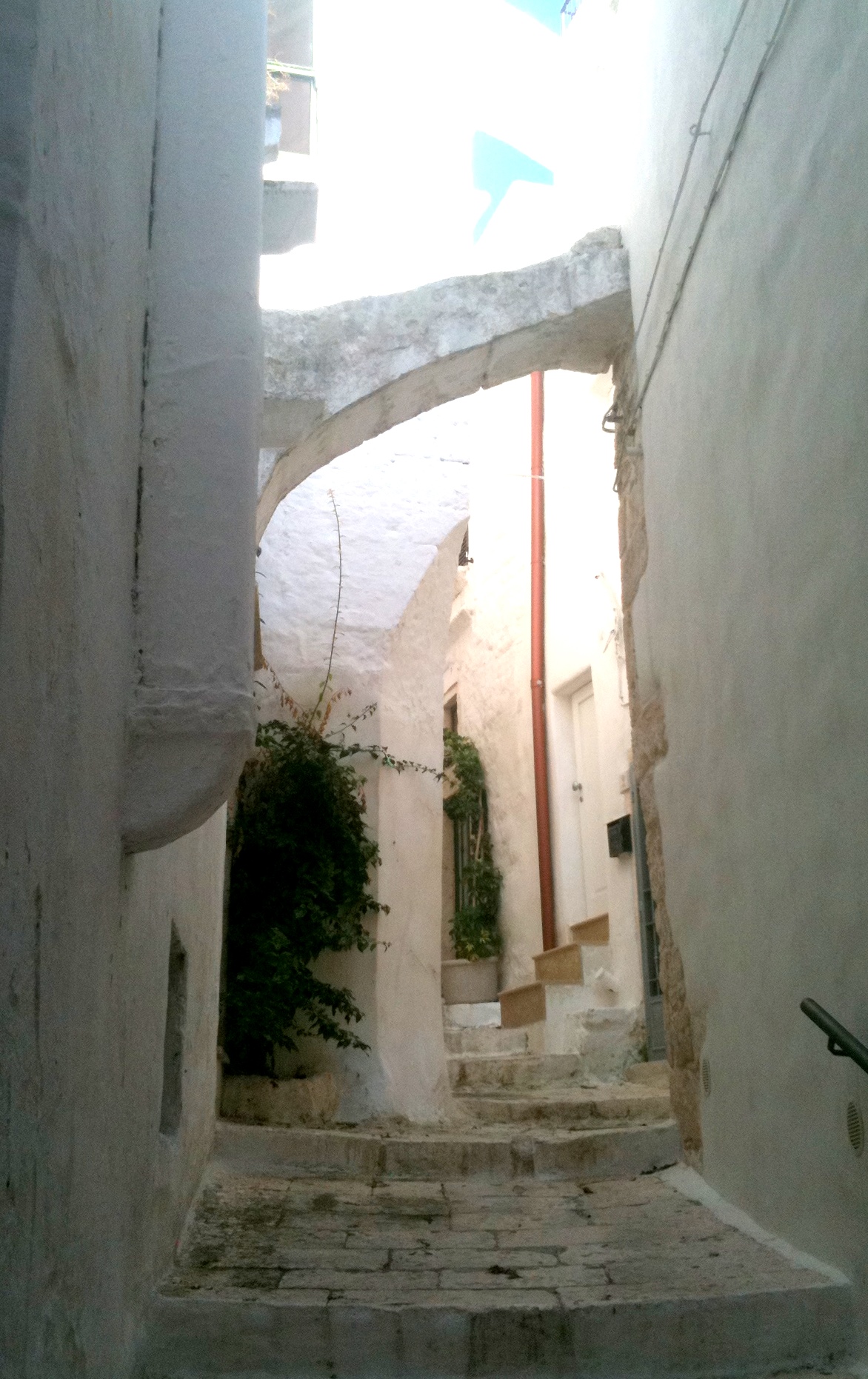
Conical, slate-roofed houses called Trulli in the UNESCO world-herItage village of Alberobello. Below, an alleyway in the hilltop town of Ostuni

PUGLIA, Italy--The good news, it's safe to say, is that right-wing Berlusconi bimbo Michaela Vittoria Brambilla is no longer Italy's minister of tourism. The one-time TV reporter, known for her long legs, red hair and fiery disposition, had been roundly criticized for spending eight million euros on a useless website (italia.it), and was never able to articulate why Italy desperately needs to promote intself as a tourism destination. Some 20 years ago, in a public vote, self-satisfied Italians even voted to do away with a formal tourism agency, forgetting that vacation expenditures and taxes contributed by visitors provide essential funding for basic local nservices. Within a short time, Italy was overtaken by France as the world's most popular tourist destination, and tourism outside the Rome-Florence-Venice corridor has stagnated. Here in Puglia, the heel of the Italian boot, a 45-minute flight from Rome, it's mostly sun-bathing German families lying cheek by jowl along the sunny Adriatic beaches. There's hope--not a lot, but hope nonetheless--that the new guy, a 73-year-old industrial engineer without political experience named Piero Gnudi, will "get it," but Gnudi management career was running Italy's national electric utility, a classic top-down hierarchy that bears little resemblance to the "herding cats" model of international tourism. In fact, managing a state monopoly is poor preparation for the competition Italy faces in troubled economic times: it's probably the most expensive destination in the Mediterranean (compared with France, Spain, Croatia, Greece, or Turkey), although this corner of the country can at least boast that it's affordable. Compared to Tuscany, anyway.

Nichi Vendola, the popular governor of Puglia, has expressed cautious support for the new Monti administration. An earring-wearing member of the left-wing Green party, he has a wider vision than most: Puglia is a gateway to the eastern Mediterranean; its stones speak many languages, its olive trees outnumber its citizens by 12 to 1. His deputy for tourism, Silvia Godelli, speaks of the region's attractions: its light, its flavors and smells, its antiquities. But only 25,000 of Puglia's 4 million visitors are Americans; it's not an easy sell

Americans spent $80 billion on overseas vacations last year, and there isn't one who doesn't want to visit Italy (according to the polls, ideally within the next couple of years) And Italy meets the three top criteria for a foreign destination (safe, affordable, scenic). That's why Italy's national tourist board, ENIT, and the Italian Travel Promotion Council (an association of 19 American tour operators) have sponsored this symposium for travel agents: so they'll know more about Puglia and convince more of their clients to come here.

Alleyway in Ostuni.jpgAll this as prelude to the scenery.

Take Ostuni, for example. You look at the narrow streets, whitewashed walls, and bright blue sky, and you might think you're on a Greek island in the middle of the Aegian. But no, the water out there, less than five miles away, is the Adriatic. The town is called Ostuni, a fortified town in the Middle Ages atop a limestone cliff, settled since prehistoric times. The influence of Greek architecture is understandable, as are design elements from North Africa.

Half an hour away, atop the Murgia plain, you find several hundred peculiar cylindrical dwellings called Trulli, with cone-shaped roofs are built without mortar from slabs of limestone. They're not like teepees or the chimney-houses of eastern Turkey; there's a separate stack at the side to vent the kitchens. You can buy your own trullo, should you want to abide by the strict historic-preservation standards, for 100 grand. A studio in one of the white-washed buildings of Ostuny, on the other hand, runs about twice that.

Monday, November 14, 2011

Traveler's Notebook: Back in Bari

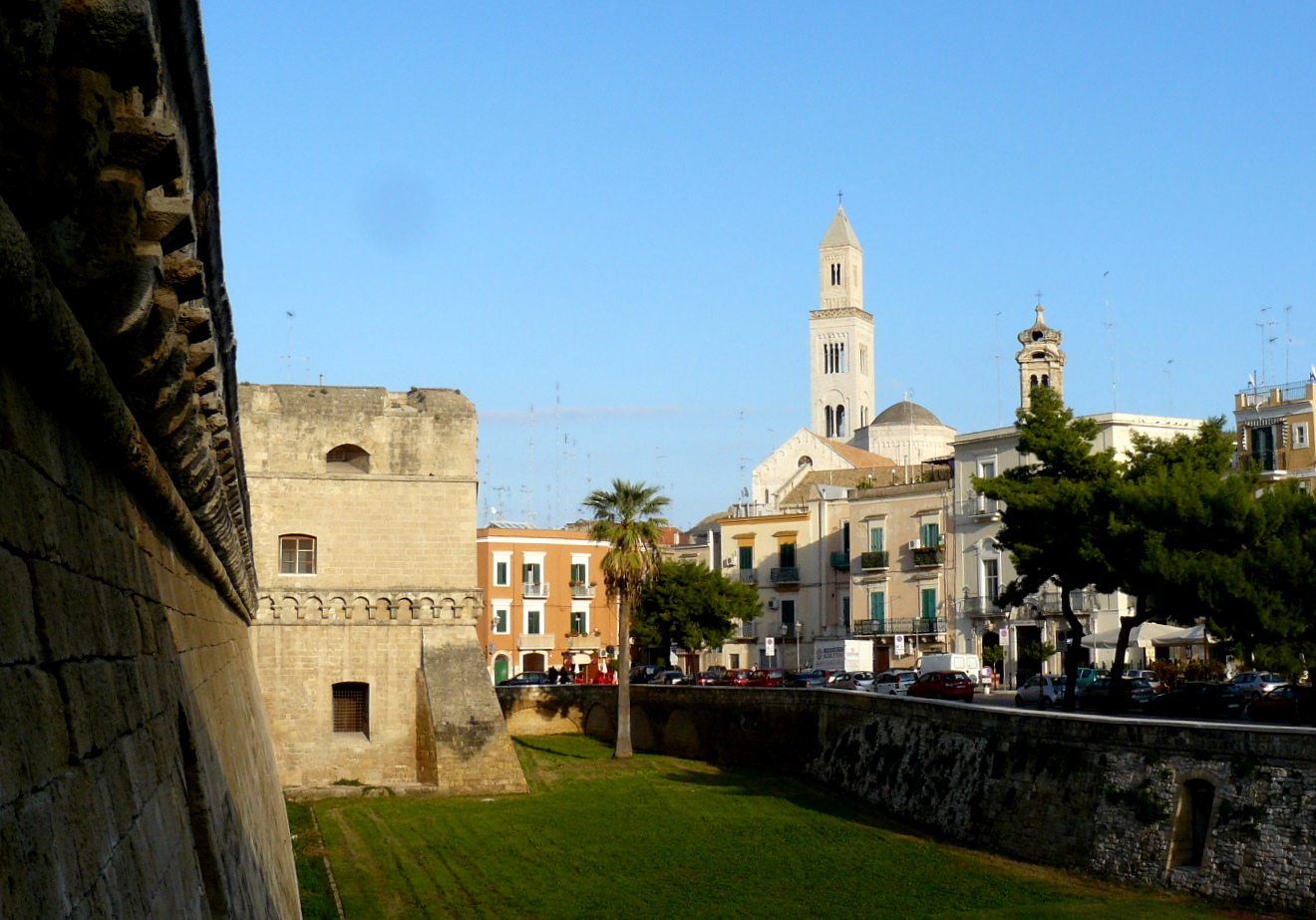
Bari Castello w Cathedral.JPG
Bari's 12 C castello, built by Frederick II, and its 15th C Romanesque cathedral

BARI, Italy--We are back in Puglia ("Apulia" in English), last visited three years ago on a wine tour, this time around for a symposium sponsored by the Italian Travel Promotion Council and ENIT (Italy's National Tourist Board). Over 200 American travel agents, two dozen tour operators and about 20 journalists from the USA are participatiing.

It's too soon to tell what priority tourism will have in the "austerity budget" to be presented later this month by the new government of Prime Minister Mario Monti (just sworn in yesterday), although the signs point distressingly toward reduction to zero. Yes, Italians have the understandable notion that the whole world already knows about its historic cultural treasures, ideal climate, great food and pleasurable lifestyle. In this they are not alone; it is a homegrown pride that is (quite often) justifiable, yet quaint and ultimately short-sighted. But tourism promotion is not a luxury.

When Washington State eliminated tourism promotion from its budget, the only audible protest came from Seattle hotelkeepers who knew that people have to be encouraged to travel to specific places. You must tell your story over and over, the marketing folks lecture you; the public is a passing parade, not a static classroom of docile fourth-graders. Tourism professionals like travel agents need constant reminders, too, ideallly in the form of field trips, to experience the uniqueness of the "product," of the destination.

And the destination here in Puglia, the heel of the Italian boot, is certainly attractive. Some 500 miles of pristine coastlne dotted with ancient watchtowers (to guard against invaders); historic architecture (Roman, Greek, Norman, Byzantine); modern cities like Bari, Baroque cities like Lecce, prehistoric settlements like Alberobello, limestone hilltowns like Ostuni; medieval strongholds like Castel del Monte; vast groves of olive trees, and vineyards planted with southern Italy's best full-bodied reds (Negroamaro, Primitivo and Nero di Troia).

Olive grove at Vallone.JPG
Olive grove in Puglia
Interntional tourism is a much sought-after source of income, but local officials here acknowledged only "incremental" increases of 20 percent over the past decade, which is a polite way of saying that tourism to this region is stagnant. Only 25,000 Americans visit Pugllia in the course of a year, a tiny fraction of the half-million foreigners who come. Assuming they're not daytrippers disembarking from the giant cruise ships, Americans stay an average of three nights, a full day less than most international visitors (almost 20 percent of them heat-seeking Germans). Puglia's official tourist office recommends touring by bicycle or on horseback, but the Yanks tend to occupy rooms in the best hotels..

Don't get me wrong, it's a stunning region, even without the beaches, but there's a campanilismo here, a short-sighted, provincial, shoulder-shrugging attitude, that seems to undervalue the surprisingly broad cultural heritage.

Welcoming the delegates, Mauro Galli, the ITPC president, pointed out that Puglia is at least 30 percent less expensive than the rest of Italy, especially compared to the strasopheric prices of hotels in Venice or Florence. Whether the price advantage alone will draw American travelers is far from clear.

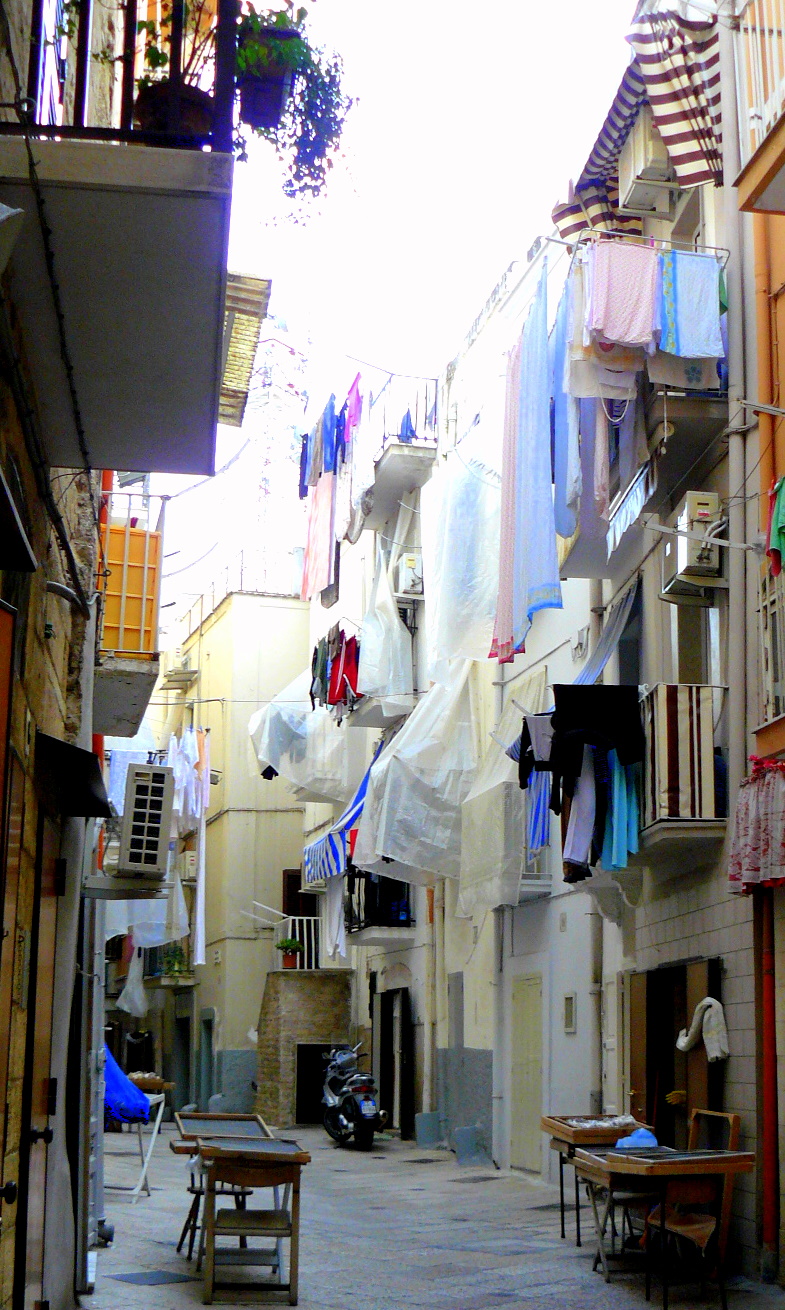
Street scene in Old Bari.JPG
Street scene in Old Bari
For Americans to visit Puglia, they first have to select Italy over France, Spain, Greece or Croatia (to name just four competing Mediterranean destinations). Then Puglia competes with the trinity of Rome-Florence-Venice, not to mention the romance of a villa in Tuscany or a cooking class on the Amalfi Coast. So it's not a stop for first-time visitors to Italy.

Puglia's capital, Bari, is a vibrant, modern Italian city, as big as Portland, Ore., with a pedestrians-only old town (narrow streets with washing hanging from the balconies), a busy harbor (shipping to Mediterranean ports, cruise ships, car ferries across the Adriatic) and imposing Mussolini-era buildings along the waterfront. The palazzo housing its Chamber of Commerce may not have wi-fi (for shame, for shame), but the city does have a dozen shared-bicycle stations and a stunning Romanesque basilica. And Puglia boasts a coastline that's every bit as long and varied as Florida's. It's embarrassing, frankly, that Americans haven't discovered this wonderful land.

So much for the first day; there's more to come. More seminars and site visits, more pictures, too.