Sunday, February 19, 2012

The Bittersweet Glory of Cucina Povera

Angelo Pellegrini, the sage of Seattle's culinary revolution in the 1960s, grew up in Tuscany, where he would gather up roadside cow pies and sell them for fuel to earn a few coins. That's hardly the boyhood one expects for a revered professor of literature at the University of Washington, but it was not an unusual story.

In the first half of the 20th century, southern Europe was racked by unimaginable poverty. Millions fled toward land they hoped could feed them; those left behind boiled and ate whatever they could find. And when there's literally nothing to eat, one invents. Vegetables, maybe, if they'll grow. Game, perhaps, if it's available (squirrel and possum on the North American continent), otherwise milk from a scrawny cow, flour milled from chestnuts or bread baked without salt because salt is too expensive.
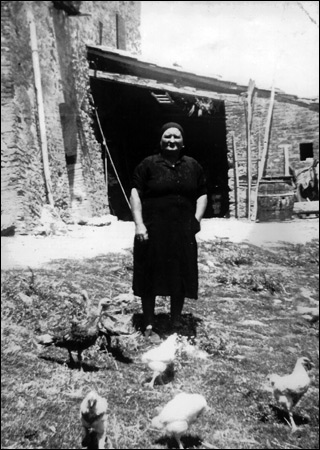
vintage_poggio_etrusco.jpgWhat's remarkable is that those dark days, whose details are vividly recalled, decades later, by survivors at the end of their lifespan, produced a culinary culture that is nothing short of glorious. Their stories, as recounted by Pamela Sheldon Johns in her new book, Cucina Povera, "were sad, bitter and desperate." Almost every person she interviews says the same thing, "We had nothing to eat," yet their memories of the food they did have (and that enabled them to survive) were almost always pleasant.
This compilation, the food of hard times, the cooking of the poor, turns Cucina Povera (subtitled Tuscan Peasant Cooking) into the most positive book I've reviewed in years.

Johns is on a US tour this winter to promote her book and to teach private classes. She'll be in western Washignton for ten days in early March, and will teach a couple of classes at Dianne LaVonne's Market Kitchen (1101 Post Alley in Seattle) at 6 PM on March 7th and at noon on March 9th. There's still space for a couple of other classes; check the Food Artisans website.

To be fair to the long-established scholars, it's a landscape that's been plowed before, especially by Lynn Rossetto Kasper, another culinary writer (and public radio host) with Italian-American roots whose books have been honored by the James Beard Foundation and the International Association of Culinary Professionals. Half a generation ago, Rosetto Kasper called this the cooking of ingenuity. "You take what the land gives and you make something of it," she wrote in The Italian Country Table (1999).

Bread baked without salt dries out within a day, to be revived with wine or stock or olive oil, giving way to ribollita (bread soup), panzanella (bread salad) and bruschetta (toasted bread with toppings). As winter subsides, tomatoes ripen and their flavor explodes. Pigs become prosciutto (not to mention guanciale, porchetta, coppa, culatello, pancetta, mortadella, lardo, lombata, speck, salami and so on), milk becomes cheese (from fresh ricotta to aged Parmegiano). Fruit can be preserved with sweet grape must or honey if there's no refined sugar.
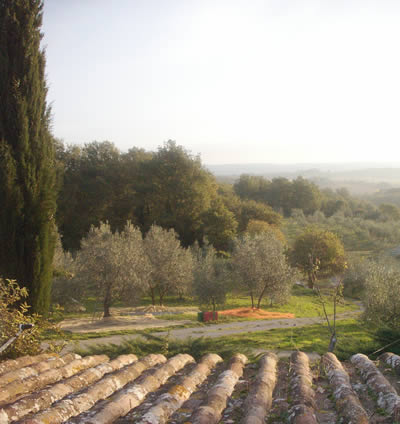
olive_orchard_view.jpgCucina Povera is a collection of some five dozen recipes that should make the reader appreciate the ease of modern cooking as well as the depth of flavor that comes from unprocessed food. Johns is an American food writer who now lives on a farm in Tuscany, Poggio Etrusco, outside Montepulciano, where she teaches culinary workshops. Almost every recipe is accompanied by a deftly drawn profile of an Italian friend who recalls the days of true poverty. The ingredients are accessible, the methods are straightforward, the accumulation of the recipes is one of joy and plenty.

There's one for acquacotta, for example, that's a sort of stone soup: nothing but coarsely chopped vegetables for flavor, with a poached egg and a crust of crust of country bread. Dandelion greens or arugula leaves provide a savory filling for a six-egg frittata. A recipe for ricotta cheesecake needs only half a dozen ingredients (eggs, milk, sugar, lemons, flour, baking powder), can be assembled in 15 minutes, baked for 35, and enjoyed for dessert.

I admit to a couple of instances of confusion. I always thought "guanciale" refered specifically to the jowls of a pig, not cows. Sure, bovines have jowls, and restaurants (even in Seattle) offer dishes featuring beef cheeks. But it you're going to call something guanciale, it better be pork. Perhaps it's just a Tuscan thing.

Second, the classic white sauce of European cuisine--butter or oil, flour, milk or cream--is Béchamel in French, Besciamella in Italian, not "Balsamella." It's called Béchamel because its "inventor" was a specific historic personage, a 17th Century nobleman named Louis de Béchameil, the Marquis of Nointel. A velouté with a lot of milk or cream added. Again, perhaps it sounds like "Balsamella" in Tuscan dialect. Pseudo-Italian TV chef Emeril Lagasse calls it Balsamella, too, but that's probably what they call it on the Jersey Shore. ( (Indeed, Johns sent me a Facebook message, after this piece had run on Crosscut.com, saying that guanciale can refer to animals other than pigs, and that balsamella is what they call it where she lives.)

No discussion of this book would be complete without an enthusiastic endorsement of the photographs, by Andrea Wyner: portraits that evoke the hard lives the Tuscan elders have lived, as well as refreshing reinventions of Tuscany's landscapes.

Cucina Povera: Tuscan Peasant Cooking, by Pamela Sheldon Johns, Andrews McMeel Publishing, 186 pages, $21.99

Monday, January 30, 2012

Olive Oil's Dirty Secret:

Not Enough Honest Virgins

PUGLIA, Italy--We're along the heel of the Italian boot, a region that produces almost half of Italy's olives and olive oil. There are somewhere between 50 and 60 million olive trees here in Puglia, twelve or thirteen times as many trees as people (4 million). From Ostuni, an ancient village on the edge of the Murgia plateau, you look toward the Adriatic, five miles to the east, and see nothing but olive trees, many of them centuries old, half a million acres all told. That's about the same area as all of Pierce County.

The region lacks rivers and doesn't get much rain, so its agricultural potential, down on the flatland, is pretty much limited to olives and grapes. (Puglia is also Italy's most prolific grape producer, with powerful reds like Primitivo--Zinfandel's identical twin--that ripen perfectly in the cool Mediterranean breezes of the Salento peninsula.) But it is the olives, specifically, that concern us here.

In 2007, the New Yorker published a 5,500-word article titled "Slippery Business" about colossal levels of fraud in the sale of what's known as Extra Virgin Olive Oil. Two thirds of what's sold in American supermarkets as EVOO, estimates Tom Mueller, the article's author, isn't the real thing at all. Oil from olives, perhaps, but hardly the rigorously controlled and strictly defined "first press." It's even worse in the food service industry, with adulterated soybean and sunflower oils regularly passed off as higher quality olive oil. What's more, any manner of imported vegetable pressings from Greece or Turkey or Tunisia are regularly offloaded in ports along Puglia's coast, processed to remove unwanted characteristics, and resold as "Italian." (That step is actually legal as long as the intent isn't to mislead consumers). But then, often with the assistance of a corrupt bureaucrat or two, the stuff is relabelled as olive oil and often "transformed" into extra virgin.

The fraud is relatively easy to detect analytically but almost impossible to prosecute. Not even a notorious case, in Spain 20 years ago, in which 300 people died from adulterated olive oil, slowed the tide of fraud. In Italy, on the regional and national level, the crooked operators are very well connected politically. Supposedly independent industry associations are toothless. The European Union doles out massive subsidies to the "olive oil" producers but has yet to recoup any of its fraudulently obtained grants. When Italy's respected Guarda di Finanza (the military police arm of the Finance Ministry, responsible for drug smuggling, border patrol, and the like) does manage to act, the bad guys stall until the statute of limitations runs out. Experts who challenge the Big Oil producers are regularly sued for slander. Stateside, the various agencies responsible for food safety and domestic security have, thus far, claimed that mislabeled olive oil isn't a big priority.

Who's to blame? In Italy, at any rate, the buck stops at the very top. "[Former Prime Minister Silvio] Berlusconi's role is indirect but meaningful in olive oil crime - creating and enhancing a sense that law and order is irrelevant," Mueller wrote to me in an email.

Mueller, who lives in Italy and has family roots in eastern Washington, has now expanded his New Yorker article into a book titled Extra Virginity. He updates the various court cases he described (no one went to jail) and widens the horizon of the Italian frauds to the rest of the world.

The United States is the third-largest consumer of olive oil in the world, a market approaching two billion dollars a year, yet has some of the loosest laws on earth concerning olive oil purity or honest labelling. The Food & Drug Administration and the US Department of Agriculture have no budget for testing, let alone enforcing laws against fraud.

The problem, as Mueller describes it, is the huge reward, with vrtually no risk, in mislabelling the oil. "Extra Virgin" has all but lost its meaning.

I spoke with Mueller by phone recently and he reminded me that olive oil is a truly amazing substance. "We shouldn't be scaring people away," he said. Indeed there's been a huge increase in olive oil sales in the US, thanks to publicity about the health-enhancing properties of the Mediterranean Diet.

Olive oil is, as Mueller puts it, "an age-old food with space-age qualities that medical science is just beginning to understand." There's even an intriguing chemical relationship between EVOO and the anti-inflammatory Ibuprofen. The tragedy is the temptation to dumb it down, by stripping from real Extra Virgin oil the specific characteristics (fruity, peppery, bitter) that make it the "real thing."

Does it have to be Italian? Hardly. In fact, Whole Foods now sells Extra Virgin Olive Oil from Turkey as well as California. (Many Whole Foods oils are DOP-labelled as well, to certify their origins.) Does it have to come from gnarled trees growing on a hillside in Tuscany? Hardly. Excellent oils are produced on vast, quasi-industrial groves in Spain, as well as Sicily and Puglia, even if the bottling plants put them in jars with Tuscan scenery.

There's a lot of unnecessary mystery in the production of olive oil. Those great stone mills are ancient history. Today's harvested olives are ground up with large metal burrs, the paste stirred in huge tanks and the liquid extracted by centrifuge. Trader Joe's website, in a convoluted, 1,900-word article on olive oil, calls this step "centrifugetion." The TJ's description continues: "Because oils are mixed together to achieve balance and style, judging oil by the country of origin has passed into legend. Nowadays, oils from all growing regions and countries can be blended together to produce tastes and styles that have specific uses." So TJ's lowest-cost oil is labeled "Packed in Italy," which doesn't reveal much about its origins.

Ironically, the US is not part of the International Olive Council, a 50-year-old rule-making body set up by the United Nations, relying instead on standards set by the US Department of Agriculture. Still, some surprising results from the University of California, Davis, which is in the heart of America's olive-oil producing region. In a report a year ago, UC Davis researchers found that 69 percent of imported "extra virgin" olive oil (and 10 percent of domestic oil) wasn't what it pretended to be. Even the best-known brands showed signs of adulteration (blended with inferior grades of olive oil or cheaper oils from soybeans, hazelnuts and sunflower seeds).

The lone import to receive top ratings on all points, selling for one-fifth the price of competing brands was Organic Extra Virgin Oil....from Costco.

Wednesday, November 30, 2011

When in Rome, Eat as the Romans Do

800px-ColosseumAtEvening.jpg

ROME--If you don't want to eat the crappy food that tourists are fed in every big city, you've got to have a battle plan. You can scour foodie magazines, you can spend hours online, or you can find a local friend. Probably easier said than done if it's a foreign country, which is why the first stop for many is TripAdvisor or one of its imitators.

It's not foolproof, and ya gotta understand the rules. But as a rule, the first dozen or so restaurants on TripAdvisor will be tourist joints. Don't believe me, look up your own home town. Seattle's top-rated "restaurants" are Beecher's (a retail cheese shop), Pike Place Chowder, Paseo Caribbean, Poppy, Toulouse Petit, Le Panier, Crumpet Shop, Salumi, Skillet Diner, Space Needle. In other words, places close to the heart of Seattle's top tourist attractions (the Market, Pioneer Square, Seattle Center, Kerry Park, Capitol Hill).

And even when you spot a TripAdvisor review that seems to point you in the right direction, you might still find yourself seated at a lousy table, ignored by the waitstaff, or handed a "tourist" menu. We ran into this in Venice last year; where we had a great time with the colorful owner of Mascareta, but the online reviews were decidedly mixed.

So if you don't have a friend in Rome, here are a couple of places that you should try. One is "Roman," in the sense that it's the food of the Lazio region; the other is "fish." They don't have fancy web sites, ritzy-glitzy decor, valet parking or waiters in tuxedos. In other words, they are probably not places to go on a first date.

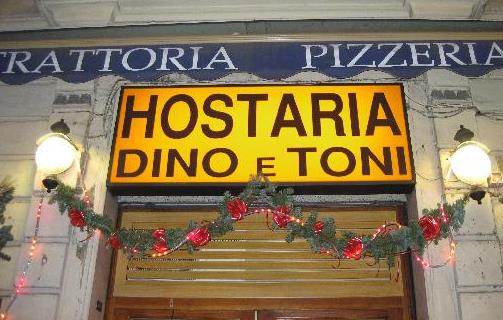
dino-tony.jpg Dino & Tony's gets a fair amount of walk-in trade, since it's just two blocks from the Vatican Museum metro stop, not far from the tony Prati neighborhood. But its principal traffic has always come from "in-the-know" locals who say it's home to "the best spaghetti all'amatriciana" (pig's cheek) in Rome.

The thing about Italian food, we should remind you, is that it's not fussy. There's a time and a place for tablecloths and fancy china, but it's not what you'll find at Dino & Tony's. The lighting comes from fluorescent bulbs; the paint job is a hallucinatory shade of green. Tony once cooked at the White House; an apron autographed by George H.W. Bush hangs on the wall as proof. The servers bustle: prosciutto crudo, salami, two kinds of pizzas, a plate of chicory in pastry, croquettes, carciofi alla giudia (deep-fried artichokes). The carbonara is served with rigatoni; the pasta alla gricia is "dry," no sauce except the pig's cheek.

Puntarelle.JPG. The most "Roman" item on the menu is a salad of crunchy chicory shoots called puntarelle. It's a pain to prepare the greens properly at home, so they're sold ready-to-eat in local markets, but kept in water until they're ordered and the tangy garlic & anchovy dressing is added. Making one's own killer dressing for puntarelle is a point of pride for Roman cooks.

A portion of herb-infused suckling pig was one of the main courses, the other was another typically Roman dish, trippa alla Romana, marvelously tender honeycomb tripe in tomato sauce. Your wine, a liter of unremarkable red, is included, as is a post-prandial limoncello.

Apps at der Belli.JPG
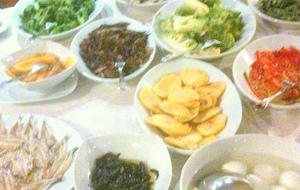
The Osteria der Belli stands out for its high quality seafood in a gentrified neighborhood, Trastevere, known for its banal tourist fare. Not everyone gets it. The standard meal begins with a flurry of appetizers, brought to the table half a dozen at a time: three types of shrimp (sgambetti rossi, scampi, gamberetti), anchovies, squid, octopus, mussels, sardines, three or four kinds of bread, an excellent bottle of Vermentino di Gallura. You could make a meal of them, but save room, even if you skip the pasta,  (they brought me an artichoke alla Romana instead); there's a whole branzino yet to come.

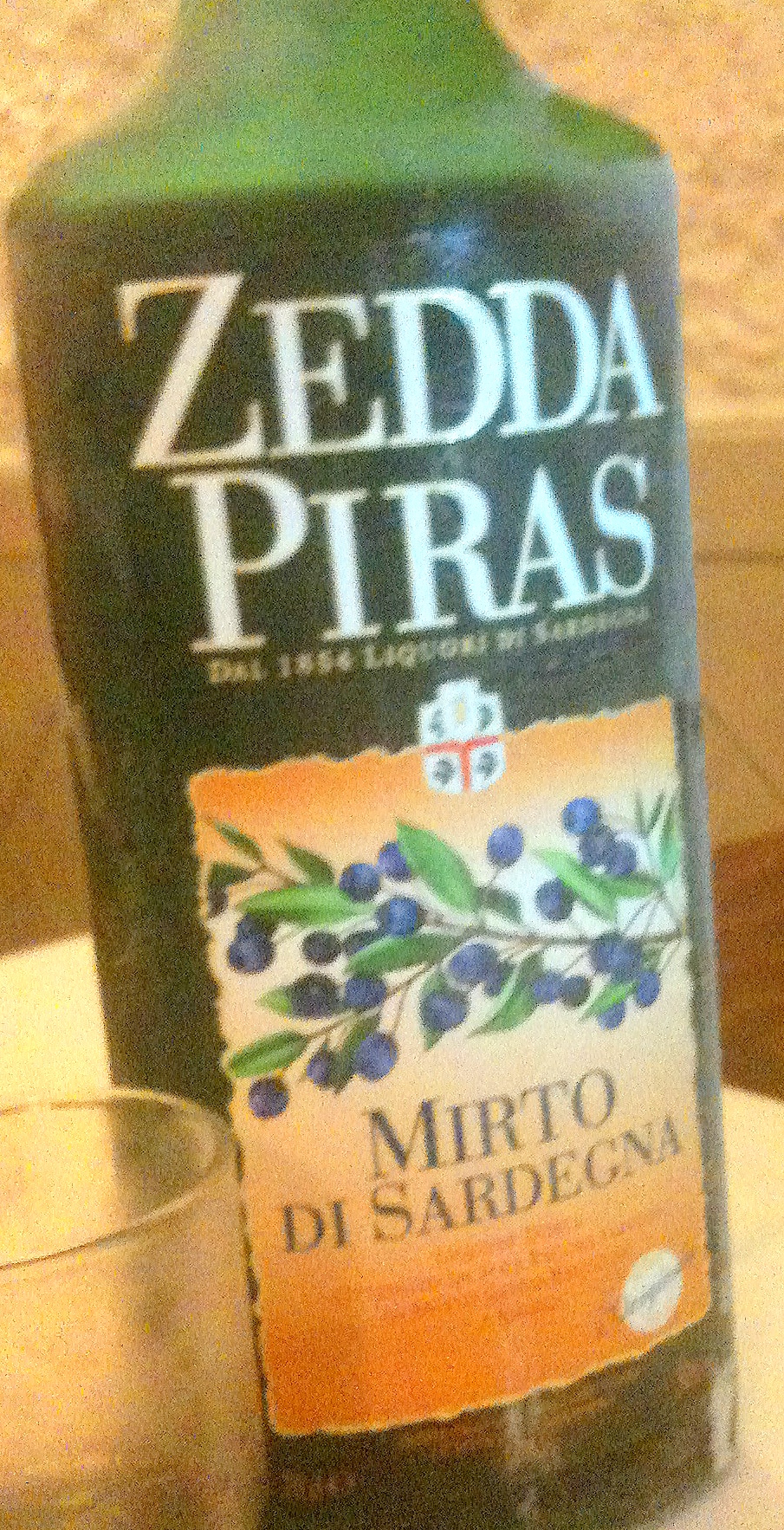
Finally, a shot of Mirto, a grappa distilled not from the blueberry fruit, as you might think, but its bark. From Sardinia, just like the four Piras brothers who run the place. 

Pricing. Yes, you can eat for less money all over Rome. A lot more money, too. But the fixed-price, whole-meal-deal at both of the restaurants mentioned here (virtually unlimited appetizers, two or three pastas, two or three main courses, dessert, wine, coffee & digestivo) is no more than $50. You can get away for less by ordering à la carte, but why would you want to do that when you've come this far to eat like a true Roman? 

Dino & Tony, Via Leone IV 60, 00192 Rome, Tel 06 397 332 84
Osteria der Belli, Piazza S. Apollonia, Trastevere, 00153 Rome, Tel 06 580 2781


Colosseum photo by Andreas Tille, Wikipedia

Tuesday, November 29, 2011

Cooking at the Top of the World

Ciociarria.JPG

CASTRO DEI VOLSCI, Italy--Welcome news on the travel front: Casa Gregorio, a bed & breakfast and cooking school here in the countryside south of Rome, is bringing style and vitality to this perfectly restored medieval village.

Castro church at dawn.JPGThis area, known as the Ciociaria, is a long valley between Rome and Naples, hemmed in by steep, forest-covered hills (the Apennines--Italy's spine--to one side, a coastal range to the other) and saw some of the heaviest fighting during World War Two at Monte Cassino. (In the shameful aftermath of the Allied victory, renegade Morroccan troops pillaged the countryside; Vittorio De Sica's movie Two Women, with Sophia Loren's Oscar-winning role as the mother of a brutalized teenager, was called La Ciociara in Italian.)

The Ciociaria is often overlooked by travelers drawn the romance of Tuscany, to the north, or the glamour of the Amalfi Coast, to the south. In fact, the corridor is traversed by the A1 motorway; Italy's fastest train, the Frecciarossa, makes the 150-mile run between Rome and Naples down the center of the Ciociaria, in a just over an hour. Yet the Ciociaria was named an area of national interest for its panoramic views and fine food.

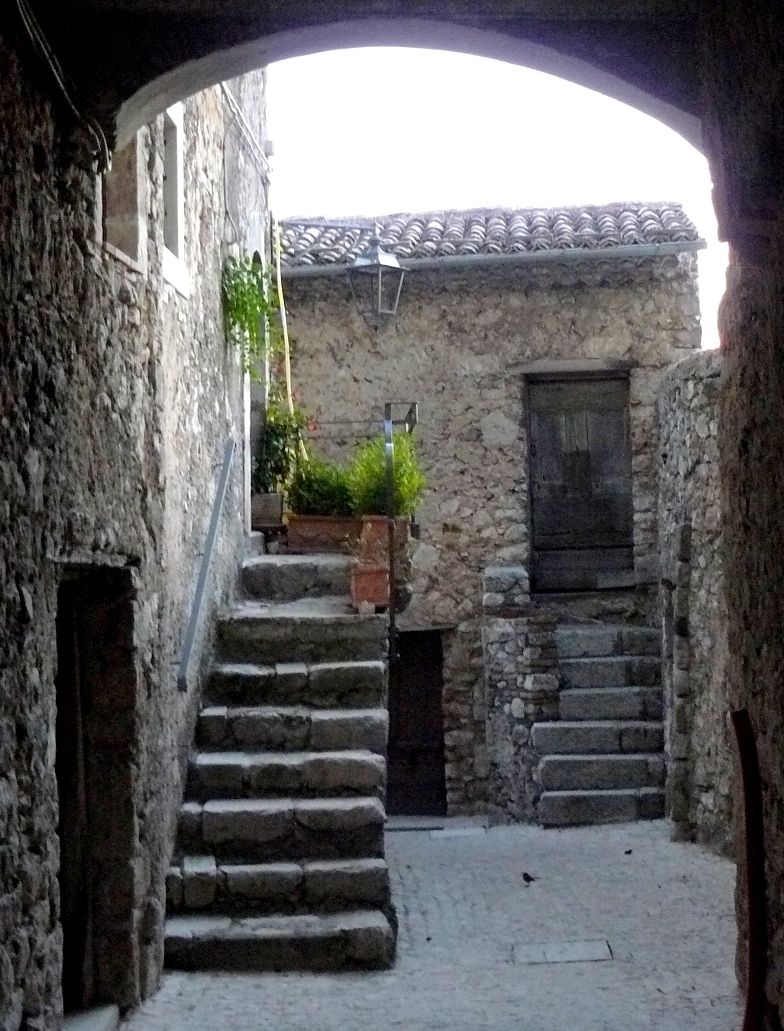
Doorway in Castro.JPGCastro dei Volsci--the stronghold of the Volsci clan back in the 15th and 16th centuries--sits atop one of the hills overlooking the valley. The village itself is a meticulously restored community of 300 or so inside the walls and a couple thousand folks who live on surrounding farms. A minibus comes up from the valley several times a day; private cars park outside the walls. There's a post office, a bakery, a couple of shops and cafes, and then there's Casa Gregorio, which combines a taverna for the locals (open weekends for now, soon to open daily), a professional kitchen, elegantly appointed living quarters and five luxurious guest rooms with private baths.

It's taken Gregory Aulensi three years to restore the property, which, ironically, he never set out to purchase. A successful decorator in Florida, he had decided to move to Rome in search of a simpler life. His father, though, had been born in Castro dei Volsci, and one day Gregory returned to the village for a wedding. The property next door to his father's house happened to be for sale: an interconnected series of houses, workshops and terraces built into the village walls, 12,000 square feet in all. The price was no more than a studio apartment in Rome, so, in the Italian tradition of spontaneity, Gregory made the life-changing decision to buy it.

Kitchen at Casa Gregorio.JPGNow he's offering cooking classes in a perfectly equipped kitchen to his B&B guests, who also get his personal attention throughout their six-night programs. You don't need a car of your own; Gregory's vehicles are comfortable sedans and minivans. You don't need to be a professional chef, either; the local women who come in to demonstrate pasta-making or vegetable carving are patient to a fault. Visits to a vineyard and an olive mill are part of the program as well. And if you happen to be there over a weekend, you can stop in at the agriturismo at the bottom of the hill, Il Rusponte, and enjoy the copious farmhouse lunch we described in a post back in October.

Gregory has launched an ambitious cultural heritage program for "his" village, which has even attracted the attention of Italy's RAI television network. The video is here, picturesque scenery, muddy buffalo herd, cooking class and all, though it's in Italian.

Bookings through The International Kitchen, which made arrangements for my visit.

Sunday, November 27, 2011

The Masserias: Puglia's Fortified Farms

Sunrise at Borgo Egnazia.JPG

PUGLIA, Italy--You arrive over a road whose pavement is, shall we say, rustic, as it traverses a grove of ancient olive trees with trunks so twisted they could be posters for a menacing horror movie. You bluff your way past the gate (honk, wait for it to open; US border security should be so lucky!) and pull into the parking lot of the Masseria Torre Coccaro, one of several dozen masserias, historic farmhouse properties on the lowlands facing the Adriatic.

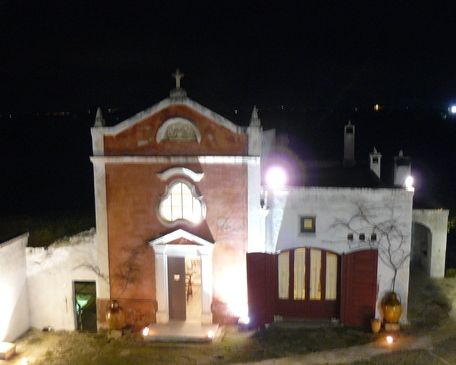
Chapel at Masserie Torre Coccaro-thumb-560x420-1420.jpgPirates were once a real threat along the coast, so the farms and villages tend to be based a few kilometers inland. There's a Fort Apache or Alamo feel to these masserias, many of them refurbished as four- and five-star hotels for tourists, with plenty of banquet space for local weddings and conventions, sometimes with golf courses attached, often with a stretch of private beach (reached by shuttle bus).

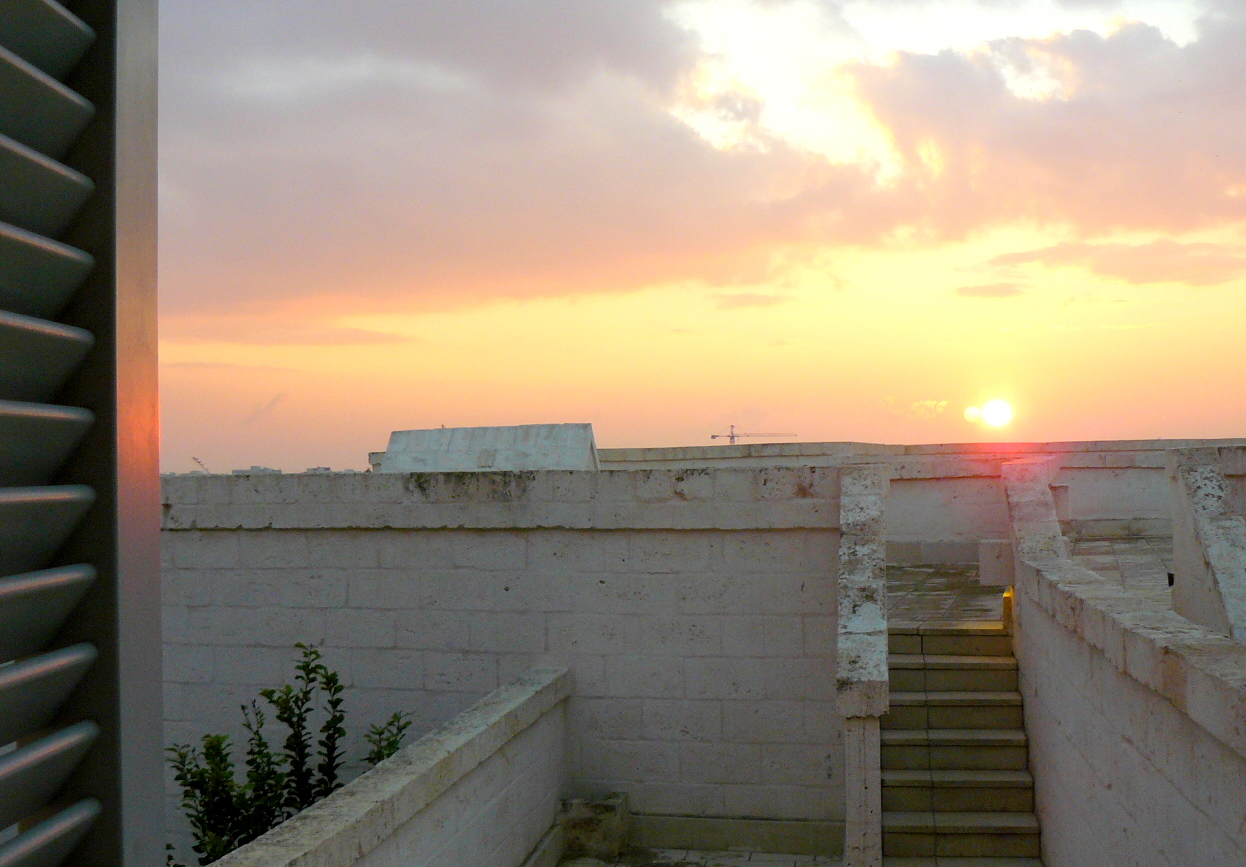
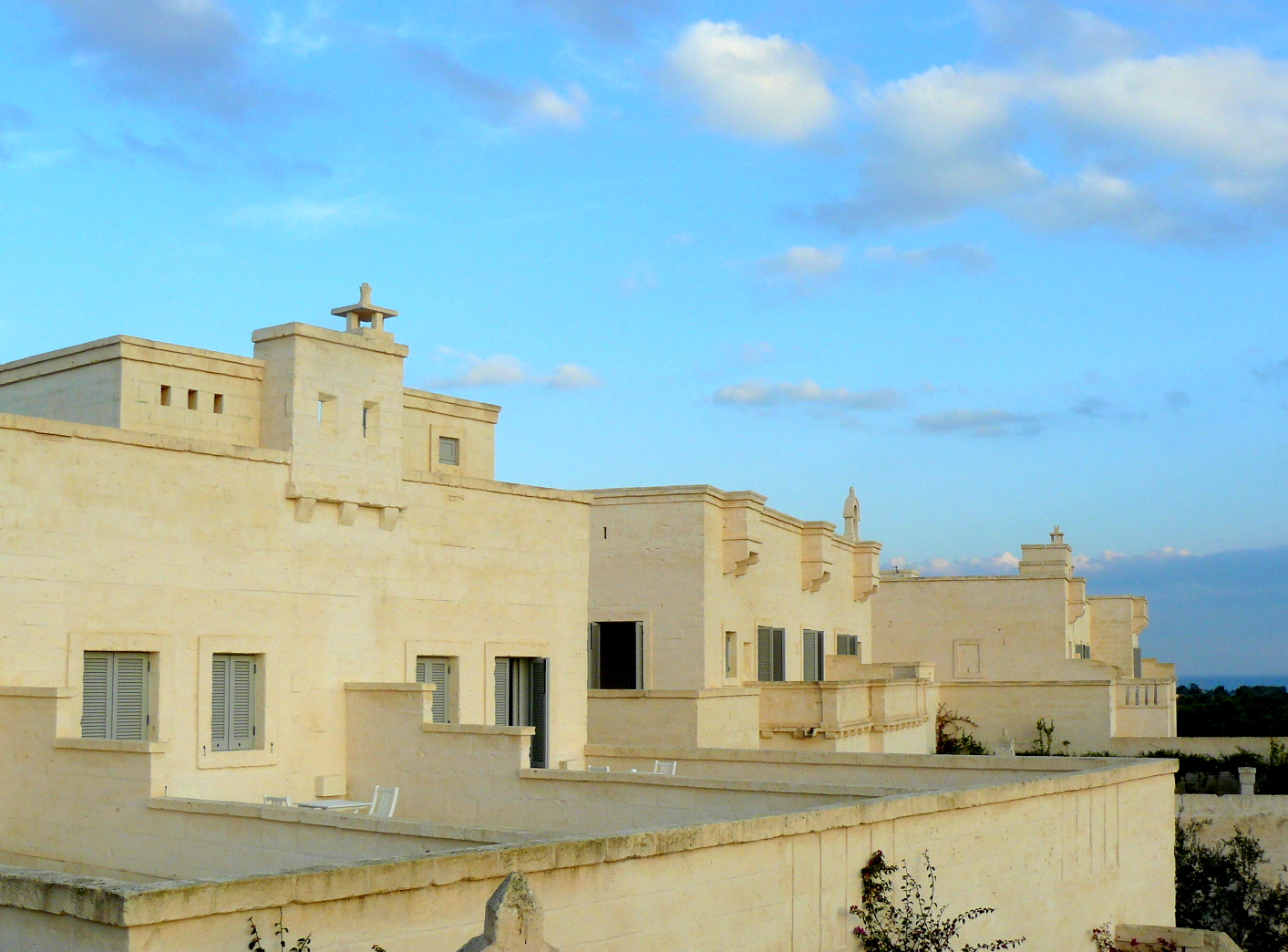
Not all are genuinely old, though. Borgo Egnazia (in the photos at top & bottom) is a two-year-old movie-set of a village built, literally from the ground up, with the local beige-white limestone. The owner, Aldo Melpignano, is said to have designed the Borgo himself, adding a cluster of villas surrounding the central "fort.." Local designer Pino Brescia decorated the expanses with vast quantities of unexpected objects (bottles, keys, laddders, old newspapers, twigs and branches, candles, birdcages). Marble hallways lead to cavernous rooms with high-tech lighting (which I couldn't figure out), high-thread-count sheets, and phones that rang on their own in the middle of the night. The Borgo's spa catalog ("Vair") is a study in psychobabble, with two dozen treatments getting their own names in ancient dialect ("Loma Kian") and descriptions ("..inspired by Orthobionomy"; "....will help you fall like raindrops on your back...to reconnect to your emotions." Not cheap, eather: a manicure is nearly $100.

Okay, I'm not the target market. Unfair to complain. Point being, though, that Puglia may be the far southeastern tip of Italy, only 25 miles across the Aegean Sea from Greece and Albania, but it's thoroughly modern when it comes to upscale accommodation and luxury services.

Note: My trip to Puglia was sponsored by the Italian Travel Promotion Council in conjunction with Italy's Natonal Tourist Board.

Borgo in Puglia.JPG

Sunday, November 20, 2011

Italy Needs a New Pair of Shoes

Shoes in Bari.jpg

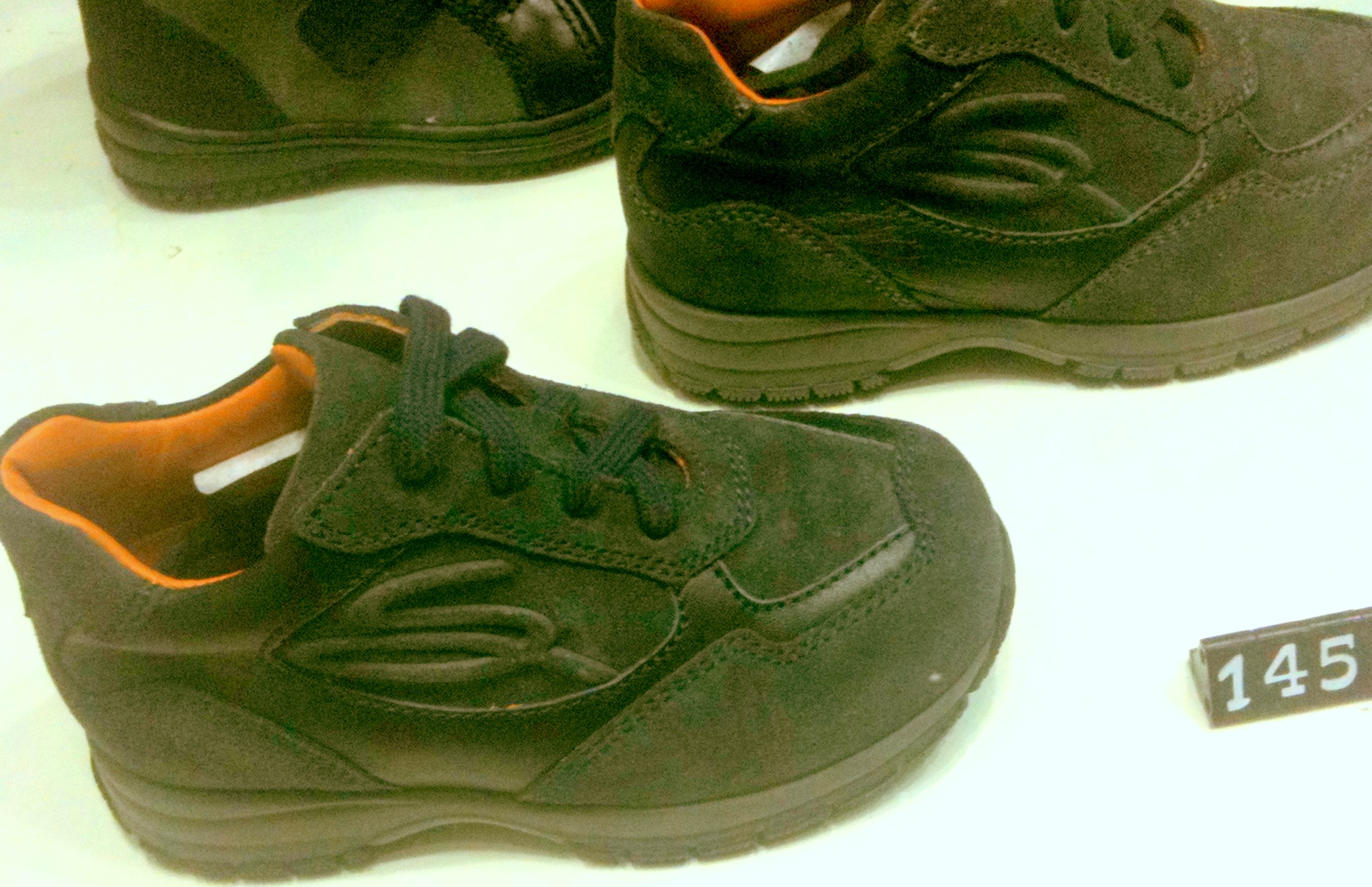
Italy, baby, you need a new pair of shoes. We know that, and we're doing what we can to get you some. But not these, not at those prices. Look: 145 euros is 200 dollars and change. You can't afford them on your own, and there's no way we can pay those prices to bail you out.

--Photo taken Friday night in Bari, the capital of Italy's Puglia region, where I was a guest at a symposium sponsored by the Italian Government Tourist Board and the Italian Travel Promotion Council.

Outrageous prices for shoes (and $800 or so for off-the-rack men's shoes in Rome is not unusual) would be hard to justify in the most prosperous of economies. Italy is just the latest European country to find that consumer spending is no help when the bond markets lose confidence.

One fix is to promote international tourism, especially to undervalued destinations like Puglia, the heel of the boot. Amazing art and architecture have been here for centuries, but to build five-star accommodations you need to create five-star demand, which is why the ITPC brings several hundred travel agents, tour operators and journalists to Italy every year.

These are momentous times for Italy's travel industry. We've commented before on the challenges faced by Italy, which comptetes with Spain, France, Croatia, Greece, Turkey, Israel, Egypt and Morocco for visitors to the Mediterranean. Then the Puglia region, little known outside Europe, which competes with the picturesque Cinque Terre, the glamorous Amalfi Coast, the art cities of Emilia-Romagna, the splendors of Florence, the glory of Venice. Doesn't help that Trenitalia just cut 30 trains a week of high-speed inter-city service to Puglia.

The question is whether the technocrat Piero Gnudi, the new minister of tourism & sports in the post-Berlusconi cabinet of Maro Monti, can do what's necessary to re-energize Italy's moribund tourism sector. His predecessor, a right-wing TV reporter ("Berlusconi bimbo") and animal-rights advocate named Michaela Vittoria Brambilla, was so tone-deaf when it came to tourism that she proposed banning the colorful Palio--run every August on the cobblestone streets of Siena--because it was "cruel" to the horses.

As an industry, tourism is made up of thousands of independent businesses, from hotel chains to private citizens who rent out their villas, from local tourist bureaus to bus companies. (Even stores that sell hiking gear to visitors.) Getting everyone to agree on a strategy and a marketing campaign is like herding cats.

So maybe Gnudi is the right guy after all. Electric utilities know what's happening on the ground level, monitor the output of every transformer at every neighborhood substation. Gnudi ran Italy's NL for a decade, so maybe he's the right man to give the system a jolt. He's not going to worry about horseshoes.

Friday, November 18, 2011

Puglia: Ancient Stones, Modern Poltics

Trulli in Alberobello.jpg

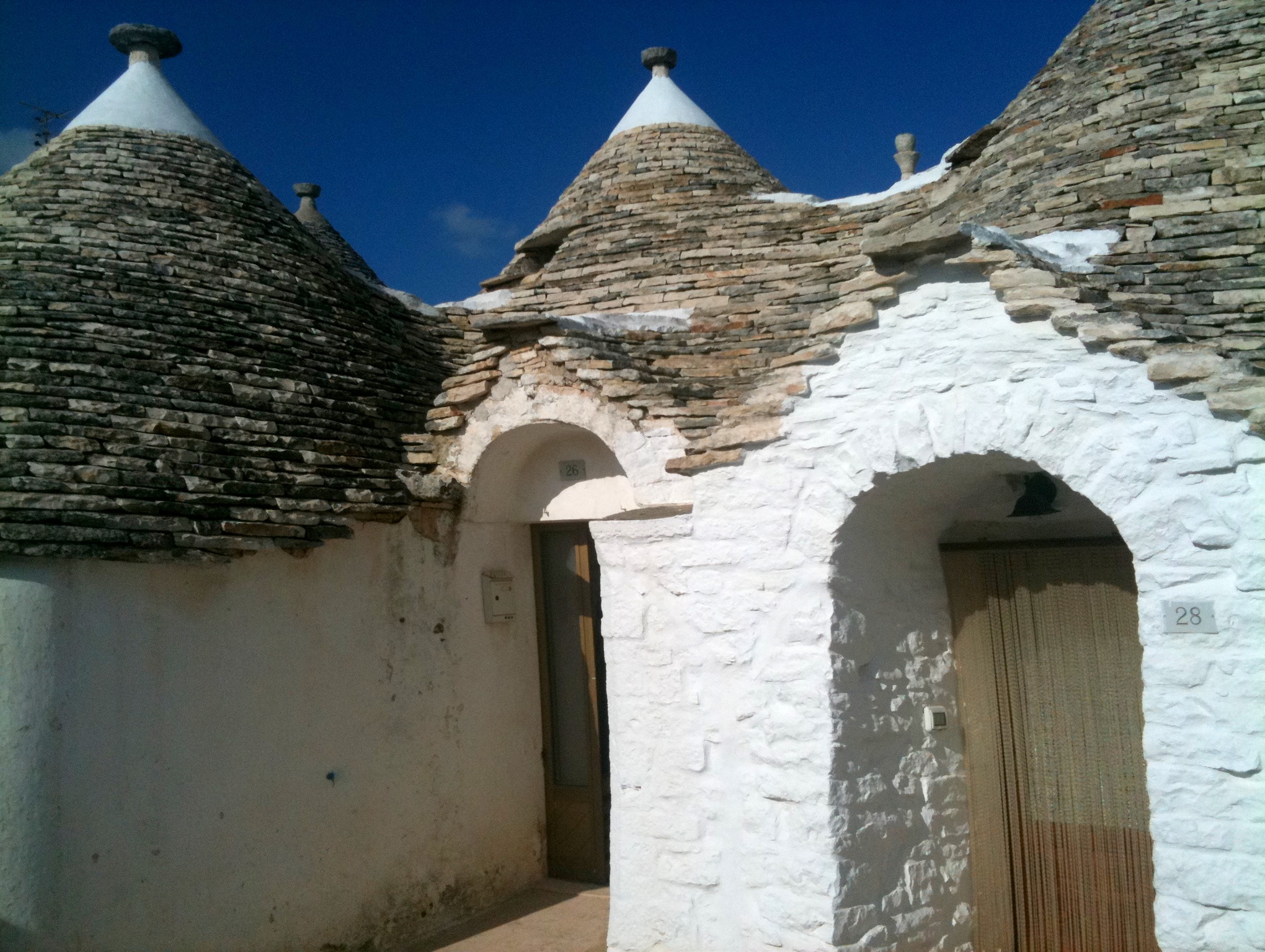
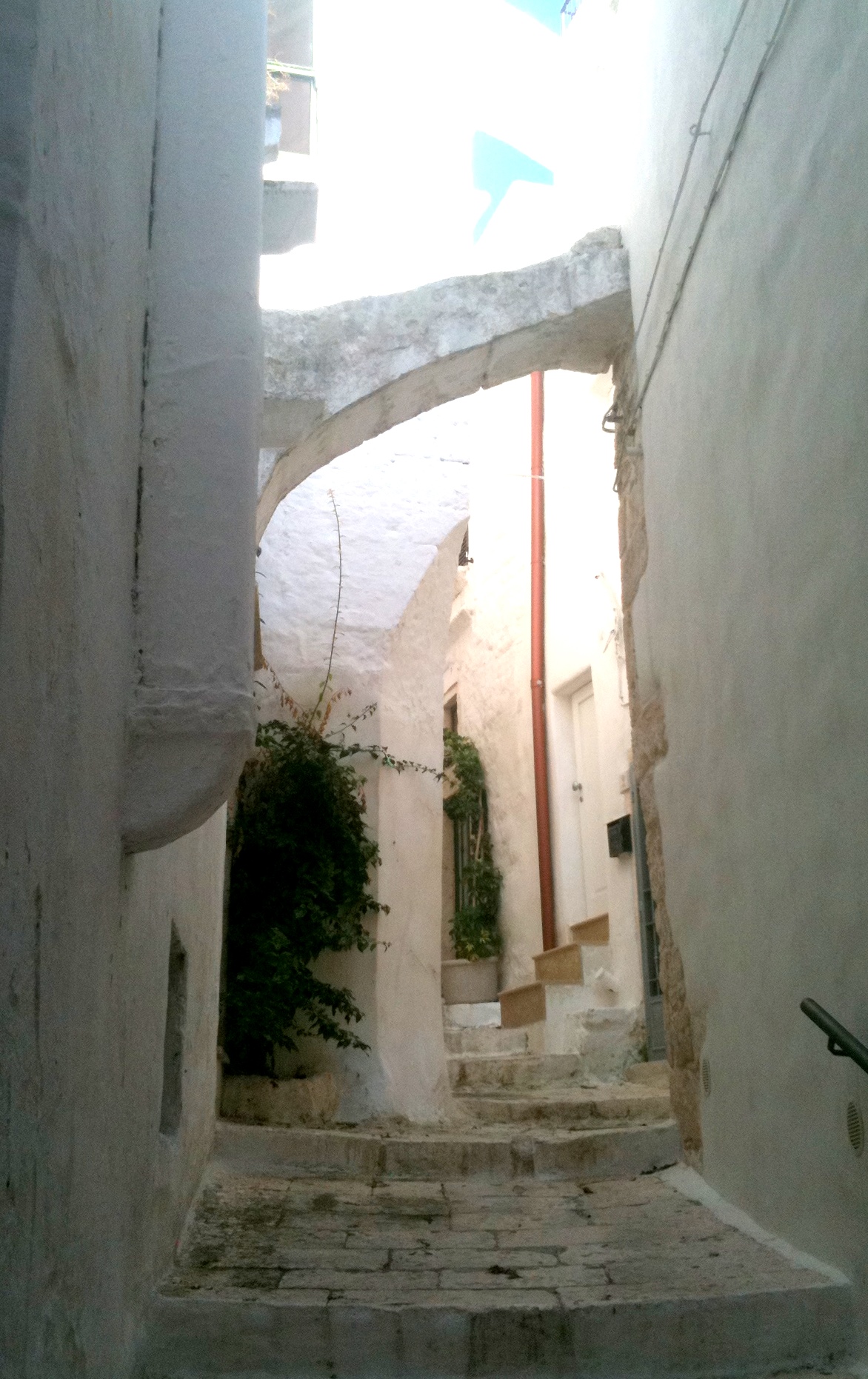
Conical, slate-roofed houses called Trulli in the UNESCO world-herItage village of Alberobello. Below, an alleyway in the hilltop town of Ostuni

PUGLIA, Italy--The good news, it's safe to say, is that right-wing Berlusconi bimbo Michaela Vittoria Brambilla is no longer Italy's minister of tourism. The one-time TV reporter, known for her long legs, red hair and fiery disposition, had been roundly criticized for spending eight million euros on a useless website (italia.it), and was never able to articulate why Italy desperately needs to promote intself as a tourism destination. Some 20 years ago, in a public vote, self-satisfied Italians even voted to do away with a formal tourism agency, forgetting that vacation expenditures and taxes contributed by visitors provide essential funding for basic local nservices. Within a short time, Italy was overtaken by France as the world's most popular tourist destination, and tourism outside the Rome-Florence-Venice corridor has stagnated. Here in Puglia, the heel of the Italian boot, a 45-minute flight from Rome, it's mostly sun-bathing German families lying cheek by jowl along the sunny Adriatic beaches. There's hope--not a lot, but hope nonetheless--that the new guy, a 73-year-old industrial engineer without political experience named Piero Gnudi, will "get it," but Gnudi management career was running Italy's national electric utility, a classic top-down hierarchy that bears little resemblance to the "herding cats" model of international tourism. In fact, managing a state monopoly is poor preparation for the competition Italy faces in troubled economic times: it's probably the most expensive destination in the Mediterranean (compared with France, Spain, Croatia, Greece, or Turkey), although this corner of the country can at least boast that it's affordable. Compared to Tuscany, anyway.

Nichi Vendola, the popular governor of Puglia, has expressed cautious support for the new Monti administration. An earring-wearing member of the left-wing Green party, he has a wider vision than most: Puglia is a gateway to the eastern Mediterranean; its stones speak many languages, its olive trees outnumber its citizens by 12 to 1. His deputy for tourism, Silvia Godelli, speaks of the region's attractions: its light, its flavors and smells, its antiquities. But only 25,000 of Puglia's 4 million visitors are Americans; it's not an easy sell

Americans spent $80 billion on overseas vacations last year, and there isn't one who doesn't want to visit Italy (according to the polls, ideally within the next couple of years) And Italy meets the three top criteria for a foreign destination (safe, affordable, scenic). That's why Italy's national tourist board, ENIT, and the Italian Travel Promotion Council (an association of 19 American tour operators) have sponsored this symposium for travel agents: so they'll know more about Puglia and convince more of their clients to come here.

Alleyway in Ostuni.jpgAll this as prelude to the scenery.

Take Ostuni, for example. You look at the narrow streets, whitewashed walls, and bright blue sky, and you might think you're on a Greek island in the middle of the Aegian. But no, the water out there, less than five miles away, is the Adriatic. The town is called Ostuni, a fortified town in the Middle Ages atop a limestone cliff, settled since prehistoric times. The influence of Greek architecture is understandable, as are design elements from North Africa.

Half an hour away, atop the Murgia plain, you find several hundred peculiar cylindrical dwellings called Trulli, with cone-shaped roofs are built without mortar from slabs of limestone. They're not like teepees or the chimney-houses of eastern Turkey; there's a separate stack at the side to vent the kitchens. You can buy your own trullo, should you want to abide by the strict historic-preservation standards, for 100 grand. A studio in one of the white-washed buildings of Ostuny, on the other hand, runs about twice that.