Showing posts with label cooking demonstrations. Show all posts

Sunday, March 11, 2012

Ribollita: 3rd (or 4th) time's a charm

By now, you know Pamela Sheldon Johns, right? She's the American author of a whole shelf of Italian cookbooks who settled in Tuscany over ten years ago after she and her husband, an artist, bought an olive grove outside Montepulciano. Johns turned the guest house into a B & B, Poggio Etrusco, and began teaching cooking classes to groups of American visitors.

Her latest book, enthusiastically reviewed on Cornichon last month, is titled Cucina Povera. Unlike books filled with fancy recipes and exotic ingredients, it celebrates (if that's the right word) the simplest preparations, the cuisine of privation.

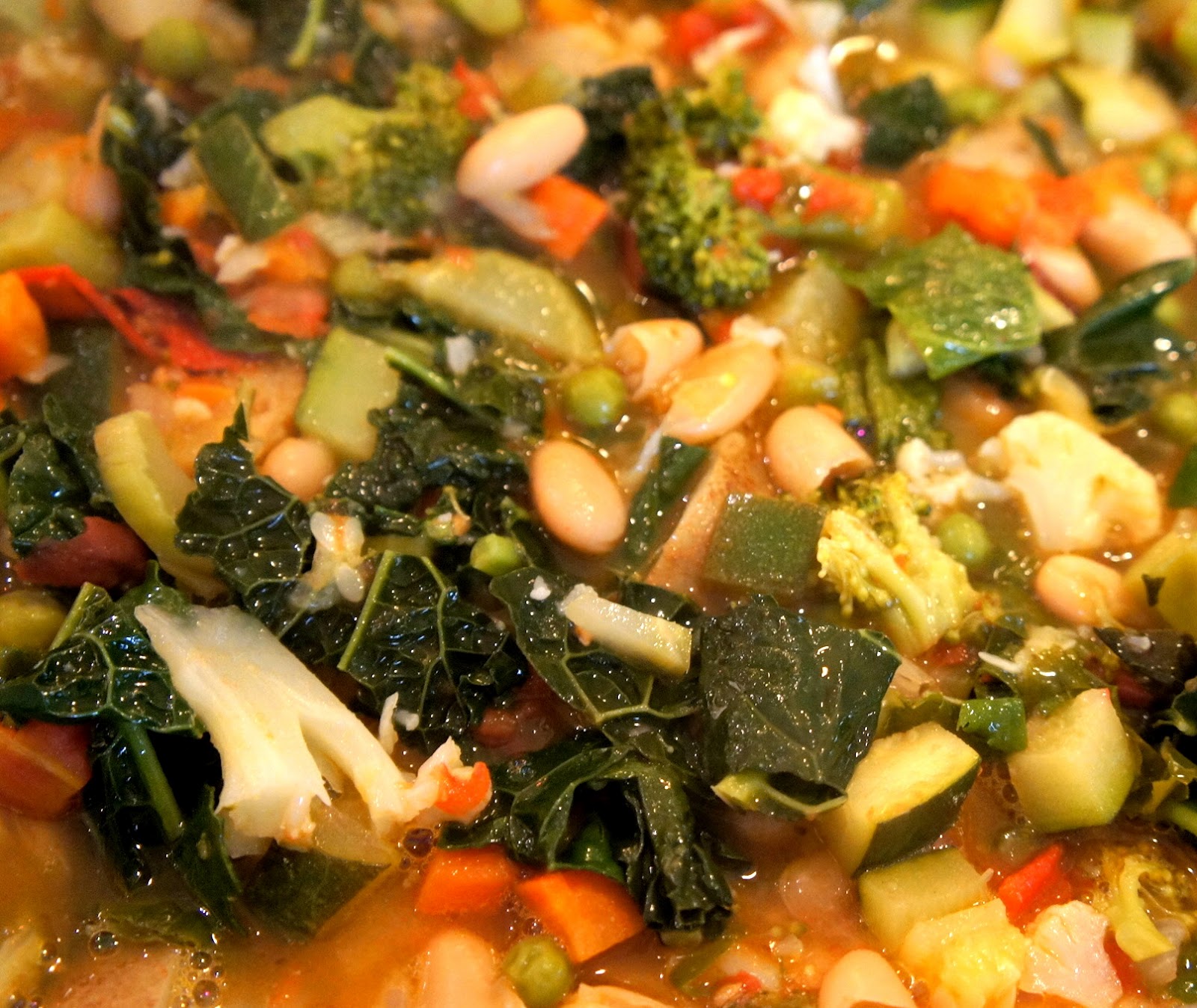
TheTuscan philosophy is exemplified by the successive uses of its basic vegetable soup, minestra di verdure. Gently sweat a sofrito of onions, carrots and celery in a bit of olive oil. One by one, add vegetables, from hard to soft: cavolo nero (dark kale, also called locinato), potatoes, broccoli stems, chopped stems of mustard greens, zucchini, the green leaves, eventually some roughly chopped canned tomatoes and cooked cannelini. Don't add liquid until the very end. Specific vegetables aren't as important as balance: sweet (herbs like parsely and celery), aromatic (thyme, fennel) and bitter (mustard greens).

If you add hot water or stock, the flavor stays in the vegetables. If you use cold water, the flavors will leach into the liquid. That's what you want.

The first day you have the minestra di verdura, your baseline vegetable soup, drizzled just before serving with extra virgin olive oil. The second day, you slice up your old, dried bread and layer it with the soup, and it becomes a minestra di pane. Tuscan bread is made without salt, so it dries out quickly. If you make this dish at home, you'll need to dry out your bread in a warm oven.

The third day, you add a bit more liquid and a bit more bread and bake it in the oven. That's minestra di pane al forno. It's the very incarnation of a country dish, flavorful and belly-filling, made from nothing, feeding both body and soul for days on end.

And on the fourth day, you take the leftover baked soup out of the pot, brown it in a skillet and eat it with a knife and fork. This is the ultimate ribollita, "recooked" vegetable stew.

Johns got as far as the "bread soup" stage at a two-hour cooking class last week at Diane's Market Kitchen in downtown Seattle. "You have so much more here in the Northwest than we do in Italy," Johns told her students, referring to the abundance of the farmers markets. It would have been unimaginable to the Tuscans she wrote about in Cucina Povera, who scraped by on nothing. And yet, they would agree with what the cobbler in Montepulciano said, "We were better off when we were worse off."

Diane's Market Kitchen, 1101 Post Avenue, Seattle, WA 98104 (206) 624-6114 
Poggio Etrusco via FoodArtisans.com

Sunday, February 19, 2012

The Bittersweet Glory of Cucina Povera

Angelo Pellegrini, the sage of Seattle's culinary revolution in the 1960s, grew up in Tuscany, where he would gather up roadside cow pies and sell them for fuel to earn a few coins. That's hardly the boyhood one expects for a revered professor of literature at the University of Washington, but it was not an unusual story.

In the first half of the 20th century, southern Europe was racked by unimaginable poverty. Millions fled toward land they hoped could feed them; those left behind boiled and ate whatever they could find. And when there's literally nothing to eat, one invents. Vegetables, maybe, if they'll grow. Game, perhaps, if it's available (squirrel and possum on the North American continent), otherwise milk from a scrawny cow, flour milled from chestnuts or bread baked without salt because salt is too expensive.

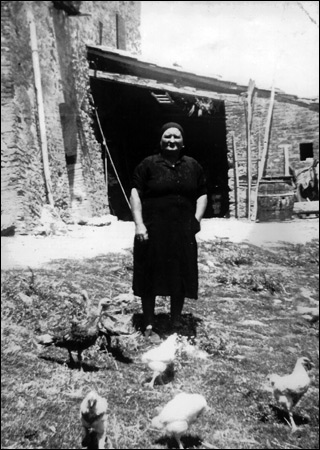
vintage_poggio_etrusco.jpgWhat's remarkable is that those dark days, whose details are vividly recalled, decades later, by survivors at the end of their lifespan, produced a culinary culture that is nothing short of glorious. Their stories, as recounted by Pamela Sheldon Johns in her new book, Cucina Povera, "were sad, bitter and desperate." Almost every person she interviews says the same thing, "We had nothing to eat," yet their memories of the food they did have (and that enabled them to survive) were almost always pleasant.
This compilation, the food of hard times, the cooking of the poor, turns Cucina Povera (subtitled Tuscan Peasant Cooking) into the most positive book I've reviewed in years.

Johns is on a US tour this winter to promote her book and to teach private classes. She'll be in western Washignton for ten days in early March, and will teach a couple of classes at Dianne LaVonne's Market Kitchen (1101 Post Alley in Seattle) at 6 PM on March 7th and at noon on March 9th. There's still space for a couple of other classes; check the Food Artisans website.

To be fair to the long-established scholars, it's a landscape that's been plowed before, especially by Lynn Rossetto Kasper, another culinary writer (and public radio host) with Italian-American roots whose books have been honored by the James Beard Foundation and the International Association of Culinary Professionals. Half a generation ago, Rosetto Kasper called this the cooking of ingenuity. "You take what the land gives and you make something of it," she wrote in The Italian Country Table (1999).

Bread baked without salt dries out within a day, to be revived with wine or stock or olive oil, giving way to ribollita (bread soup), panzanella (bread salad) and bruschetta (toasted bread with toppings). As winter subsides, tomatoes ripen and their flavor explodes. Pigs become prosciutto (not to mention guanciale, porchetta, coppa, culatello, pancetta, mortadella, lardo, lombata, speck, salami and so on), milk becomes cheese (from fresh ricotta to aged Parmegiano). Fruit can be preserved with sweet grape must or honey if there's no refined sugar.

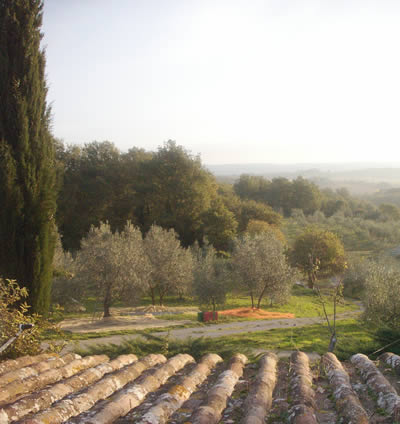
olive_orchard_view.jpgCucina Povera is a collection of some five dozen recipes that should make the reader appreciate the ease of modern cooking as well as the depth of flavor that comes from unprocessed food. Johns is an American food writer who now lives on a farm in Tuscany, Poggio Etrusco, outside Montepulciano, where she teaches culinary workshops. Almost every recipe is accompanied by a deftly drawn profile of an Italian friend who recalls the days of true poverty. The ingredients are accessible, the methods are straightforward, the accumulation of the recipes is one of joy and plenty.

There's one for acquacotta, for example, that's a sort of stone soup: nothing but coarsely chopped vegetables for flavor, with a poached egg and a crust of crust of country bread. Dandelion greens or arugula leaves provide a savory filling for a six-egg frittata. A recipe for ricotta cheesecake needs only half a dozen ingredients (eggs, milk, sugar, lemons, flour, baking powder), can be assembled in 15 minutes, baked for 35, and enjoyed for dessert.

I admit to a couple of instances of confusion. I always thought "guanciale" refered specifically to the jowls of a pig, not cows. Sure, bovines have jowls, and restaurants (even in Seattle) offer dishes featuring beef cheeks. But it you're going to call something guanciale, it better be pork. Perhaps it's just a Tuscan thing.

Second, the classic white sauce of European cuisine--butter or oil, flour, milk or cream--is Béchamel in French, Besciamella in Italian, not "Balsamella." It's called Béchamel because its "inventor" was a specific historic personage, a 17th Century nobleman named Louis de Béchameil, the Marquis of Nointel. A velouté with a lot of milk or cream added. Again, perhaps it sounds like "Balsamella" in Tuscan dialect. Pseudo-Italian TV chef Emeril Lagasse calls it Balsamella, too, but that's probably what they call it on the Jersey Shore. ( (Indeed, Johns sent me a Facebook message, after this piece had run on Crosscut.com, saying that guanciale can refer to animals other than pigs, and that balsamella is what they call it where she lives.)

No discussion of this book would be complete without an enthusiastic endorsement of the photographs, by Andrea Wyner: portraits that evoke the hard lives the Tuscan elders have lived, as well as refreshing reinventions of Tuscany's landscapes.

Cucina Povera: Tuscan Peasant Cooking, by Pamela Sheldon Johns, Andrews McMeel Publishing, 186 pages, $21.99

Tuesday, November 29, 2011

Cooking at the Top of the World

Ciociarria.JPG

CASTRO DEI VOLSCI, Italy--Welcome news on the travel front: Casa Gregorio, a bed & breakfast and cooking school here in the countryside south of Rome, is bringing style and vitality to this perfectly restored medieval village.

Castro church at dawn.JPGThis area, known as the Ciociaria, is a long valley between Rome and Naples, hemmed in by steep, forest-covered hills (the Apennines--Italy's spine--to one side, a coastal range to the other) and saw some of the heaviest fighting during World War Two at Monte Cassino. (In the shameful aftermath of the Allied victory, renegade Morroccan troops pillaged the countryside; Vittorio De Sica's movie Two Women, with Sophia Loren's Oscar-winning role as the mother of a brutalized teenager, was called La Ciociara in Italian.)

The Ciociaria is often overlooked by travelers drawn the romance of Tuscany, to the north, or the glamour of the Amalfi Coast, to the south. In fact, the corridor is traversed by the A1 motorway; Italy's fastest train, the Frecciarossa, makes the 150-mile run between Rome and Naples down the center of the Ciociaria, in a just over an hour. Yet the Ciociaria was named an area of national interest for its panoramic views and fine food.

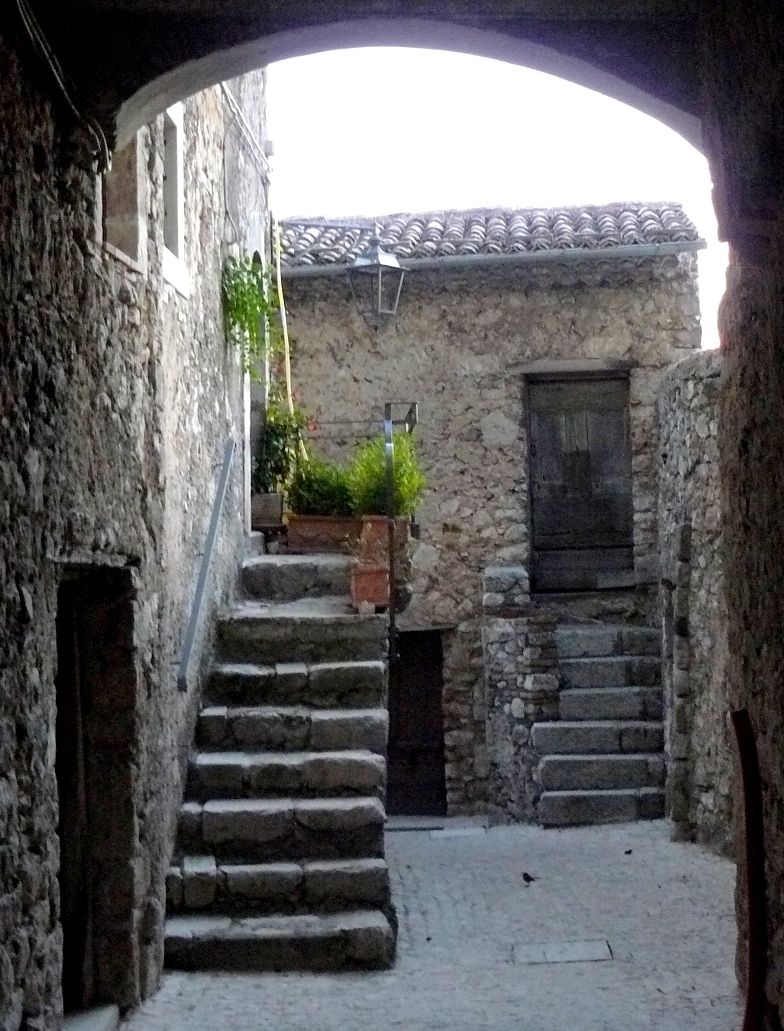
Doorway in Castro.JPGCastro dei Volsci--the stronghold of the Volsci clan back in the 15th and 16th centuries--sits atop one of the hills overlooking the valley. The village itself is a meticulously restored community of 300 or so inside the walls and a couple thousand folks who live on surrounding farms. A minibus comes up from the valley several times a day; private cars park outside the walls. There's a post office, a bakery, a couple of shops and cafes, and then there's Casa Gregorio, which combines a taverna for the locals (open weekends for now, soon to open daily), a professional kitchen, elegantly appointed living quarters and five luxurious guest rooms with private baths.

It's taken Gregory Aulensi three years to restore the property, which, ironically, he never set out to purchase. A successful decorator in Florida, he had decided to move to Rome in search of a simpler life. His father, though, had been born in Castro dei Volsci, and one day Gregory returned to the village for a wedding. The property next door to his father's house happened to be for sale: an interconnected series of houses, workshops and terraces built into the village walls, 12,000 square feet in all. The price was no more than a studio apartment in Rome, so, in the Italian tradition of spontaneity, Gregory made the life-changing decision to buy it.

Kitchen at Casa Gregorio.JPGNow he's offering cooking classes in a perfectly equipped kitchen to his B&B guests, who also get his personal attention throughout their six-night programs. You don't need a car of your own; Gregory's vehicles are comfortable sedans and minivans. You don't need to be a professional chef, either; the local women who come in to demonstrate pasta-making or vegetable carving are patient to a fault. Visits to a vineyard and an olive mill are part of the program as well. And if you happen to be there over a weekend, you can stop in at the agriturismo at the bottom of the hill, Il Rusponte, and enjoy the copious farmhouse lunch we described in a post back in October.

Gregory has launched an ambitious cultural heritage program for "his" village, which has even attracted the attention of Italy's RAI television network. The video is here, picturesque scenery, muddy buffalo herd, cooking class and all, though it's in Italian.

Bookings through The International Kitchen, which made arrangements for my visit.

Monday, October 24, 2011

Enrica Cooks Venetian

VENICE--Enrica Rocca, native of Venice, resident of London, returns to her handsomely appointed loft in the Dorsoduro and gives cooking pointers to paying guests. "The recipe," she says offhandedly, "is a modern concept."

Is this serious advice or another example of the Italian gift for stylish improvisation? "Just put good things in, good things will come out," she continues. Were this truly the case, she'd be out of work. But she continues: "The ingredient most often lacking is common sense."

And there, in a nutshell, is the reason for cookbooks, for the popularity of TV cooking shows and glamorous cooking-school vacations (a business I've got a stake in, truth be told): a lack, not just of common sense but of confidence.

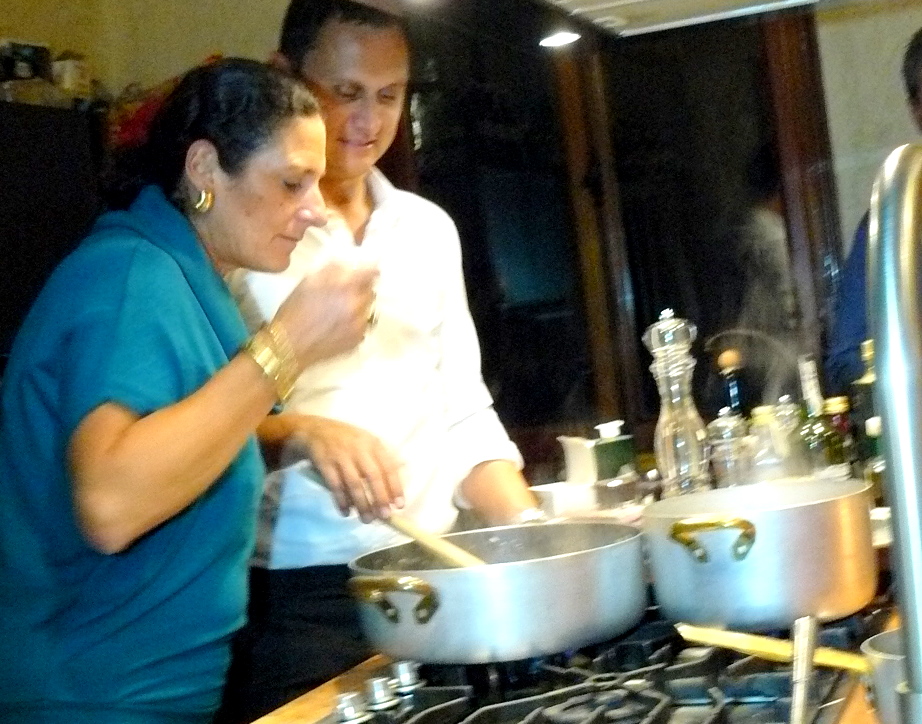
We're in what used to be the laundry of her family palazzo, a short walk from the Accademia bridge. A butler in a tuxedo pours prosecco while Enrica and a couple of volunteers help with the risotto. Carnaroli, not arborio rice, two to three ounces per person. Put the porcini mushrooms in first, so their flavor penetrates the rice. Use stock made from prawn heads, where the flavor is. Add the prawns themselves at the last minute so they don't overcook. Stir in some wild mint and lemon zest, along with a touch of heavy cream, and let the risotto stand, covered, for five minutes before serving. We sit on stools covered with the hides of springboks, dyed bright orange, and the prosecco gives way to a Soave.

Karen Herbst w Marco Giol.JPG
We--a coterie of international tour operators--been invited to this impromptu dinner as part of a travel project called PLANETT, Private Luxury Accommodation Network, designed by Marco Giol (the very well-connected man with the motor launch described in this post) to showcase the very best of a private, hidden Venice that most tourists will never see:. a private palazzo on the Grand Canal, a private castello in the vineyards, that sort of thing.

Enrica worries about culinary programs that promsie to teach "how to cook" in one day. ("Pretentious bullshit.") Instead, four basics: qualty ingredients, take the time to shop, read the labels, and remember that the very act of eating is fundamental. Then go fot it. "And if you fuck it up, that's what takeout is for."

Top: Enrica Rocca checks the risotto. above, Marco Giol with Karen Herbst of The International Kitchen.

Sunday, September 25, 2011

Historic gnocchi at Festa Italiana

Two strands to this story. One is current, Rossella Rago's "Cooking With Nonna" website and TV show. The other is historic, involving Sicily and Garibaldi.

Garibaldi is a hero in Italy, the military commander who, in 1861, "unified" the 20 regions of Italy and helped create the modern state. He's especially beloved in Sicily, for it was a single victory at the western port city of Marsala that made his reputation.

The strands came together this afternoon, when Enza Sorrentino, a native of Marsala, took the stage at the annual Festa Italiana at Seattle Center and prepared red, white and green gnocchi, the colors of the Italian flag.

Her restaurant on Queen Anne, Enza Cucina Siciliana, had come to the attention of Rossella, whose real mother and grandmother had helped her win an episode of the Food Network's "24 Hour Restaurant Battle" earlier this year. So Rossella made Enza, who has five grandchildren of her own, her honorary nonna of the day.

So there we have it: potato gnocchi rolled out, flavored and cooked in the space of half an hour.

The most remarkable thing may be that Rossella is only 23. She has poise and wit, charm and an unflappable stage presence, and, even more appealing, a profound respect for the wisdom of grandmothers everywhere. We're going to see a lot more of her.

- Posted using BlogPress from my iPad