Friday, August 19, 2011

Aperitivi and More at Artusi

Guests at Artusi
A year ago, I wrote features for both Crosscut and Cornichon about the ethereal, hand-cut pasta served at Jason Stratton's three-year-old, 30-seat Capitol Hill storefront, Cascina Spinasse. Since then he's doubled the size of the place and appended an entirely new venture, an Italian aperitivo bar called Artusi, where he continues to demonstrate levels of creativity and techinical prowess unique in Seattle.

Artusi occupies a quiet, signless corner at 14th and Pine. It has a high ceiling, a concrete floor, a neutral gray color scheme with bright yellow accent tiles and hand-rolled paper lampshades. There's seating for a total of 50 at two bars (one at the cooking station, one for cocktails) and a string of tables for two overlooking the sidewalk. The place is named for Pellegrino Artusi, a northern Italian silk merchant who wrote Italy's first post-unification cookbook ("The Science of Cooking and the Art of Eating Well"), wildly popular in Italy at the end of the 19th century and only available in English since 1997.

Borlotti beans with egg
The concept is for folks to come into Artusi for a drink at one of the counters, a cocktail or maybe a glass or two of wine, maybe a stuzzatino (snack) of fried capers ($3) or a crisp semolina wafer with fresh ricotta ($6), then meander over to Spinasse when their table was ready. They way you would in Italy. An aperitivo and a bite in a caffè or bar, then dinner somewhere else. And some folks, to be sure, do just that. But no sooner do you think that Seattle gets it, gets the Italian lifestyle, than you learn that many more folks don't want to leave for dinner at all.

Gulp! Seattle wants more: bigger portions, more full-meal options. Sheesh! But Stratton's not a dogmatic chef, he's the soul of attentiveness to what his customers want . (Helps that he's got a great staff of business professionals working with him.) So dinner-size portions it is.

Bobby Palmquist
Which brings us to Stratton's dilemma. Can't put handmade pasta on the menu at Artusi, that's cannibalizing his own specialty. So instead he's doing some remarkable dishes that can be prepped in the Spinasse kitchen and finished on the induction cooktop at Artusi: duck leg with prunes ($15), lamb braised with olives ($16), and the single best dish I've had in months: tripe with bone marrow and local black truffles ($16).

A lot of people, needless to say, have negative experiences (or negative expectations) about tripe.
"There's something deeply satisfying about taking such an overlooked and even off-putting ingredient and transforming it into something delicious and tender," Stratton tells me. "I've had many guests be surprised at how much they like it."

Tripe with bone marrow & black truffles
Beginning to end, the tripe dish is a three day process. First, Stratton's crew blanches honeycomb tripe (from Nicky USA, a specialty purveyor in Portland) in a vinegary poaching liquid with white wine onions, garlic and spices. The pot goes on a very low simmer for about an hour, with a cook standing by to skim off the scum as it rises to the surface.

Most of the "funk" contained in tripe lies in the fat, and poaching helps render it. After the tripe is chilled, the honeycombs are scraped with a spoon to remove the rest of the fat residing in the folds and near the valves of the stomach. Then it's cut into thin strips.

Meanwhile the cooks prepare a brodo, a meat broth that begins with a soffrito of finely diced carrot, celery, onion, garlic, chopped rosemary and a little sage, pancetta and prosciutto rind. After it caramelizes and gets deglazed with white wine, the trips is added back and simmered for another three hours. When it's done, the brodo is thick and stew-like.

Stratton's line cook (Bobby Palmquist on a recent evening) finishes the dish with a slice of grilled bread, julienned black truffles from Oregon (sourced by Jeremy Faber of Foraged and Found), and discs of bone marrow (from Silvies Valley Ranch), seared in a hot pan and added at the last minute.

"This is sort of a Northwest ode to cooking tripe in the style of Piedmont, where bone marrow is often used to enrich tripe dishes," Stratton explains. In any event, the tripe is rich and flavorful, with the texture of sliced mushrooms. The best wine? Schiopettino from Friuli, Primitivo from Puglia, Negroamaro from Siciliy, Canonau from Sardinia, Barbera from Piedmont. It's really a dish that transcends wine.

Artusi, 1535 14th Avenue, Seattle, 206-251-7673


Sunday, August 7, 2011

Ferragosto in Seattle


Ferragosto is Italy's big mid-summer festival, a combination of the Fourth of July and Labor Day. The actual date is always August 15th, the Feast of the Assumption, and big celebrations are held in seaside towns where vacationing Italians gather to listen to music and watch fireworks on the beach. (Far more civilized than Seafair.) The tradition predates Christianity; the festival was named for Augusto, the Roman emperor. Adding to the festivities, Ferragosto is almost always the week of the Perseid meteor shower, so the main celebration is often called "The Night of the Stars."

(In other countries, in other cultures, Assumption is known as Maria Himmelfahrt, la Fête de l'Assomption or Asunción de la Virgen. In Italy, it's known simply as Ferragosto.)

Two big events in Seattle this year. The oldtimer is Osteria La Spiga on Capitol Hill,which launched the local version of Ferragosto three summers ago. Their solution to the scheduling issue (a scant three weeks after Capitol Hill Block Party, a week after Seafair) is now to call the thing "12th Avenue Neighborhood Festival." It will be the second year for this formula, which includes $5 bites from a dozen or more restaurants along 12th.

The Ferragosto newcomer is Enza Cucina Siciliana (where, yes, I occasionally serve as maitre d' and sommelier) on Queen Anne. "Mamma Enza" Sorrentino, whose extended family also operates restaurants in Magnolia and Belltown, will prepare a seven-course "Night of the Stars" dinner on Sunday, Aug. 14th, and I'll be on hand to pour matching wines.

Wednesday, July 13, 2011

The Pope of Prosecco

Meet Pierluigi Bolla, scion of one Italy's first families. They used to own the giant, highly respected Bolla winery outside Verona, which they sold in the mid-1980s, to their American distributor, Brown-Foreman. Pierluigi's brother until recently was chief executive of Barilla, Italy's largest pasta producer. And he himself runs Valdo, the fourth-largest producer of Prosecco, the iconic sparkling wine from the Veneto.

Prosecco is made from the glera grape, with the sparkle coming in a second fermentation that takes place in large, stainless steel tanks called autoclaves; it's known as the Charmat method even though it was invented by an Italian named Martinotti. Sparkling wine is made all over northern Italy, but it can only be called Prosecco if it comes from a delimited area of the Veneto; the best comes from two DOCG regions, Valdobbiadena and Conigliano. Valdo, founded in the 1920s and purchased by the Bolla family in the 1940s, makes more Prosecco, 10 million bottles, than all the fancy Franciacorta producers put together! (There are several posts on www.Cornichon.org from my visit to Franciacorta last December. I'd link to them if I could figure out how to do it on the iPad.) Ten million bottles is also substantially more than the entire output of the Collio, where I visited just last month.

Impeccably turned out in a Brooks Brothers blazer, blue Oxford button-down and tie, Dr. Bolla presided over an Italian-style lunch at Serafina (bruschetta, calamari, ravioli, tuna, espresso). "Our biggest export market is Germany, then the UK," he said. "We've only been in the US for the past year, but we have some wonderful new products coming into the market." Like many, he was seduced by the potential of China, but abandoned that market after 20 frustrating years. His best sales are still at home; Italians drink three out of five bottles of Valdo.

Tuesday, July 12, 2011

A Seattle Twist on Vitello Tonnato

Vitello Tonnato is a staple of summer across Italy: poached veal smothered in a tuna mayonnaise and capers. It's an amazing flavor combination, not at all "fishy." But good veal is expensive and hard to come by, whereas boneless pork roast is readily available.

So Steve Smrstik, the veteran chef in the kitchen at Jackie Roberts's Pink Door, has come up with this porchetta tonnata, $11 as an appetizer, through September.

The Pink Door, 1919 Post Alley, (206) 443-3241

Monday, July 11, 2011

Americans Love Their Pizza


This is a "loaded" topic, since everyone's got an opinion. "I'm from Noo Yawk," they'll say, "and I know pizza." Or "South Philly pizza's da best," or South Jersey's, or Chicago deep-dish, or Frank's New Haven "apizza," and so on. So, okay, you guys are all right, There's a whole lot of styles because each big city used to have a Little Italy, settled by immigrants from different regions, each bringing a unique culinary culture from the Old Country.

The pizza above, by the way, is from Tutta Bella right here in Seattle, part of a new menu for summer. They do everything they can to produce an authentic "Neapolitan" pizza, using imported 00 flour, DOP San Marzano tomatoes, and baking the pies in a 900-degree, wood-fired oven that's been certified by the Associazione Verace Pizza Napoletana, right down to the blisters on the crust. And Tutta Bella's founder, Joe Fugere, was recently named VP of the AVPN; he was also one of the Seattle business leaders invited to have lunch with President Obama earlier this year.

But we Merkins are a nation of culinary tinkers. We'll deconstruct something as straightforward as pizza and reimagine it six ways from Sunday: as flatbread, as tarte flambée, as pissaladière, as soca. There's pizza topped with doner kebabs in Sweden and a Pizza Hut outpost in Peshawar, Pakistan.

And then there's Chuck E. Cheese. Not a pizza chain (550 stores and counting) so much as family-fun destination (the corporate name is CEC Entertainment), and they've come out with a "new recipe" for their pies. Here's the video; note how the employees aren't so much cooks as equipment operators.


If you're still with me after watching that, ask yourself if it isn't worth $14 to have this prosciutto and porcini pizza at Tutta Bella, and not have to play Skee Ball. 


Tutta Bella, 4411 Stone Way N., Seattle, 206.633.3800 Additional locations in Columbia City, Westlake and Issaquah.

More photos:

Tuesday, July 5, 2011

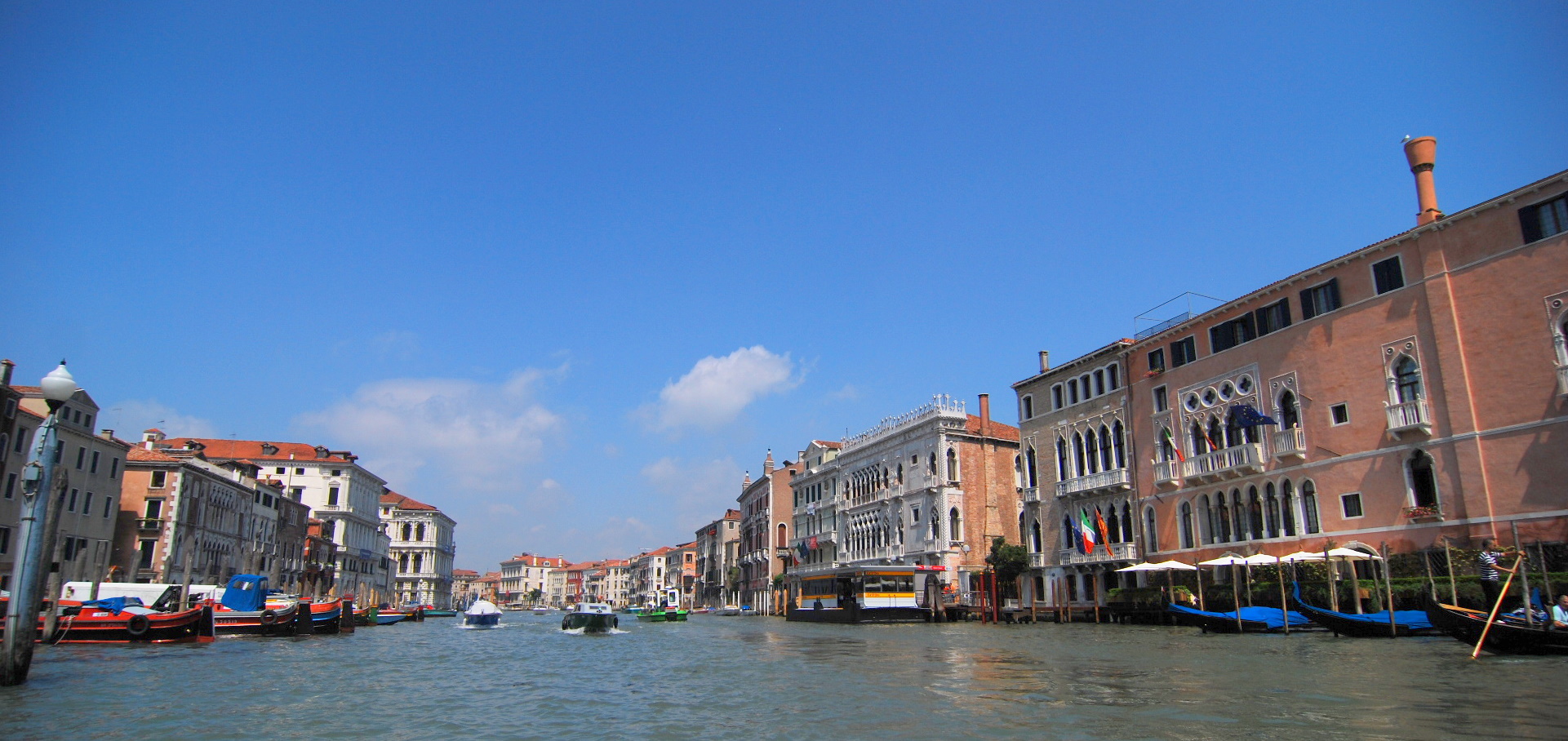
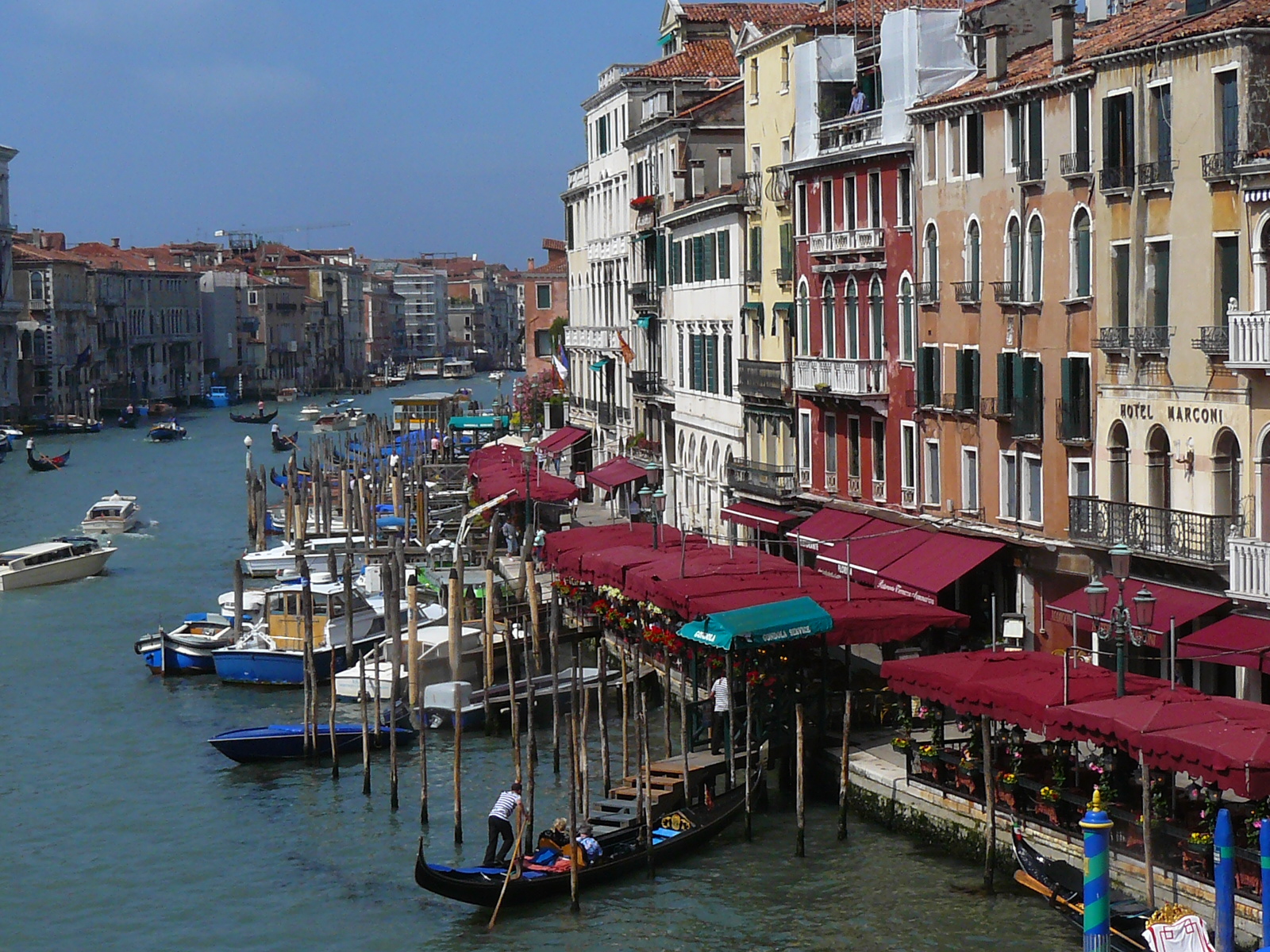
Venice in the Sun


What you notice first is the discreet vroom-voom of a motor launch easing its way through the quiet neighborhood canals, the muted sounds echoing off the walls of an 18th century palazzo. Nothing like the semis, the half-ton delivery trucks, the roaring Metro diesels buses, not to mention the incessant drone of rubber on concrete throughout even the more remote Seattle neighhborhoods. No, you realize, Venice is quiet. Hushed, reverential.

And Venice is crowded! Tourists from Lithuania, tourists from Brazil. Nikon-wielding Japanese, Gucci-wielding Chinese, .gelato-wielding Texans. They jostle one another along fondamento, calle, campo, and ponte. They compete for passage with deliverymen pushing rubber-wheeled carts and dollies. Venice, city of maybe 200,000 iinhabitants, is overrun by visitors. And then you realize why: no cars.

Instead of driving to McDonald's or Starbucks, Venetians (and tourists) walk to the caffè, walk to the corner bar, walk to the market, walk to the square; They walk because water taxis are not only slow but prohibitively expensive. If you're heading to the fish market at the Rialto bridge, just take the local vaporetto.


A gondola? Sure. For romance, not for point-to-point You see them gondoliers at strategic intersections, in their black or red striped shirts, calling out to tourists, "Gondola, gondola!" with a practiced rhythm in between drags on their cigarettes, taking off their beribboned straw hats to wipe their brows when the traffic slows. On one boat, a balding businessman ignores the other passengers (three stout women in red jackets) and speaks loudly into a cellphone. Another businessman in a green tie and carrying a briefcase alights from a traghetto (a gondola devoted only to crossing the Grand Canal) and pays the ferry man his 50 cent ransom. If he's a lawyer or a banker, he's got style, la bella figura.

The North Africans have returned to the piazzas; no umbrellas today since it's sunny at last, but with a panoply of "designer" (illegal counterfeit) bags and purses. And some weird flying doodads that light up, zoom skyward and drop slowly to the ground. Nothing like that in Seattle any more.

And the pigeons have returned to the Piazza San Marco. Thousands of them. I read last year that pigeon shit does enormous damage to the fragile underpinnings of San Marco, so the city fathers banned the sale of piegon feed. Don't know what magic potion the Japanese tourists are scattering on the stones, but pigeons are everywhere. More pigeons, many more, than dogs (for example). Reverse of Seattle.

A gaggle of teeny-boppers interrupts the sately scene in front of the Frari church. Giggling American schoolgirls. One would think their chaperones had warned them that halter tops and obscenely short jeans were inappropriate. One would be wrong. But Americans don't have a monopoly on provocatve dress or boorish behavior. Shlubs from all nations, it seems, converge on La Serenissima, armed with water bottles, cargo pants, combat boots, oversize fanny packs, outsize cameras, huge jackets tied around their ample waists. The locals arrive dressed for the office (briefcase, jacket & tie) or pulling a lightweight shopping cart as they head to the ancient fish markets.

Tourists don't visit the market to buy food but to gawk, The markets are surrounded by storefont booths hawking gew-gaws and cheap souvenirs. 8.99 for a "hand-painted" mask. They eat in cheap restaurants where the flavorless pizza crust comes out of a box, sauce and toppings well dusted with a magic flavor-removing powder called "MancaSapori." (Just kidding.)

Summer is here at last. It's warmer, and it stays light out for a long time. On the other hand, just like Seattle's it's probably going to rain again tomorrow.

- Posted using BlogPress from my iPad

Sunday, July 3, 2011

The 2011 Collio Prize


The vine-covered Collio hills of northeastern Italy, 
right on the Slovenian border, produce some of the country's best white wines.

NOTE:All the posts over the years on Cornichon.org from and about Italy are now available without distractions on the blog PaninoPanini. No French posts, no Canadian posts, nothing about Seattle, Belltown, opera, just Italy!

 
True, it's not quite a Pulitzer. But it did mark the first time since the Premio Collio (Collio Prize) awards were launched, eight years ago, that the winning entries were written in English. John Brunton, the distinguished travel writer who lives half-time in nearby Venice, published a series of excellent pieces in the Financial Times over the past year.

And a second award went to the writer of a modest blog published in Seattle, Cornichon.org. First online winner ever! (The individual posts ran in December, 2010, and January, 2011. They're all together in this PDF).

Consorzio Collio e Carso (the marketing association of the region's wine makers) sponsored the awards, which also honored academic researchers and a film maker. Its acting director, Alessandra Gruppi (pictured below at the awards ceremony last Friday) who teaches marketing at the nearby University of Udine, recognizes the fierce competition of the world's wine regions, and is helping the Consorzio develop a brand, "I Love Collio," that goes beyond a simple wine label.

The first element, the Consorzio now understands, is a signle "signature" wine that everyone can produce: Collio Bianco. As well as a distinctive Collio bottle. For European travelers, increased amenities like B&Bs and restaurants, better signage, bike and Vespa rentals. And for the rest of the world, international trade shows and an ambitious communications strategy to tell the story of Collio.


That's what brought me to Collio last winter. I had first visited seven years earlier and jumped at the chance to return. What I found were delightful wines that rivalled the best French and German whites (bright acidity, mouth-fillng flavors), produced in artisanal quantities by hard-working yet sophisticated families. They export two-thirds of their production and recognize the need for in-person marketing, so they send the younger generation off to the United States, to England, to Asia to pour their wines and tell their story..

And what a story! Collio is only 3,500 acres (one tenth the acreage of Napa Valley) with some 200 wineries producing 7 million bottles from a unique terroir. The soil, variously called marl & sandstone, flysh or ponca, contributes a unifying characteristic to all the wines from Collio: minerality. Even the lightest wines have backbone, and some, especially ribolla gialla, have so much potential that they are vinified and aged like red wines

And now I'm off, on a bright yellow Vespa, to scoot around the hills! If I were giving the Collio Prize, I'd give it to Collio.