Thursday, June 23, 2011

The First Family of Collio Hospitality

If there is a guardian of Friuli's food culture, a student of its sometimes opaque history, a defender of its origins and a champion of its traditions, that would be Josko Sirk, whose country restaurant La Subida just outside Cormòns has evolved into a legend.

It's a legend that brooks no compromises, but it does demand the fulltime attention of every member of the Sirk entourage.

On a recent Sunday evening, when tourists as well as local families tend to wander off to the Adriatic beaches, Josko Sirk was dressed a bit less formally (no jacket, rolled up shirtsleeves), wheeling the cart bearing a Prosciutto d'Osvaldo to every table so he could personally carve a few slices as a token of welcome. (When we were here this past winter, Sirk welcomed visitors at La Subida's hearth, the fogolar.)

Sirk's wife, Loredana, glided from table to table to chat with guests. Their 32-year-old daughter, Tanja, acted as the principal server ("I've worked here da sempre," she said with a charming smile, "since forever"). Her husband, Alessandro Gavagna, runs the kitchen. There's another daughter, Erika, whom I didn't see on this visit.

And then there was their son, Mitya, just 18, in jeans and a polo shirt and a funny little beard, but with the poise and grace of a ballet dancer, already a professional maître d'hôtel (clothes don't necessarily make the man) and a precocious knowledge of Collio's wines. No shy, gangly teenage mannerisms but a bearing of self-confidence that will stand him in good stead as he makes the rounds of the top Italian, Slovenian and Croatian restaurants in the US this summer, starting with Lydia Bastianich's spots in Manhattan. (The Bastianich family has a winery in Udine, not far from La Subida.)

Game has pride of place on the menu here; the full name of the restaurant is Trattoria al Cacciatore de la Subida, the hunter's tavern. And cervo with polenta is but one example. That after several appetizers and pastas, and before a panoply of desserts. The region's best wines, of course. The kitchen displays none of the frantic, frazzled activity of an American restaurant; the staff knows what's expected and they deliver, confidently and without fuss.


Now that the kitchen is firmly in the hands of his son-in-law, Josko Sirk can devote his time and energy to another project: artisanal aceto. Just down the drive from the restaurant he's built a star-shaped wooden house; inside is a distillery where he uses whole grapes to produce an exquisite vinegar, sweet enough to flavor ice cream. You spritz it onto food as if you were squirting it with a lemon. Industrial production takes 20 minutes, but he ages aceto his for two summers. The vinegar even has its own website.

Trattoria al Cacciatore de la Subida, Via Subida 52, Cormons, 39 0481 60531

Thursday, June 16, 2011

Collio on a Vespa

UPDATE, July 2, 2011: Three weeks after this post appeared, the New York Times runs big interactive feature by Ingrid Williams about, yes, riding a Vespa along the Collio trail.


I admit it, I'm a sucker for scooters. I drive the Yamaha Vino in Seattle, so I jumped at the chance to tour the Collio hills on a sunny Sunday afternoon on a bright yellow Vespa.

And what a sweet machine it is. Room under the seat for Michael's D80 loaner with its 12mm lens. Off I go, into the hills, toward San Florian (church square under reconstruction), down again to Oslavia (World War One ossuary, remains of 60,000 soldiers), stop on market square in Cormons for Aperol spritz and bowl of gulasch soup.

More photos online:

Scooter outing courtesy of the elegant resort Castello di Spessa. This trip to Italy is being hosted by the Cosorzio Collio Carso, whose motto, I need not remind you, is I Love Collio!

Monday, June 6, 2011

Venice in the Rain

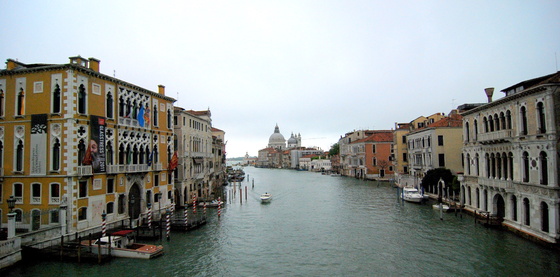
View of the Grand Canal from the Accademia brdge. More new pictures of Venice online. More coverage of wet weather in Venice (last December) here and here.

It feels like winter. The sky is leaden, and the public squares are almost empty except for a handful of North Africans who have materialized with 5-euro mini-umbrellas; they stay in touch with each other by cellphone. From the Accademia bridge, a German tourist tries to pierce the gloom with his camera flash.

On the periphery of the Campo San Stefano, half a dozen cafes serve lunch under a canopy of canvas. Bored waiters wielding brooms poke and nudge the accumulated water to the edge, where it cascades onto the outermost row of tables. "Cambia domani," they say, without conviction; it's going to be better tomorrow.

The Biennale is on. Art of all kinds is on display and being performed in museums, gardens, public squares, palazzos. Venice itself is a giant living museum, of course, even with the lights turned low. Along the maze of side canals are neighborhood bars where young and old stop for a glass on the way home. Prosecco, spritz, Campari Soda. Cicchetti are nibbled.

Back on the square a couple of tourists hurry past, protected by hooded white ponchos; they look like they're going to a KKK rally. Everyone wears sensible shoes. The wind shifts and the tablecloth gets soaked. All is quiet except for the church bells.


Saturday, October 18, 2008

Language Lessons

After%20lunch.JPGPullmino. A Pullman is one of those big coaches, a tour bus, but a pullmino is a baby, like the minivan we're riding in.

Consorzio. In English, you don't encounter a consortium every day; we're more likely to call it an association or a union. Italy's got thousands of consorzie, though. In the travel biz, for example, hotels get together by locality. Competing wineries form a consortium to promote their region.

Enoteca. A wine bar or wine cellar. The Enoteca Regionale is a wine cellar (and promotional agency) supported by a consorzio of Emilia-Romagna's wineries. My hosts for this trip.

Tanto Piacere. With great pleasure. The Enoteca's slogan.

Genitori. No, not the janitor. Nor is it genitals, though that's closer. Your genitori are your parents, your forebears, your ancestors. They're the ones who established and followed the traditions that created the system we live in today. Very important.

Vivace, Frizzante, Spumante. Three levels of spritz in wine, from the lowest level of sparkle to the biggest bubbles. Many examples in Emilia-Romagna, because that's the tradition.

Passito. Another tradition. Ripe grapes are dried in the sun after harvest to concentrate the sugars. When they're vinified, they make a delicious sweet wine, highly prized.

Agriturismo. A farmhouse inn. More than a simple bed & breakfast, the Italian agriturismo is often rather like a country hotel, complete with restaurant. Since everyone here makes wine, lunch at an agriturismo includes many bottles.

Pisolino. A nap. What I'd like after lunch.

The Painted Walls of Dozza

View%20from%20tower.JPG
Dozza%20town%20gate.JPGEntrance%20to%20Enoteca.JPG
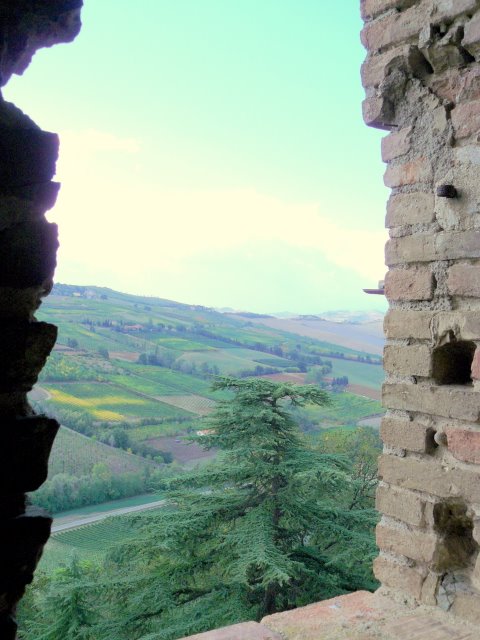
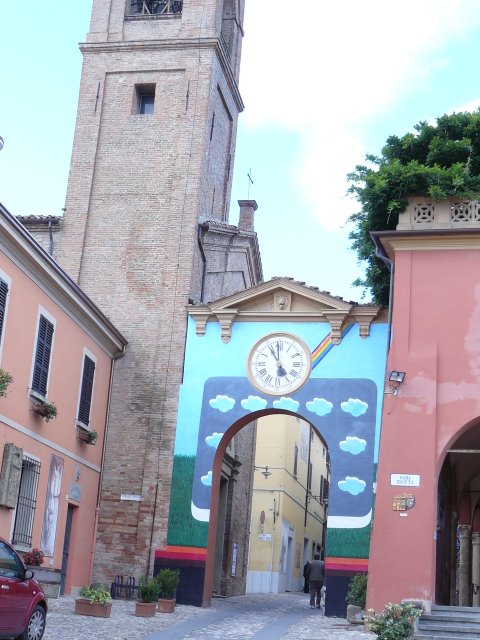
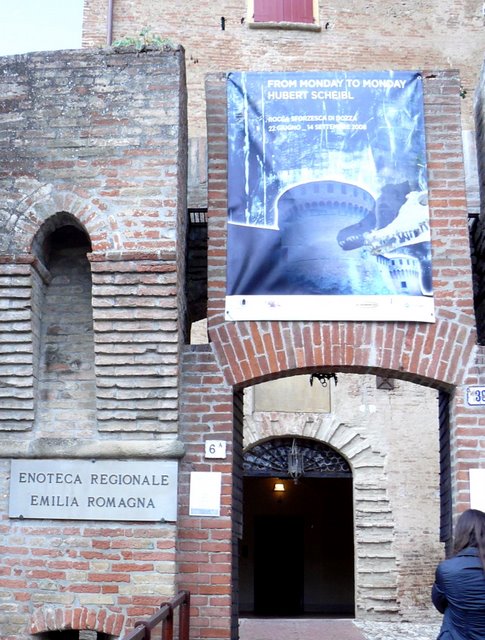
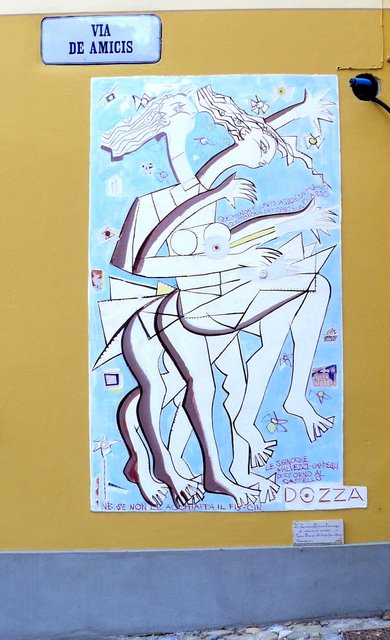
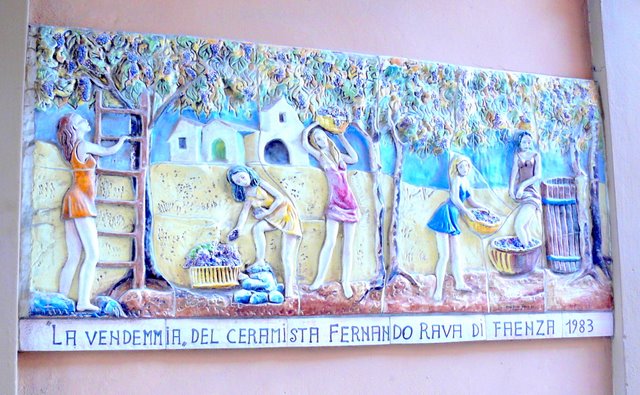
In a region dotted with perfect hilltop villages, Dozza stands out. It's a given that the view from its tower would extend across the vineyards and north to the Alps, almost a no-brainer that the 30-year-old Enoteca Regionale dell'Emilia-Romagna would be located within the Rocca Sforzesca (fortress) itself. But what makes Dozza unique is its biennial festival of the painted wall, when artists are invited to express themselves directly on the ancient doors, alley ways, arches, and public passages of the tiny village.

Dozza%20wall.JPGAs for the Enoteca, it's an administrative center for hundreds of participating wineries as well as a well-stocked showcase and well-run wine bar that's open to the public. Yes, there's a knowledgeable sommelier on hand (800 labels, after all, not to mention olive oil, balsamic vinegar and grappa!) They face the same challenges as industry associations everywhere: representing growers with a dizzying number of grape varieties and wine styles, defending Emilia-Romagna's 18 DOC and DOCG appellations, even as legislation later this decade sweeps all the traditional nomenclature into DOP (Protected Denomination of Origin). There's optimism that the new DOP (already in use for agricultural products) will simplify matters; we hope so. Every provincial subzone of the region clings passionately to its traditions, reluctant to compromise "authenticity" with innovation, even when it's clear (to an outsider) that there's too much, say, lightly sparkling lambrusco and malvasia and not enough full-bodied barbera and bonarda. But the market for wine throughout Italy is defined by its local food, and Emilia-Romagna is no different. The prosciutto and coppa of Parma, one cannot deny, are absolutely delightful with lambrusco; the castrato (gelded lamb) of Romagna finds its perfect match with the light-bodied sangiovese grown nearby.

Campanilismo, what we'd call provincialism, is alive and well here, frustrating as hell most of the time, yet providing the reassurance of a foot planted firmly in the past. The Enoteca Regionale sponsored my trip to Italy as part of an effort to communicate the vast improvement in local wines. No argument, even though it sometimes seems their drive for quality is at odds with the very system they're promoting.

Vendemmia%20wall%20in%20Dozza.JPG

Benessere for Benito

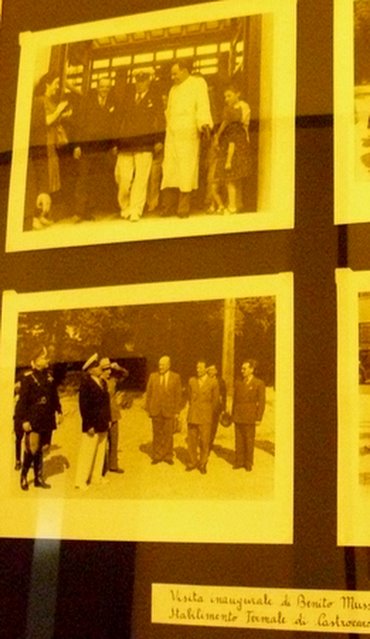
Castrocaro%20exterior.JPG Mussolini%20visits%20Castrocaro.JPG
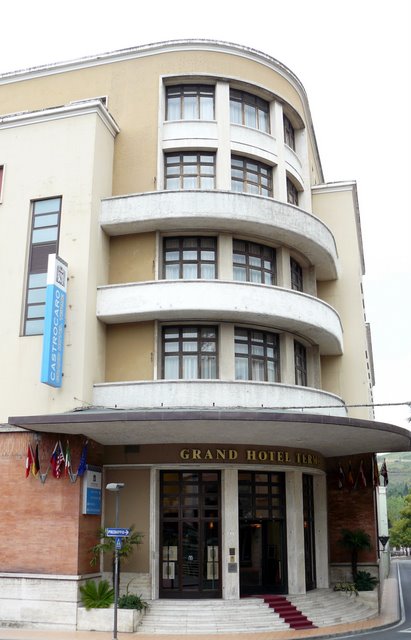
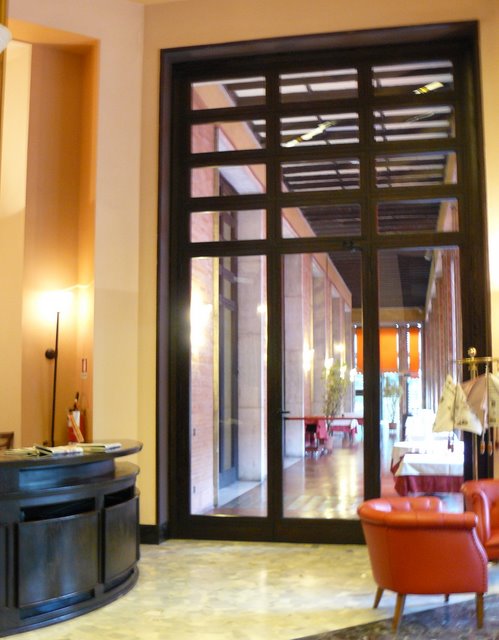
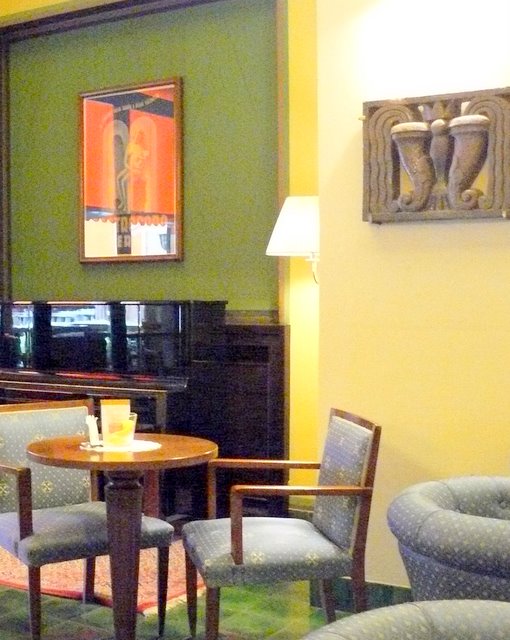
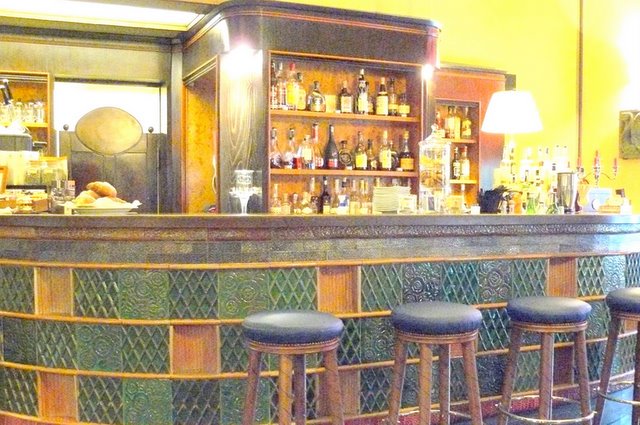
Hotel%20lobby.JPGBenessere is what the Italians call the pampering you get at a spa. Benito Mussolini, sometime journalist seduced by the power of politics, ended up running post-WWI Italy in much the same way as Adolf Hitler did post-WWI Germany: by appealing to the anger, shame and nationalism of its baffled, impoverished and humiliated citizenry. A native of Emilia-Romagna, he nationalized its terme, the soothing hot springs of the Apennines. In the Grand Hotel at Castrocaro, he strutted proudly, toga-clad, through the grand hallways of its Fascist-era architecture. (Art deco suited totalitarianism very well.) Then again, FDR took similar pleasure in dedicating Mt. Hood's Timberline Lodge. Actually, Timberline was built as a public works project in the same era (late 1930s), though there would not have been a faint aroma of sulfur. One fortunate, impressive legacy at the Grand Hotel is the magnificent decoration by a Florentine ceramicist, Tito Chini.

Hotel%20bar.JPG Bar%20at%20Castrocaro.JPG


Tuesday, October 14, 2008

Italian Character, Italian Characters

Graziella%20w%20Peti%20Trufi%20%26%20Barbarossa.JPG

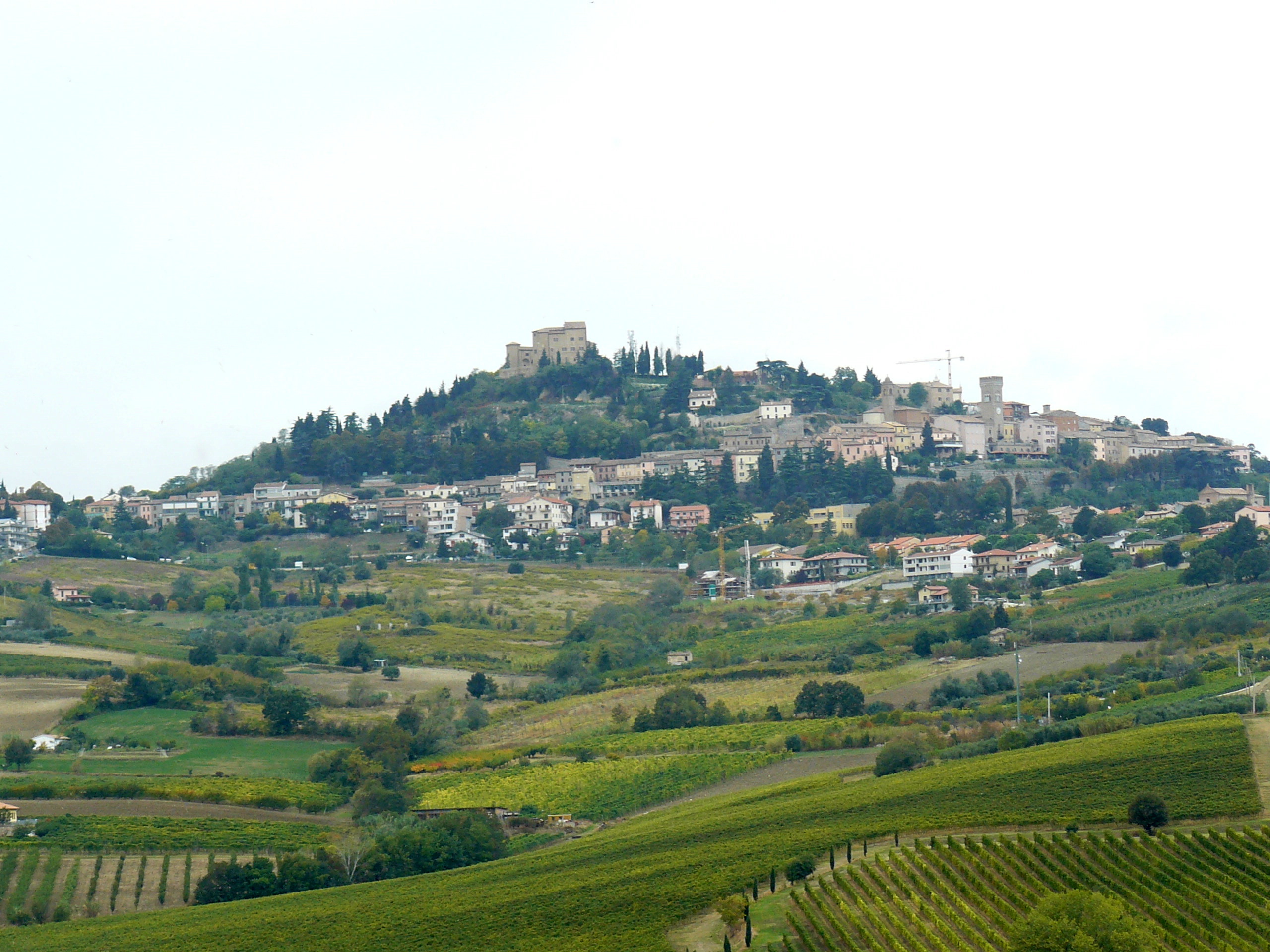
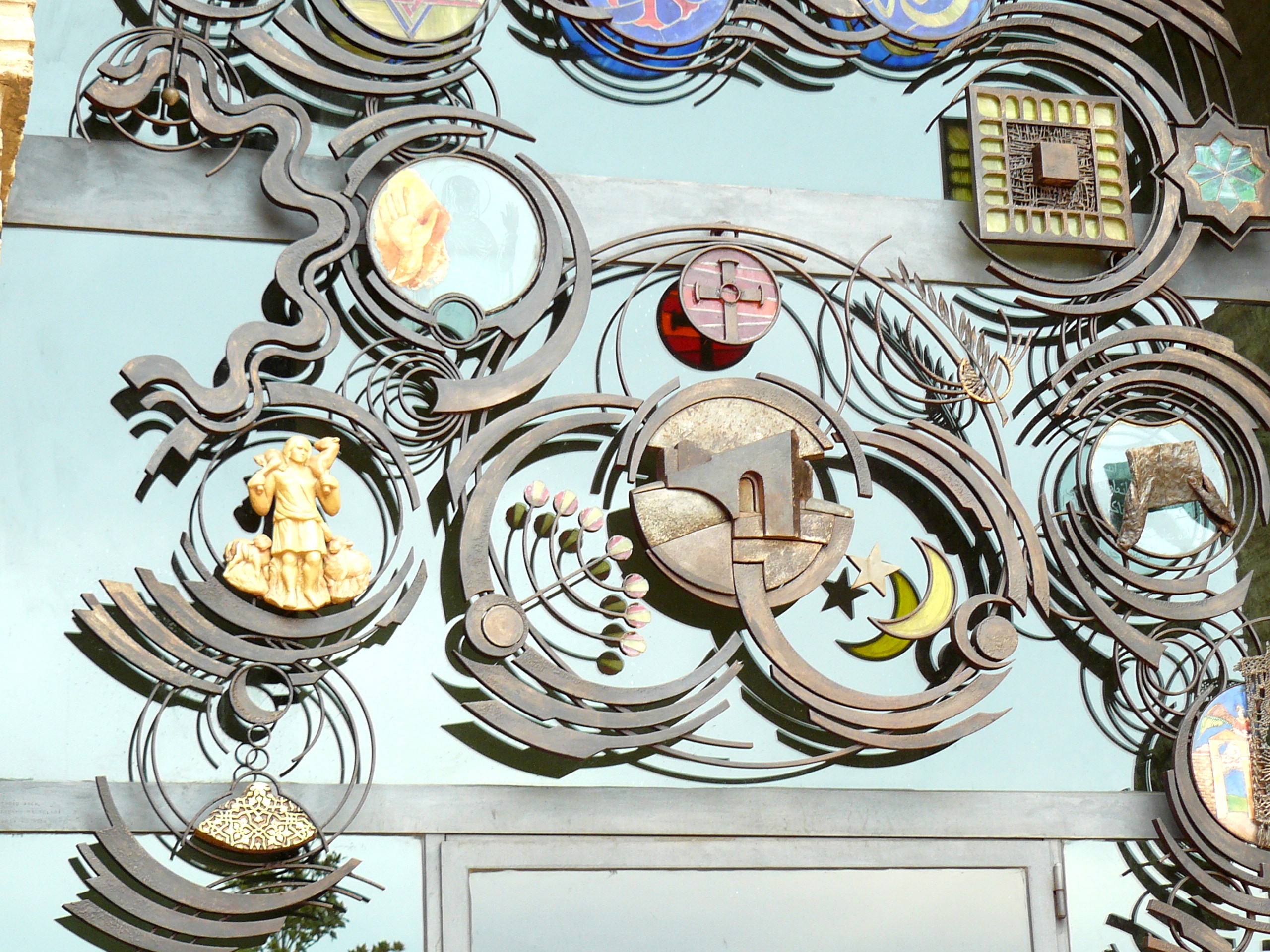
Tasting%20at%20Campo%20del%20Sole.JPGBERTINORO, Italy--We're at the eastern end of the vineyards of Emilia-Romagna.The village itself is medieval, with a castle that houses, of all things, an interfaith museum. Its exhibits are devoted to the world's three great monothestic religions and reconciles Jewish, Christian and Islamic teachings.

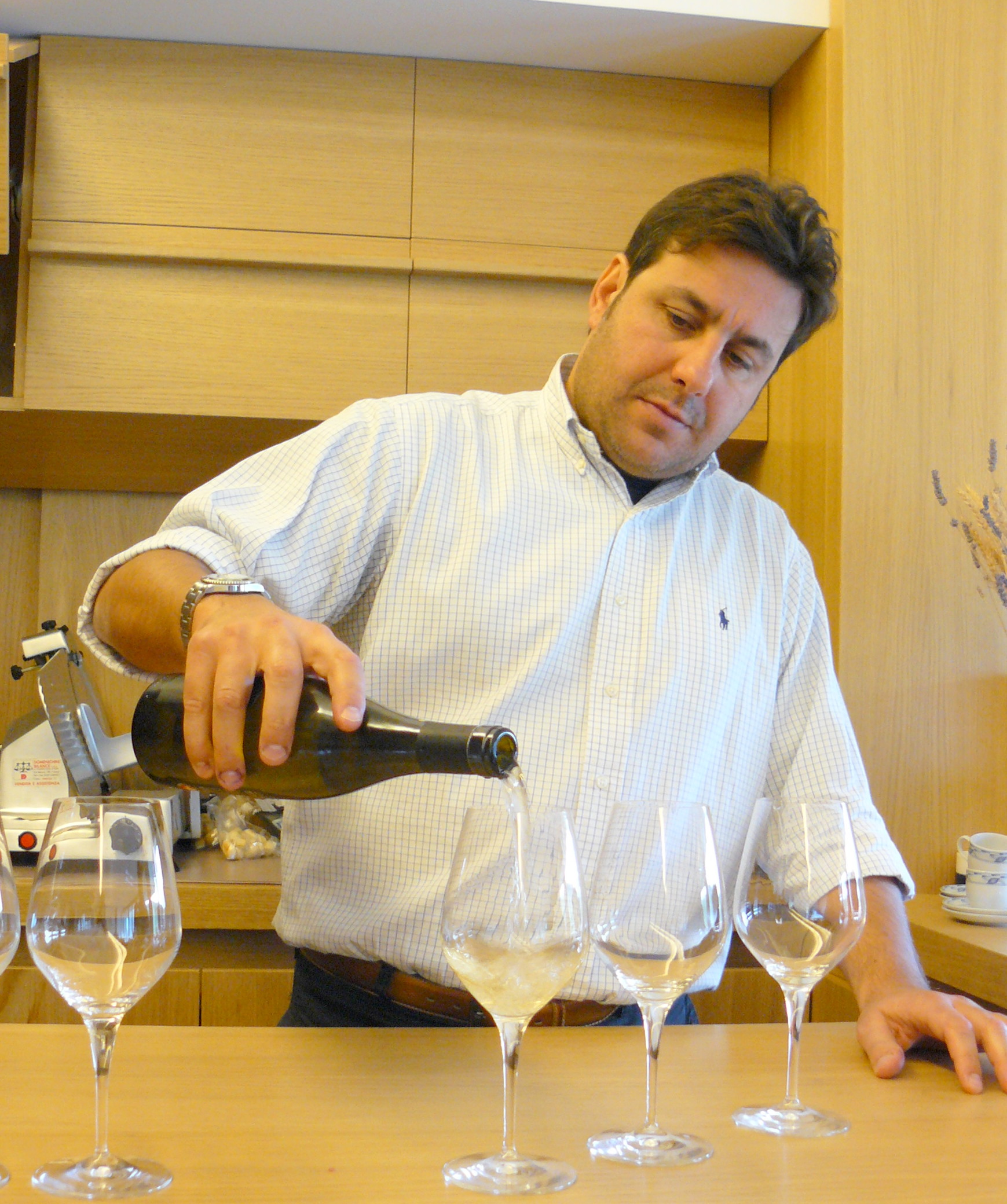
Below the walls lies a spanking new winery, Campo del Sole, a huge investment by the Isoldi family. Their wine maker, Stefano Salvini, has worked all over the world, including stints at Mondavi and Sebastiani; he's got a consulting gig right now in Georgia. Their vineyards are immaculate, their ambitions high. Modern techniques, clean-finishing wines, not a bad one among them. There's a budget for marketing; Campo del Sole's bringing its road show to Seattle in February.

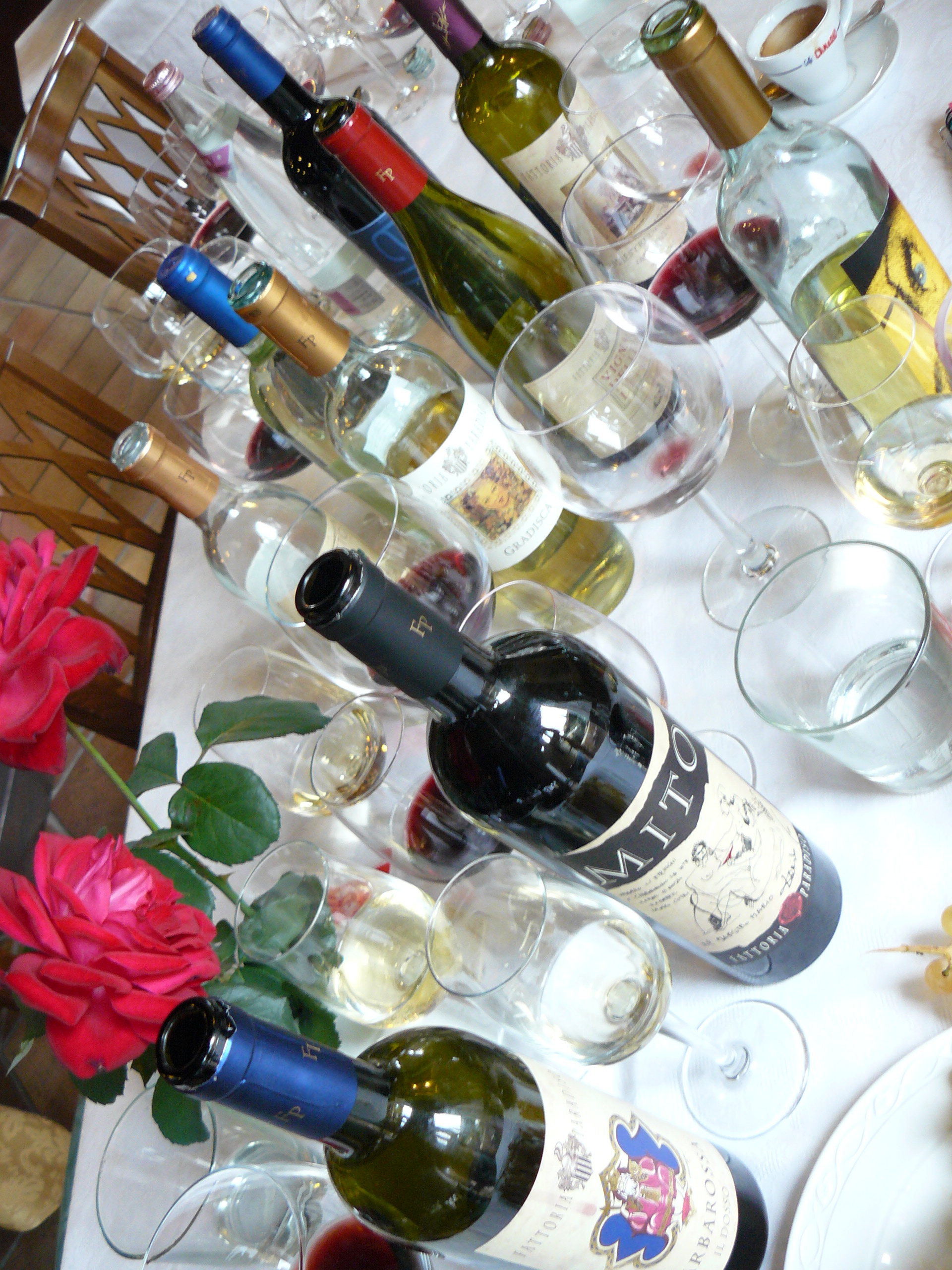
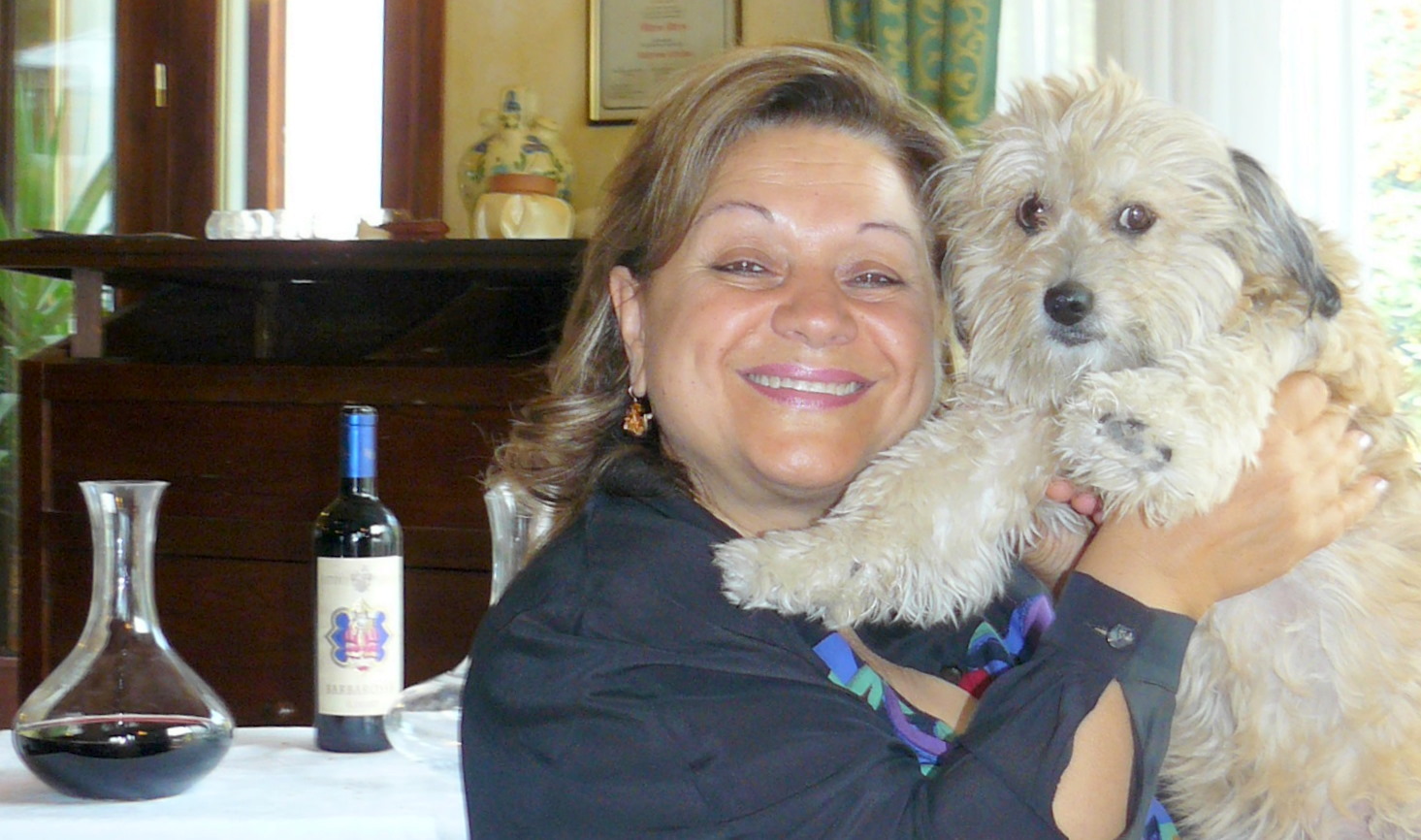
Higher on the hill, Fattoria Paradiso's been around since the 15th century. Graziella Prezzi has taken over from her father, who brought the winery back to prominence. She's a political powerhouse and former president of Italy's Women In Wine. Mario Batali shot an episode of his TV show here. She's got traditional wines from sangiovese and albana, new styles ("concept wines") and unique wines, best of all being barbarosso, a long-lived red variety. Danny Kaye was particularly taken with it. Graziella's beloved dog, Peti Trufi, is a foundling.

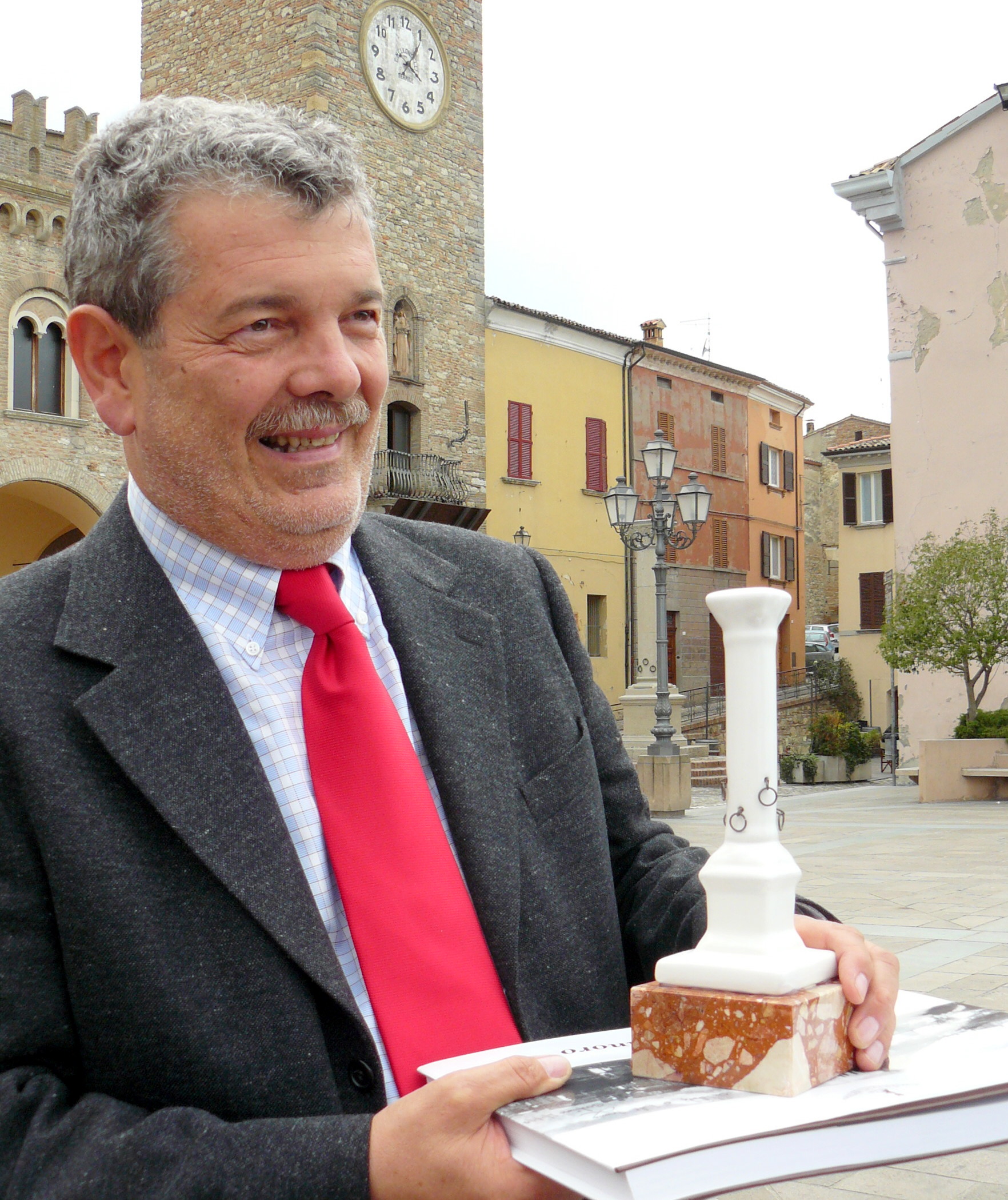
Bertinoro has a long tradition of hospitality. Local families would fight for the privilege of welcoming strangers, finally building a column festooned with "anonymous" rings. Upon tying up, travelers would be hosted by the family whose ring they were using. The mayor, Nevio Zaccarelli, tracked us down on the square and presented us with a replica of Bertinoro's famous hitching post.

Top: Graziella Prezzi and her dog, with bottle of Barbarossa in background. Side: Stefano Salvini. Below: Bertinoro hillside, mayor Nevio Zaccarelli, doorway detail of interfaith museum.

Bertinoro.JPG 
Mayor%20of%20Bertinoro.JPG Door%20detail%2C%20Interfaith%20Museum.JPG