Tuesday, July 5, 2011

Venice in the Sun


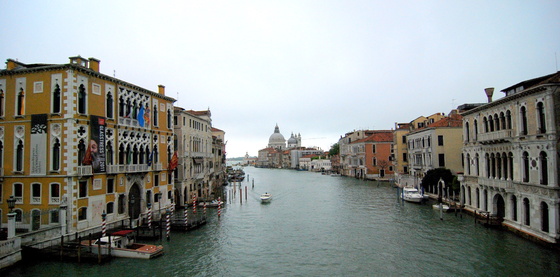
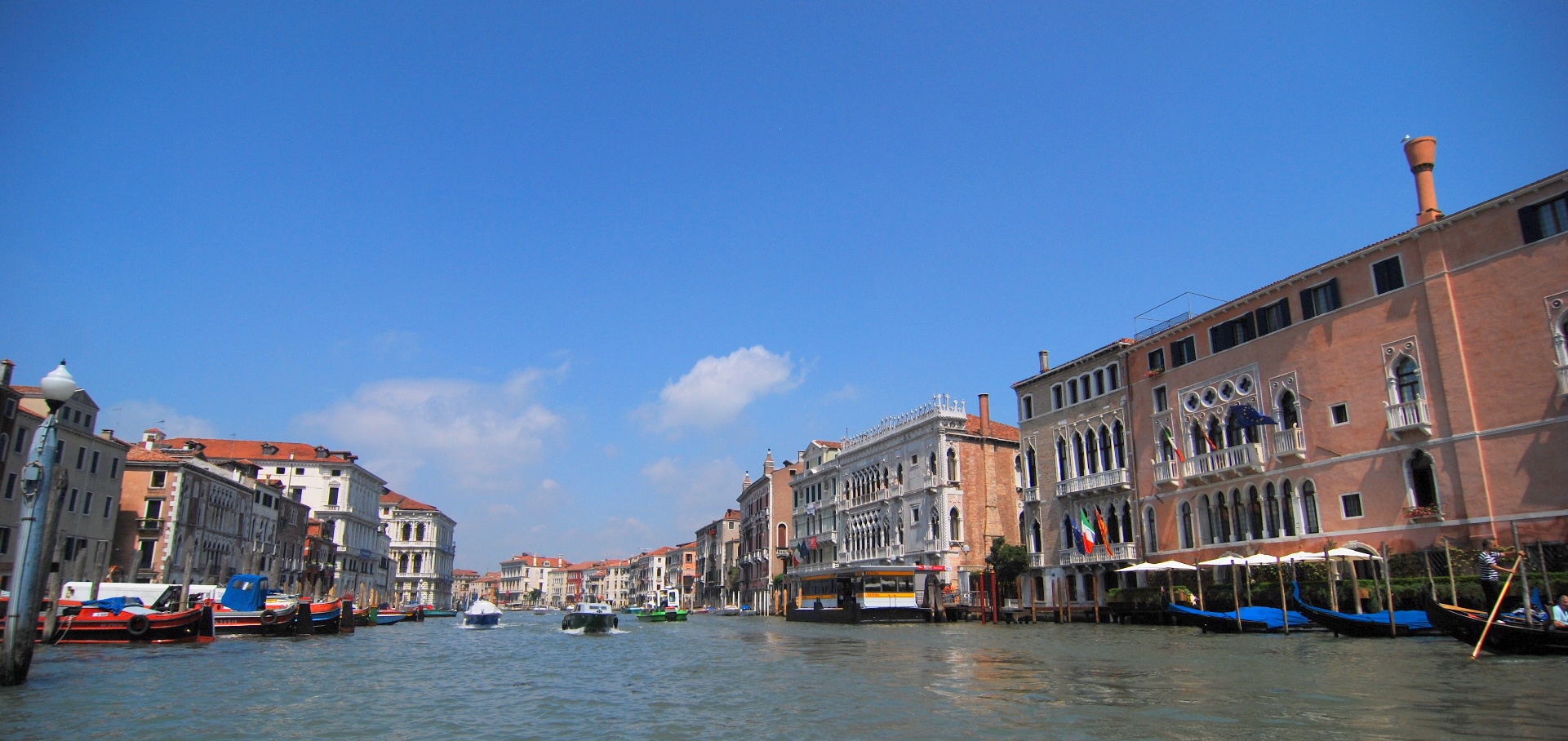
What you notice first is the discreet vroom-voom of a motor launch easing its way through the quiet neighborhood canals, the muted sounds echoing off the walls of an 18th century palazzo. Nothing like the semis, the half-ton delivery trucks, the roaring Metro diesels buses, not to mention the incessant drone of rubber on concrete throughout even the more remote Seattle neighhborhoods. No, you realize, Venice is quiet. Hushed, reverential.

And Venice is crowded! Tourists from Lithuania, tourists from Brazil. Nikon-wielding Japanese, Gucci-wielding Chinese, .gelato-wielding Texans. They jostle one another along fondamento, calle, campo, and ponte. They compete for passage with deliverymen pushing rubber-wheeled carts and dollies. Venice, city of maybe 200,000 iinhabitants, is overrun by visitors. And then you realize why: no cars.

Instead of driving to McDonald's or Starbucks, Venetians (and tourists) walk to the caffè, walk to the corner bar, walk to the market, walk to the square; They walk because water taxis are not only slow but prohibitively expensive. If you're heading to the fish market at the Rialto bridge, just take the local vaporetto.
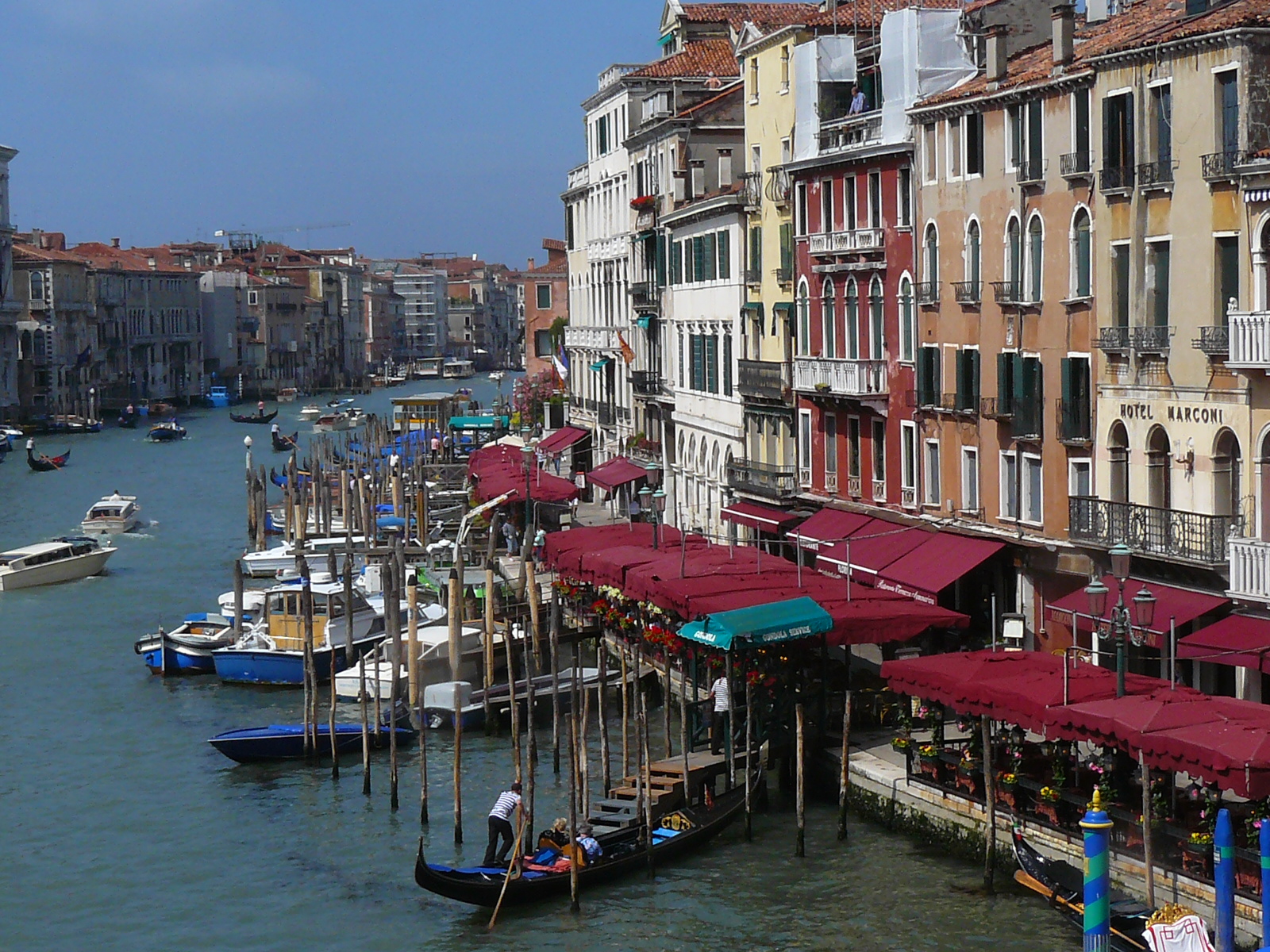

A gondola? Sure. For romance, not for point-to-point You see them gondoliers at strategic intersections, in their black or red striped shirts, calling out to tourists, "Gondola, gondola!" with a practiced rhythm in between drags on their cigarettes, taking off their beribboned straw hats to wipe their brows when the traffic slows. On one boat, a balding businessman ignores the other passengers (three stout women in red jackets) and speaks loudly into a cellphone. Another businessman in a green tie and carrying a briefcase alights from a traghetto (a gondola devoted only to crossing the Grand Canal) and pays the ferry man his 50 cent ransom. If he's a lawyer or a banker, he's got style, la bella figura.

The North Africans have returned to the piazzas; no umbrellas today since it's sunny at last, but with a panoply of "designer" (illegal counterfeit) bags and purses. And some weird flying doodads that light up, zoom skyward and drop slowly to the ground. Nothing like that in Seattle any more.

And the pigeons have returned to the Piazza San Marco. Thousands of them. I read last year that pigeon shit does enormous damage to the fragile underpinnings of San Marco, so the city fathers banned the sale of piegon feed. Don't know what magic potion the Japanese tourists are scattering on the stones, but pigeons are everywhere. More pigeons, many more, than dogs (for example). Reverse of Seattle.

A gaggle of teeny-boppers interrupts the sately scene in front of the Frari church. Giggling American schoolgirls. One would think their chaperones had warned them that halter tops and obscenely short jeans were inappropriate. One would be wrong. But Americans don't have a monopoly on provocatve dress or boorish behavior. Shlubs from all nations, it seems, converge on La Serenissima, armed with water bottles, cargo pants, combat boots, oversize fanny packs, outsize cameras, huge jackets tied around their ample waists. The locals arrive dressed for the office (briefcase, jacket & tie) or pulling a lightweight shopping cart as they head to the ancient fish markets.

Tourists don't visit the market to buy food but to gawk, The markets are surrounded by storefont booths hawking gew-gaws and cheap souvenirs. 8.99 for a "hand-painted" mask. They eat in cheap restaurants where the flavorless pizza crust comes out of a box, sauce and toppings well dusted with a magic flavor-removing powder called "MancaSapori." (Just kidding.)

Summer is here at last. It's warmer, and it stays light out for a long time. On the other hand, just like Seattle's it's probably going to rain again tomorrow.

- Posted using BlogPress from my iPad

Sunday, July 3, 2011

The 2011 Collio Prize


The vine-covered Collio hills of northeastern Italy, 
right on the Slovenian border, produce some of the country's best white wines.

NOTE:All the posts over the years on Cornichon.org from and about Italy are now available without distractions on the blog PaninoPanini. No French posts, no Canadian posts, nothing about Seattle, Belltown, opera, just Italy!

 
True, it's not quite a Pulitzer. But it did mark the first time since the Premio Collio (Collio Prize) awards were launched, eight years ago, that the winning entries were written in English. John Brunton, the distinguished travel writer who lives half-time in nearby Venice, published a series of excellent pieces in the Financial Times over the past year.

And a second award went to the writer of a modest blog published in Seattle, Cornichon.org. First online winner ever! (The individual posts ran in December, 2010, and January, 2011. They're all together in this PDF).

Consorzio Collio e Carso (the marketing association of the region's wine makers) sponsored the awards, which also honored academic researchers and a film maker. Its acting director, Alessandra Gruppi (pictured below at the awards ceremony last Friday) who teaches marketing at the nearby University of Udine, recognizes the fierce competition of the world's wine regions, and is helping the Consorzio develop a brand, "I Love Collio," that goes beyond a simple wine label.

The first element, the Consorzio now understands, is a signle "signature" wine that everyone can produce: Collio Bianco. As well as a distinctive Collio bottle. For European travelers, increased amenities like B&Bs and restaurants, better signage, bike and Vespa rentals. And for the rest of the world, international trade shows and an ambitious communications strategy to tell the story of Collio.


That's what brought me to Collio last winter. I had first visited seven years earlier and jumped at the chance to return. What I found were delightful wines that rivalled the best French and German whites (bright acidity, mouth-fillng flavors), produced in artisanal quantities by hard-working yet sophisticated families. They export two-thirds of their production and recognize the need for in-person marketing, so they send the younger generation off to the United States, to England, to Asia to pour their wines and tell their story..

And what a story! Collio is only 3,500 acres (one tenth the acreage of Napa Valley) with some 200 wineries producing 7 million bottles from a unique terroir. The soil, variously called marl & sandstone, flysh or ponca, contributes a unifying characteristic to all the wines from Collio: minerality. Even the lightest wines have backbone, and some, especially ribolla gialla, have so much potential that they are vinified and aged like red wines

And now I'm off, on a bright yellow Vespa, to scoot around the hills! If I were giving the Collio Prize, I'd give it to Collio.

Saturday, July 2, 2011

No Lasagna, No Pizza, No "Menu Turistico"


 Moonrise over the Grand Canal, shot from Marco Giol's wooden motor launch.

VENICE--This densely packed archipelago, an intricate latticework of some 120 islands and 400 bridges, is home to perhaps 50,000 people. (Higher numbers, which you may have read here, refer to the commune of Venice, which extends well into the mainland.) On any given day, there are probably 100,000 tourists wandering about as well, some of them enjoying the schmaltz of a serenade aboard one of La Serenissima's 450 gondolas. Even as its foundations crumble, the city remains an enchanted place, drawing sustenance from its love of edgy art (especially the Bienale) and the vitality of its swarming tourism.

If you visit Venice, you wander. You might have a map in your pocket with the name of your hotel to rescue you, when you can no longer bear the lightness of being lost. Venice is a city of lost tourists looking for that special doorway, that magic courtyard, that perfect palazzo. They haunt the souvenir shops along the Rialto bridge, they line up outside churches and museums, they congregate in restaurants with tourist menus in five languages. They eat bad pizza, and those who know it's bad hunger for an authentic trattoria where locals eat after the daytrippers have gone back to their cruise ships and pensiones for a good night's sleep. (Venice is tiring. Try walking around for hours on end with a five-pound camera around your neck--those lenses, that's your Venetian glass, by the way!--without anyplace to sit except, perhaps, the steps of the bridges. Up and down the goddamn steps, Martha, I'm calling it a day.)


There's no shame in being lost in Venice; that's the whole idea. And from time to time you come across a narrow fondamento with a bar, or a campo with some tables outside, the sound of clinking glasses and lilting Italian conversations filling the night air, and you want to join in, you wish you spoke the language better, you wonder how to order what that table is having over there.

Well, what I'm having are those cozze-vongole (mussels and clams in tomato sauce). You're looking at me enviously because I'm the one sitting at the table under the umbrella, drinking local white wine with Marco Giol (the man behind WineTTand the owner of the motor launch that navigated the canals and is tied up at the end of the rio); he's having the sweet cape longhe (razor clams). We're being pampered by Francesco Agopyan, the owner of this secret spot, Trattoria Antiche Carampane, named for the neighborhood, which may have been, long ago, Venice's red light district. Then again, maybe not.

There are maybe a dozen fishmongers down at the Rialto market; Francesco (that's him in the picture above) trusts only two. His clientele, regardless of passport, is Venetian (or enterprising enough to have a Venetian make a reservation). They don't scorn tourists, far from it, they just don't eat dinner with them. The sign on the door is quite clear. "We really don't know to make pizza and we're too stupid to learn."

And here's Marco in the launch, which he pilots like Luke Skywalker flying his starfighter through the narrow canals, occasionaly calling out "Oh-AY" on the blind corners.

Want to find this magic spot? Here's how, according to Carampane's website:

"From the Campo San Polo, take Sottoportago De La Madoneta at the rear of campo (on the right side coming from Chiesa). Turn left at Building #1414- Enter Calle dei Cavalli. Cross Ponte Furatola and take Sottoportago de la Furatola. There will be a small canal on your right. Before you get to the next bridge, turn left onto Calle del Tamossi. You will pass a house with a large courtyard. Then go right onto Ramo del Tamosi. Make a left onto Rio Tera de la Carampane - the restaurant is about one block on the right."

Or you could see if Marco is available and zigzag your way in by water.

Antiche Carampane, San Polo 1911 (Rio Tera delle Carampane), Venice. (39) 041.524.0165

Jamar: Cave-Aged Cheese, No Elevators


 Cheese maker Dario Zidaric and a plate of his cheeses. The Jamar is in the foreground.

TRIESTE, Italy--This corner of the world, where the Adriatic meets the Alps, where Italy meets Slovenia and Croatia, is full of sink-holes and limestone caves. It was also the first flashpoint of the Cold War, before the borders melted into the European Union.

On the surface, though, you see only the gray rock called karst, and you admire the perseverance of the families who plant grape vines and olive trees here. The whites include picolit, malvasia and vitovska; the red varieties go beyond cabernet sauvignon and cabernet franc to include refosco, schiopettino, and terrano. (Go ahead, tell me you've tried vitovska!)

My visit here was sponsored by the Collio Carso wine consortium, but I was so taken with the cheese at Josko Sirk's La Subida the other night that we had to make a non-wine stop. It was at Dario Zidaric's farm and vineyard a few miles outside of Trieste, capital of the Friuli Venezia Giula region.

Dario is a big guy, a giant. Patient, kind, and unafraid of hard work. The perfect disposition, I'd say, for a farmer, or, for that matter, for a cheese-maker whose flagship product requires aging deep underground in a cave you have to actually descend into using serious climbing gear.

 His 90 cows give only half the milk of an industrial farm: 700 liters a day of unpasteurized organic milk (which translates to about 70 kg, 150 lbs, of cheese). He makes eight or nine different styles of cheese. The "simple" ones, like Montasio and caciotti bianchi, go to local shops via a network of cheesemongers. The more complex, like an aged caciotta covered with an indigenous herbs such as the thyme-like santoreggia, are destined for high-level restaurants across northern Italy and Austria.

And then there's the Jamar, a cheese that spends four months ripening in a very damp, very dark cave 250 feet underground. You don't walk in, you don't ride in, you drop down, in full spelunking gear. (By coincidence, I think, there's a cave-climbing device manufactured in Switzerland called Jumar.) Dario does this once a week, taking 100 fresh, 10-lb cheeses with him and bringing a similar number of aged cheeses back up from their makeshift shelving. The ripened Jamar has a remarkably rich, nutty flavor that resembles a cave-aged Gruyère from Switzerland or a mature Comté from the Massif Central of France, earthy and truffle-scented. Once the mold is brushed off, it will sell for 25 euros a kilo, about $17 per pound.

Dario owns the cave outright. It's on (inside?) a piece of land a mile or so from his farm, but no, I didn't go down.

Thursday, June 23, 2011

The First Family of Collio Hospitality

If there is a guardian of Friuli's food culture, a student of its sometimes opaque history, a defender of its origins and a champion of its traditions, that would be Josko Sirk, whose country restaurant La Subida just outside Cormòns has evolved into a legend.

It's a legend that brooks no compromises, but it does demand the fulltime attention of every member of the Sirk entourage.

On a recent Sunday evening, when tourists as well as local families tend to wander off to the Adriatic beaches, Josko Sirk was dressed a bit less formally (no jacket, rolled up shirtsleeves), wheeling the cart bearing a Prosciutto d'Osvaldo to every table so he could personally carve a few slices as a token of welcome. (When we were here this past winter, Sirk welcomed visitors at La Subida's hearth, the fogolar.)

Sirk's wife, Loredana, glided from table to table to chat with guests. Their 32-year-old daughter, Tanja, acted as the principal server ("I've worked here da sempre," she said with a charming smile, "since forever"). Her husband, Alessandro Gavagna, runs the kitchen. There's another daughter, Erika, whom I didn't see on this visit.

And then there was their son, Mitya, just 18, in jeans and a polo shirt and a funny little beard, but with the poise and grace of a ballet dancer, already a professional maître d'hôtel (clothes don't necessarily make the man) and a precocious knowledge of Collio's wines. No shy, gangly teenage mannerisms but a bearing of self-confidence that will stand him in good stead as he makes the rounds of the top Italian, Slovenian and Croatian restaurants in the US this summer, starting with Lydia Bastianich's spots in Manhattan. (The Bastianich family has a winery in Udine, not far from La Subida.)

Game has pride of place on the menu here; the full name of the restaurant is Trattoria al Cacciatore de la Subida, the hunter's tavern. And cervo with polenta is but one example. That after several appetizers and pastas, and before a panoply of desserts. The region's best wines, of course. The kitchen displays none of the frantic, frazzled activity of an American restaurant; the staff knows what's expected and they deliver, confidently and without fuss.


Now that the kitchen is firmly in the hands of his son-in-law, Josko Sirk can devote his time and energy to another project: artisanal aceto. Just down the drive from the restaurant he's built a star-shaped wooden house; inside is a distillery where he uses whole grapes to produce an exquisite vinegar, sweet enough to flavor ice cream. You spritz it onto food as if you were squirting it with a lemon. Industrial production takes 20 minutes, but he ages aceto his for two summers. The vinegar even has its own website.

Trattoria al Cacciatore de la Subida, Via Subida 52, Cormons, 39 0481 60531

Thursday, June 16, 2011

Collio on a Vespa

UPDATE, July 2, 2011: Three weeks after this post appeared, the New York Times runs big interactive feature by Ingrid Williams about, yes, riding a Vespa along the Collio trail.


I admit it, I'm a sucker for scooters. I drive the Yamaha Vino in Seattle, so I jumped at the chance to tour the Collio hills on a sunny Sunday afternoon on a bright yellow Vespa.

And what a sweet machine it is. Room under the seat for Michael's D80 loaner with its 12mm lens. Off I go, into the hills, toward San Florian (church square under reconstruction), down again to Oslavia (World War One ossuary, remains of 60,000 soldiers), stop on market square in Cormons for Aperol spritz and bowl of gulasch soup.

More photos online:

Scooter outing courtesy of the elegant resort Castello di Spessa. This trip to Italy is being hosted by the Cosorzio Collio Carso, whose motto, I need not remind you, is I Love Collio!

Monday, June 6, 2011

Venice in the Rain

View of the Grand Canal from the Accademia brdge. More new pictures of Venice online. More coverage of wet weather in Venice (last December) here and here.

It feels like winter. The sky is leaden, and the public squares are almost empty except for a handful of North Africans who have materialized with 5-euro mini-umbrellas; they stay in touch with each other by cellphone. From the Accademia bridge, a German tourist tries to pierce the gloom with his camera flash.

On the periphery of the Campo San Stefano, half a dozen cafes serve lunch under a canopy of canvas. Bored waiters wielding brooms poke and nudge the accumulated water to the edge, where it cascades onto the outermost row of tables. "Cambia domani," they say, without conviction; it's going to be better tomorrow.

The Biennale is on. Art of all kinds is on display and being performed in museums, gardens, public squares, palazzos. Venice itself is a giant living museum, of course, even with the lights turned low. Along the maze of side canals are neighborhood bars where young and old stop for a glass on the way home. Prosecco, spritz, Campari Soda. Cicchetti are nibbled.

Back on the square a couple of tourists hurry past, protected by hooded white ponchos; they look like they're going to a KKK rally. Everyone wears sensible shoes. The wind shifts and the tablecloth gets soaked. All is quiet except for the church bells.