Friday, November 18, 2011

Puglia: Ancient Stones, Modern Poltics

Trulli in Alberobello.jpg

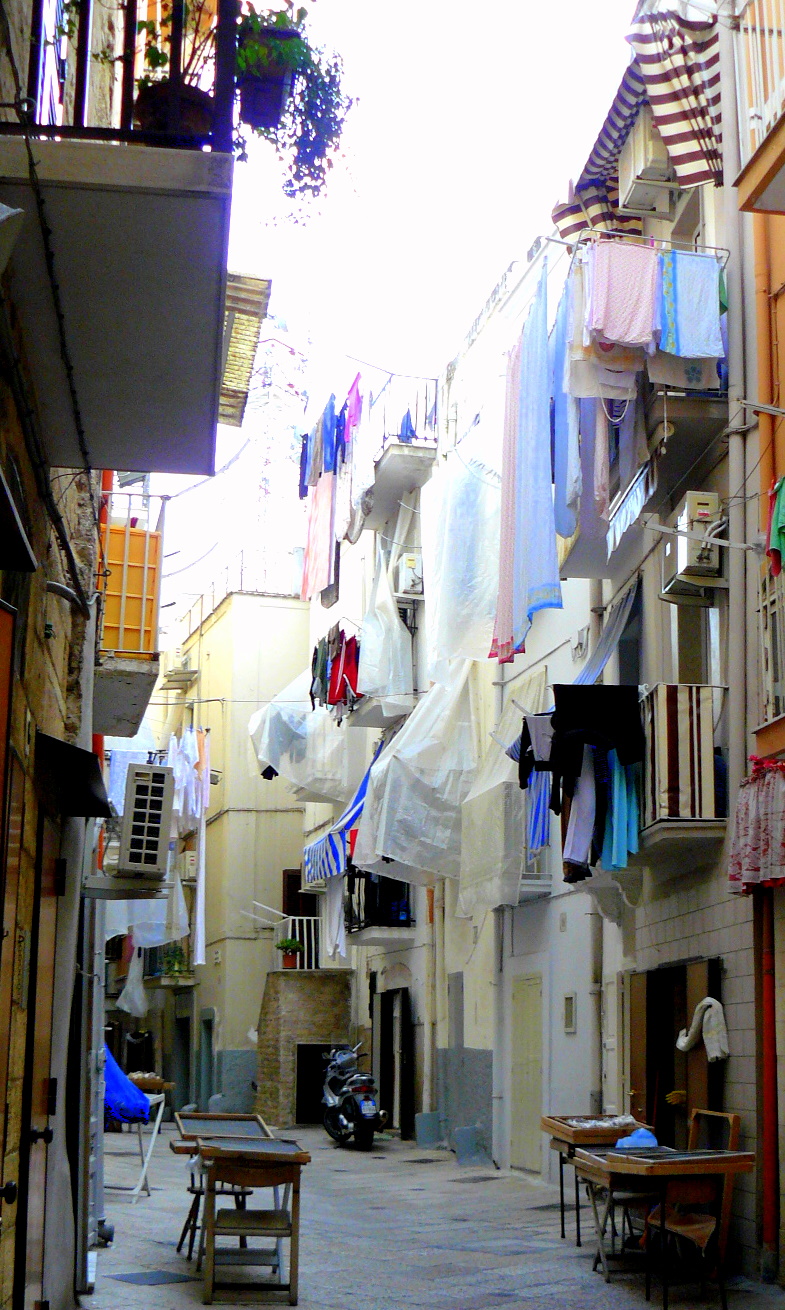
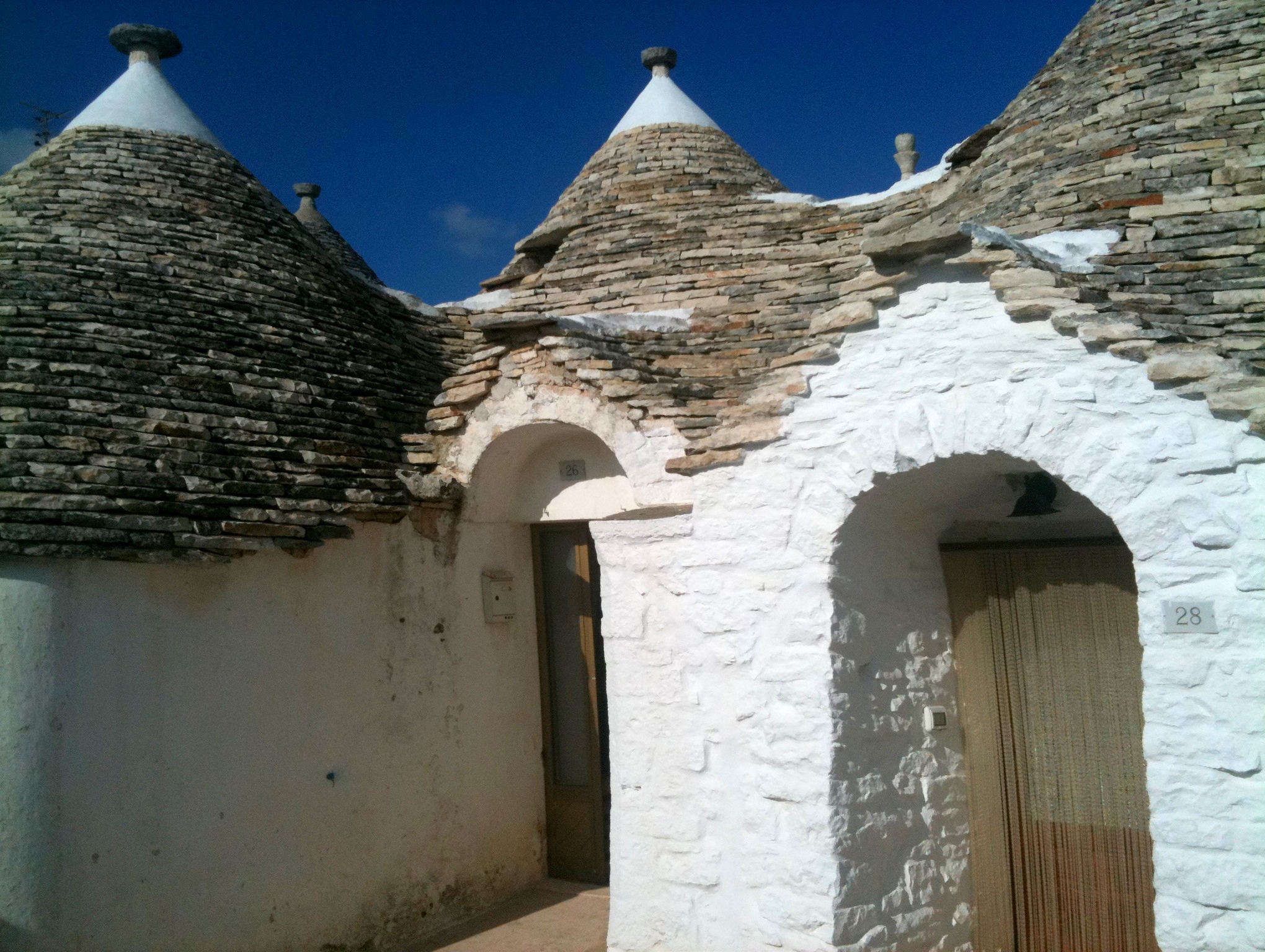
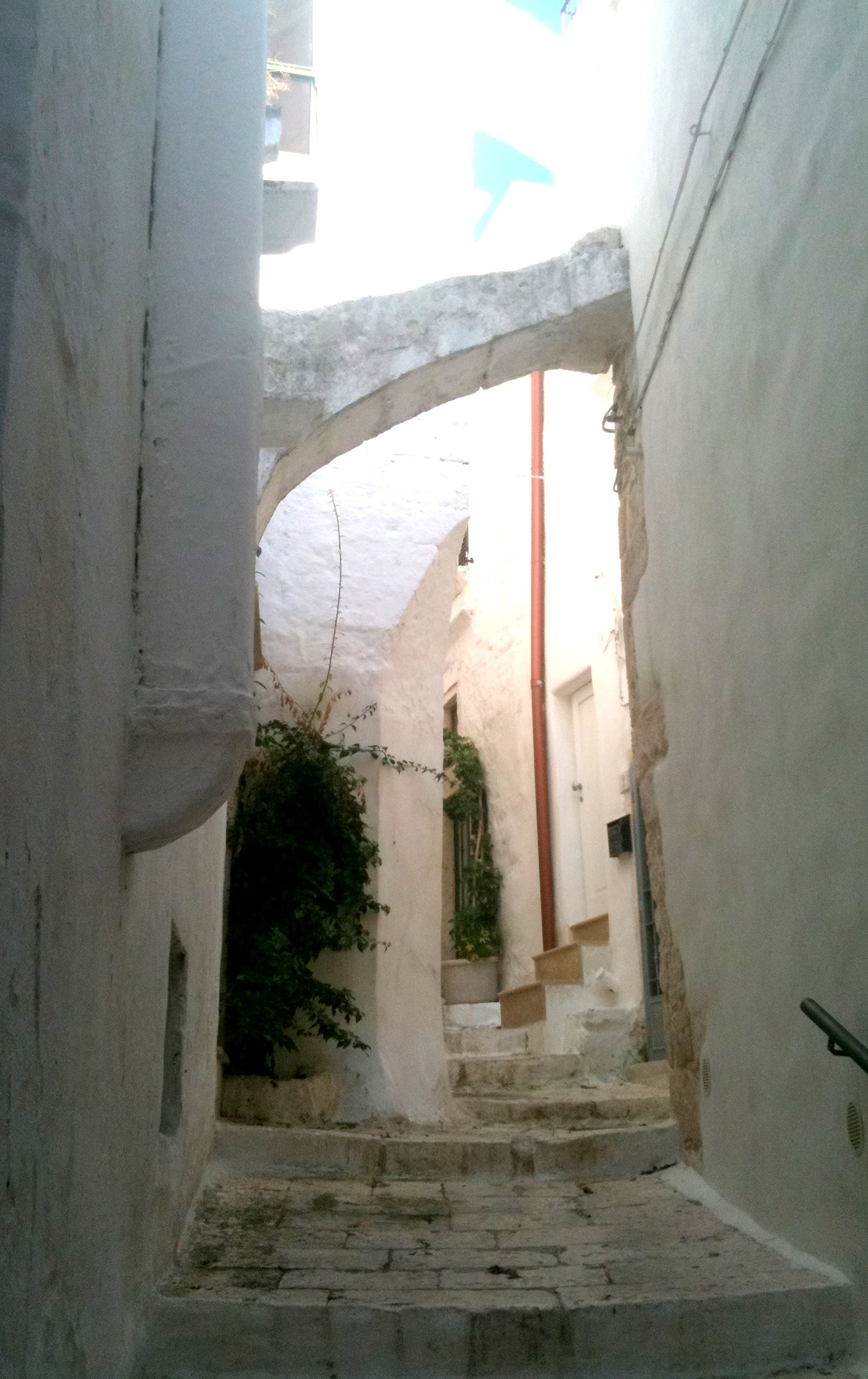
Conical, slate-roofed houses called Trulli in the UNESCO world-herItage village of Alberobello. Below, an alleyway in the hilltop town of Ostuni

PUGLIA, Italy--The good news, it's safe to say, is that right-wing Berlusconi bimbo Michaela Vittoria Brambilla is no longer Italy's minister of tourism. The one-time TV reporter, known for her long legs, red hair and fiery disposition, had been roundly criticized for spending eight million euros on a useless website (italia.it), and was never able to articulate why Italy desperately needs to promote intself as a tourism destination. Some 20 years ago, in a public vote, self-satisfied Italians even voted to do away with a formal tourism agency, forgetting that vacation expenditures and taxes contributed by visitors provide essential funding for basic local nservices. Within a short time, Italy was overtaken by France as the world's most popular tourist destination, and tourism outside the Rome-Florence-Venice corridor has stagnated. Here in Puglia, the heel of the Italian boot, a 45-minute flight from Rome, it's mostly sun-bathing German families lying cheek by jowl along the sunny Adriatic beaches. There's hope--not a lot, but hope nonetheless--that the new guy, a 73-year-old industrial engineer without political experience named Piero Gnudi, will "get it," but Gnudi management career was running Italy's national electric utility, a classic top-down hierarchy that bears little resemblance to the "herding cats" model of international tourism. In fact, managing a state monopoly is poor preparation for the competition Italy faces in troubled economic times: it's probably the most expensive destination in the Mediterranean (compared with France, Spain, Croatia, Greece, or Turkey), although this corner of the country can at least boast that it's affordable. Compared to Tuscany, anyway.

Nichi Vendola, the popular governor of Puglia, has expressed cautious support for the new Monti administration. An earring-wearing member of the left-wing Green party, he has a wider vision than most: Puglia is a gateway to the eastern Mediterranean; its stones speak many languages, its olive trees outnumber its citizens by 12 to 1. His deputy for tourism, Silvia Godelli, speaks of the region's attractions: its light, its flavors and smells, its antiquities. But only 25,000 of Puglia's 4 million visitors are Americans; it's not an easy sell

Americans spent $80 billion on overseas vacations last year, and there isn't one who doesn't want to visit Italy (according to the polls, ideally within the next couple of years) And Italy meets the three top criteria for a foreign destination (safe, affordable, scenic). That's why Italy's national tourist board, ENIT, and the Italian Travel Promotion Council (an association of 19 American tour operators) have sponsored this symposium for travel agents: so they'll know more about Puglia and convince more of their clients to come here.
Alleyway in Ostuni.jpgAll this as prelude to the scenery.

Take Ostuni, for example. You look at the narrow streets, whitewashed walls, and bright blue sky, and you might think you're on a Greek island in the middle of the Aegian. But no, the water out there, less than five miles away, is the Adriatic. The town is called Ostuni, a fortified town in the Middle Ages atop a limestone cliff, settled since prehistoric times. The influence of Greek architecture is understandable, as are design elements from North Africa.

Half an hour away, atop the Murgia plain, you find several hundred peculiar cylindrical dwellings called Trulli, with cone-shaped roofs are built without mortar from slabs of limestone. They're not like teepees or the chimney-houses of eastern Turkey; there's a separate stack at the side to vent the kitchens. You can buy your own trullo, should you want to abide by the strict historic-preservation standards, for 100 grand. A studio in one of the white-washed buildings of Ostuny, on the other hand, runs about twice that.

Monday, November 14, 2011

Traveler's Notebook: Back in Bari

Bari Castello w Cathedral.JPG
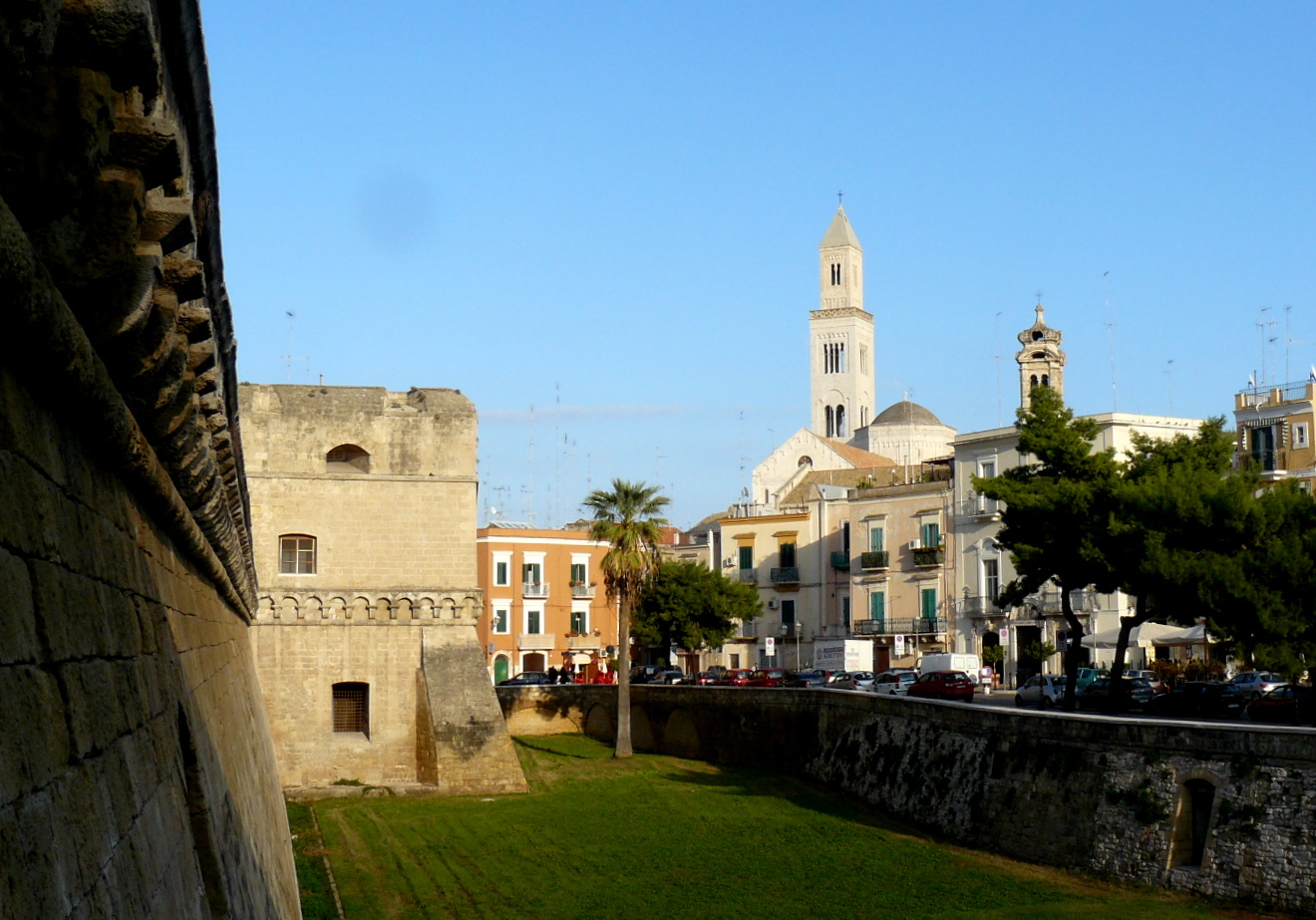
Bari's 12 C castello, built by Frederick II, and its 15th C Romanesque cathedral

BARI, Italy--We are back in Puglia ("Apulia" in English), last visited three years ago on a wine tour, this time around for a symposium sponsored by the Italian Travel Promotion Council and ENIT (Italy's National Tourist Board). Over 200 American travel agents, two dozen tour operators and about 20 journalists from the USA are participatiing.

It's too soon to tell what priority tourism will have in the "austerity budget" to be presented later this month by the new government of Prime Minister Mario Monti (just sworn in yesterday), although the signs point distressingly toward reduction to zero. Yes, Italians have the understandable notion that the whole world already knows about its historic cultural treasures, ideal climate, great food and pleasurable lifestyle. In this they are not alone; it is a homegrown pride that is (quite often) justifiable, yet quaint and ultimately short-sighted. But tourism promotion is not a luxury.

When Washington State eliminated tourism promotion from its budget, the only audible protest came from Seattle hotelkeepers who knew that people have to be encouraged to travel to specific places. You must tell your story over and over, the marketing folks lecture you; the public is a passing parade, not a static classroom of docile fourth-graders. Tourism professionals like travel agents need constant reminders, too, ideallly in the form of field trips, to experience the uniqueness of the "product," of the destination.

And the destination here in Puglia, the heel of the Italian boot, is certainly attractive. Some 500 miles of pristine coastlne dotted with ancient watchtowers (to guard against invaders); historic architecture (Roman, Greek, Norman, Byzantine); modern cities like Bari, Baroque cities like Lecce, prehistoric settlements like Alberobello, limestone hilltowns like Ostuni; medieval strongholds like Castel del Monte; vast groves of olive trees, and vineyards planted with southern Italy's best full-bodied reds (Negroamaro, Primitivo and Nero di Troia).

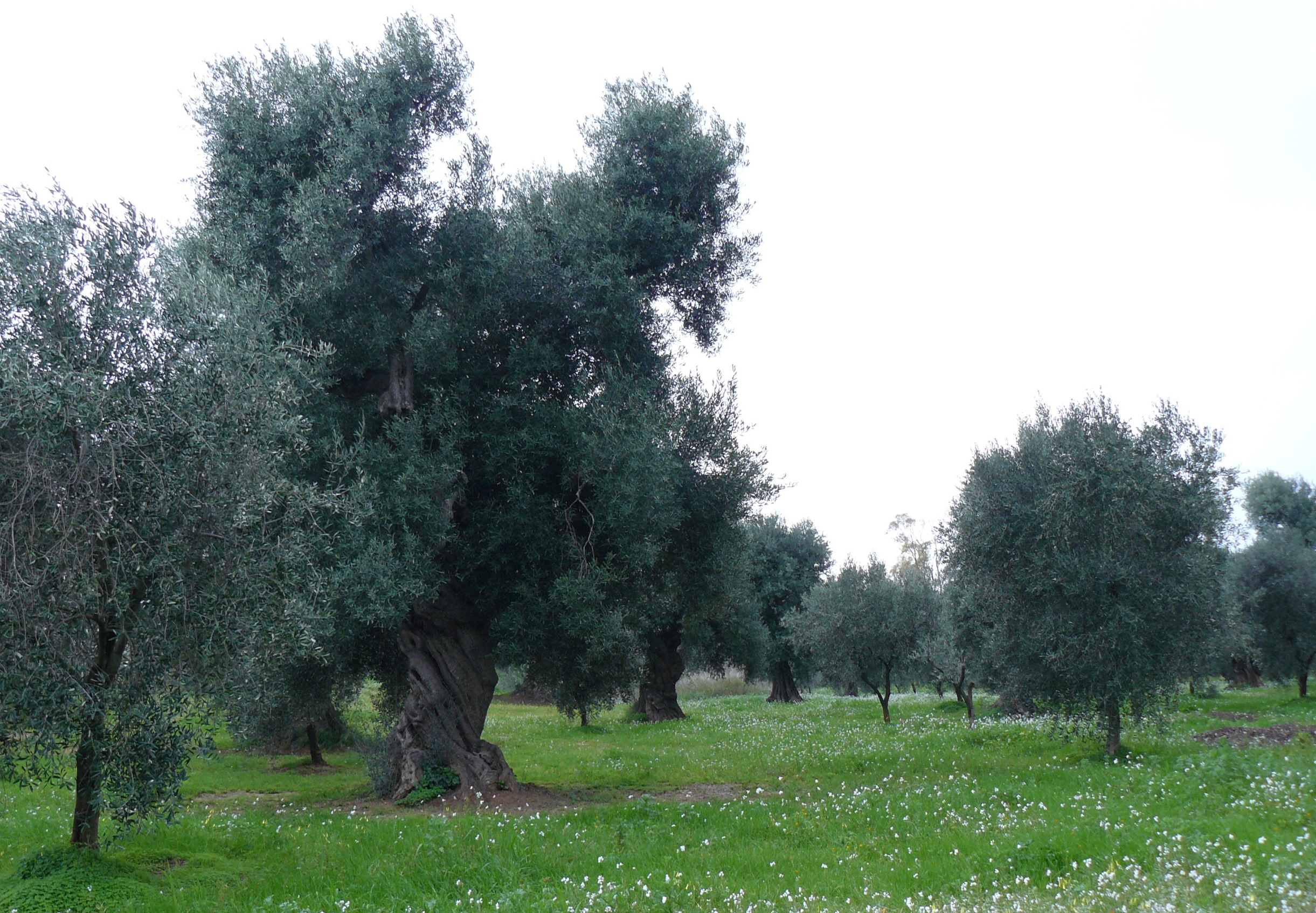
Olive grove at Vallone.JPG
Olive grove in Puglia
Interntional tourism is a much sought-after source of income, but local officials here acknowledged only "incremental" increases of 20 percent over the past decade, which is a polite way of saying that tourism to this region is stagnant. Only 25,000 Americans visit Pugllia in the course of a year, a tiny fraction of the half-million foreigners who come. Assuming they're not daytrippers disembarking from the giant cruise ships, Americans stay an average of three nights, a full day less than most international visitors (almost 20 percent of them heat-seeking Germans). Puglia's official tourist office recommends touring by bicycle or on horseback, but the Yanks tend to occupy rooms in the best hotels..

Don't get me wrong, it's a stunning region, even without the beaches, but there's a campanilismo here, a short-sighted, provincial, shoulder-shrugging attitude, that seems to undervalue the surprisingly broad cultural heritage.

Welcoming the delegates, Mauro Galli, the ITPC president, pointed out that Puglia is at least 30 percent less expensive than the rest of Italy, especially compared to the strasopheric prices of hotels in Venice or Florence. Whether the price advantage alone will draw American travelers is far from clear.

Street scene in Old Bari.JPG
Street scene in Old Bari
For Americans to visit Puglia, they first have to select Italy over France, Spain, Greece or Croatia (to name just four competing Mediterranean destinations). Then Puglia competes with the trinity of Rome-Florence-Venice, not to mention the romance of a villa in Tuscany or a cooking class on the Amalfi Coast. So it's not a stop for first-time visitors to Italy.

Puglia's capital, Bari, is a vibrant, modern Italian city, as big as Portland, Ore., with a pedestrians-only old town (narrow streets with washing hanging from the balconies), a busy harbor (shipping to Mediterranean ports, cruise ships, car ferries across the Adriatic) and imposing Mussolini-era buildings along the waterfront. The palazzo housing its Chamber of Commerce may not have wi-fi (for shame, for shame), but the city does have a dozen shared-bicycle stations and a stunning Romanesque basilica. And Puglia boasts a coastline that's every bit as long and varied as Florida's. It's embarrassing, frankly, that Americans haven't discovered this wonderful land.

So much for the first day; there's more to come. More seminars and site visits, more pictures, too.

Sunday, November 13, 2011

Just a Small-Town White in a Red Wine World

vino_bianco.jpgFRIULI, Italy--It hasn't been tried before, an international summit like this on the opportunities and challenges facing the country's best white wines. We're not talking about the bulk pinot grigio, you understand, but the most prestigious wines from this region in the northeast corner of Italy, on the border with Slovenia). The daylong conference was organized by the Collio wine producers, and drew a good crowd of local winemakers, consultants, marketers, importers, exporters and restaurateurs, along with a dozen or more journalists. The panels--once the public and industry officials made the obligatory welcome speeches--talked about technical issues in the morning and marketing in the afternoon. 
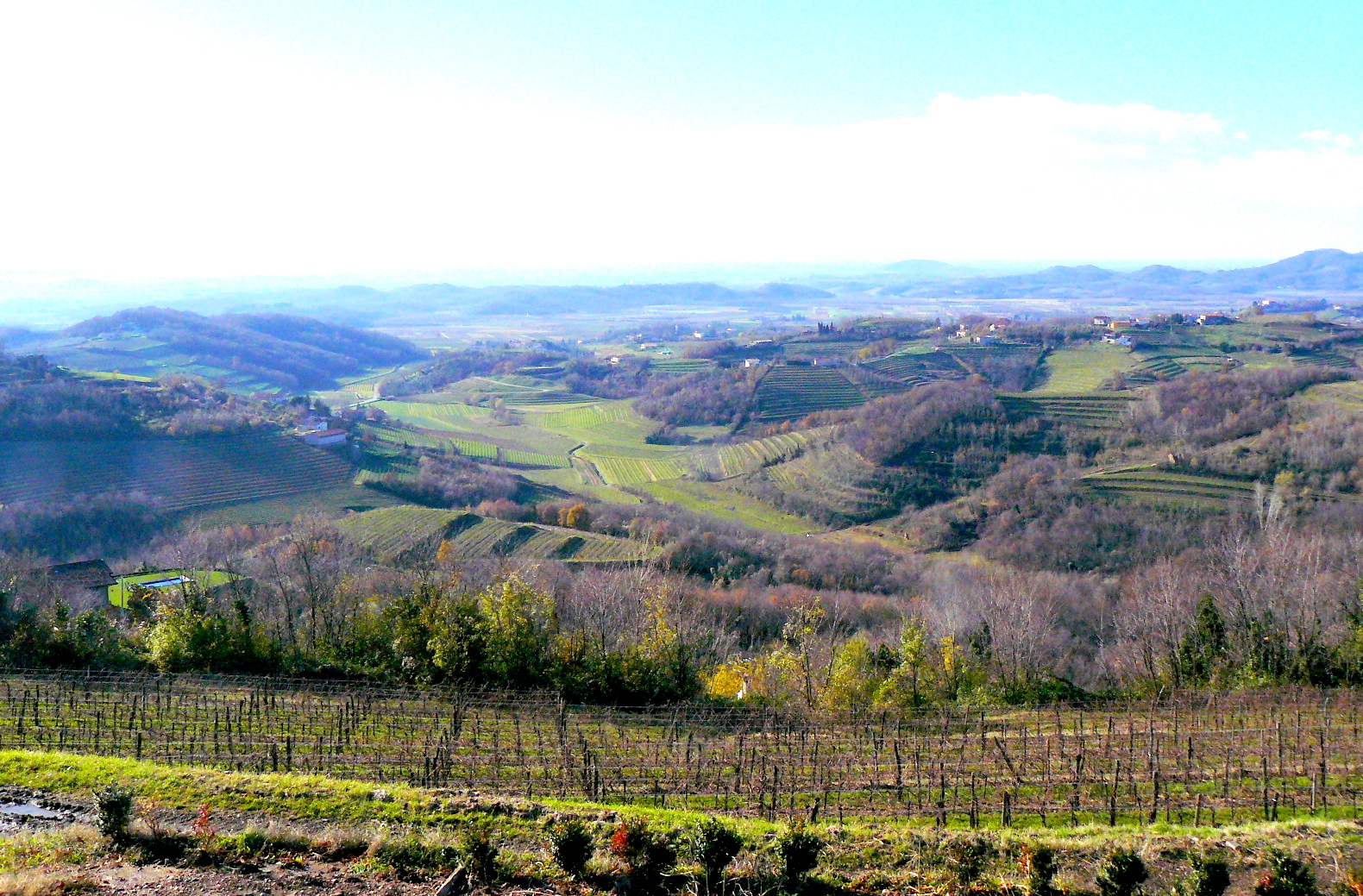
The challenge was expressed by a grower who didn't attend. Edi Keber, whom I called the "Commoner-King of Collio" in a post last year, looked out from his winery this morning and surveyed the landscape, where vineyards and whitewashed houses share the sun-drenched hills, where Italy blends into Slovenia without so much as a border fence. "I could make and sell 50,000 bottles of pinot grigio here, but I would betray my heritage. What grows here is unique. Several varieties, but one wine." It's as if the very blend were a single grape variety. Nobody much cares that Bordeaux grows half a dozen red grapes, Keber points out. The same here. "One wine, and it is virtually autochtonous. It is Collio."

Collio vineyards.JPGItaly exports four billion euros worth of wine every year, more than any country, but less than two percent of that comes from this region, formally known as Friuli Venezia Giulia. FVG wines are nationally acclaimed as excellent, everyone agrees, but they don't have a coherent story to tell the export markets.

Prof. Francesco Venier.JPGFrancesco Venier, professor of business administration at the University of Trieste, points to FVG's grab bag of appellations and grape varieties, which end up with some 168 varieties and protected denominations spread over 25,000 acres. Collio, for all its efforts, is one small appellation but allows almost a dozen varieties and blends--all white--to carry the name. Venier urged the wine makers and government officials to develop a more coordinated and efficient system of leadership ("Cluster Governance") that would permit more flexibility and encourage more innovation. 

The marketing sessions drew plenty of attention, ranging from specifics (using gel packs instead of refrigerated containers, for example) to broad advice regarding Asian and American markets.

Becky Sue Epstein writes, Paul Wagner tastes.JPG"Making good wine isn't enough," said Paul Wagner of Napa-based Balzac Communications, who participated by videoconference from the US. The competition is overwhelming and the sales people are overwhelmed. A single distributor can carry more than 5,000 wines; Wine Spectator gave 90+ scores to nearly a thousand Italian wines. "So you need more than a good wine," Wagner told the audience, "you need a good story."

And because of the message-killing inefficiencies of the three-tier wine distribution system, wine makers need to tell that story themselves.

Less than a quarter of all Americans even drink wine (about the same percentage as own passports), Wagner pointed out. Americans do their "traveling" by going to the movies or drinking imported bottles in restaurants. They want to fall in love with their wine, yet most wine marketing is based on the false notion that Americans want wine education: enology (barrels), chemistry (fermentation) or geology (soil structure).

Wrong! says Wagner. This may work in emerging Asian markets, but to sell in the United States, you need to sell the romance of travel, sell the romance of wine. Sell the story of vineyards on sunny, foreign hilllsides; sell the story of a wine maker walking through those vineyards, touching his grapes. Sell the story of nonna's recipe for homemade pasta and the family dinners enlivened by a special bottle. It's not about facts, it's about feelings.

Antonio Galloni, the Italian correspondent for Robert Parker's The Wine Advocate, agreedd that more work is needed to create an identity for wine from Friuli. "The sommeliers in New York restaurants are young, they have no wine prejudices and are happy to become ambassadors for serious white wnes along with the appeal of Italy's la dolce vita lifestyle.

Patricia Felluga, president of the Collio-Carso consortium, would certainly agree. "We need tourism," she said. The winery she owns, Zuani, is adjacent its own, wine-centered restaurant, Luka, to attract visitors. (In Napa, Wagner pointed out, a single winery sells one million bottles of wine at full retail to passers-by.)

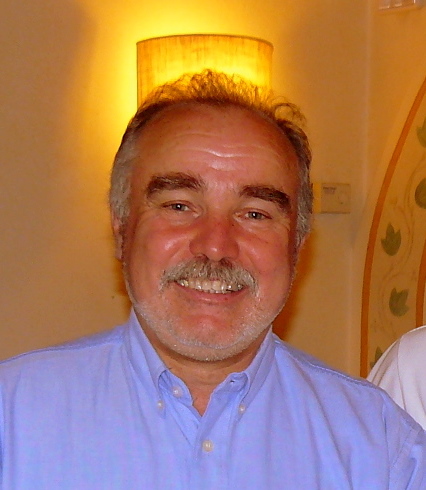
Josko Sirk.JPGJosko Sirk, who owns Al Cacciatore della Subida, the region's best restaurant, sees a solution: the world's first bi-national appellation, a DOC that would include most of the Italian state of Friuli Venezia Giulia along with the vineyards of Brda, on the Slovenian side of the border. "They work well, they are serious, their wines are good," says Sirk. "And the publicity for Collio would be fantastic."

There's no doubt that the wines of Collio and FVG could use a stronger identity outside Italy. Only one winery (so far) has its own sales rep in China, where only ten percent of wine sales are white wine. Burgundy and Bordeaux do well in China, as long as it's their reds. New Zealand's sauvignon blanc is making inroads; its bouquet is aromatic and fresh. German Rieslings, well known and appreciated. Premium white from Italy? Yes, as it becomes more famous, and comes with a unified story: "The future is white."

It's all very well for the locals to be self-congratulatory about the excellence of their wines, but they need to do more for the gorgeous lady in the silvery-gold lamé dress, whose delights they're praising. Right now, she's standing all by herself in the corner, ready to strut her stuff. She needs to step into the spotlight, she needs to be invited to dance. The world is waiting.

Thursday, November 10, 2011

Berlusconi Resigns, Sort Of

ROME--Tuesday night, after a dramatic rainstorm, the dome of St. Peter's glowed with an almost palable, paternal benevolence over the Eternal City. It wasn't quite bright enough for the TV correspondents doing live shots in front of the Quirinale Palace, of course, but their breathless reports were strangely reassuring: after 17 years at the helm of Italy's government, Silvio Berlusconi had finally announced that he would step down, and the Prime Minister would have to come to Quirinale to deliver his resignation to the President of the Republc.

It didn't happen. What Berlusconi promised wasn't exactly a resignation, and the message wasn't quite clear enough. Berlusconi lost a critical coalition partner earlier this week, then lost a procedural vote yesterday in Parliament relating to Italy's debt crisis. It looked like he would suffer the same fate that befell the Greece's George Papandreou just last week.

The obituaries were already being written: in the end, it wasn't the sexual escapades that brought Berlusconi down, it wasn't the street protests, it wasn't even the loss of political allies. Rather, it was the same thing that brought down Lehman Brothers and Bear Sterns: the financial markets, which care nothing about sex or politics. Once the yield on bonds for Italy's sovereign debt came close to seven percent, Berlusconi lost his remaining support.

The markets responded this morning to the non-resignation with renewed ferocity and even higher interest rates (what is referred to here as "lo spread"). The drama is being measured in hours.

Italians as a whole are both self-indulgent (those shoes! those scarves!) and self-deprecating, by turns passionate and indifferent, but they are always keenly aware of image. That their head of government was seen by much of the world as a swaggering sex clown was, for a time, not so bad. When the Amanda Knox case eventually become an national embarrassment, they just sent her home. Berlusconi's embarrassing antics finally ran into the roadblock of international finance.

The markets were may not reassured this week, no doubt because Berlusconi has slipped through a number of crises in the past. But most observers think his time is finally up. Rome's newspapers reported this morning that Berlusconi had promised President Giorgio Napolitano that he would not run for re-election in February and would step down before then, as soon as an austerity package is approved. The nature of the package and its timing have yet to be revealed.

"I am personally delighted," said Michele Napoli, national sales director for FilmAuro, the distribution arm of the Dino De Laurentiis film studios. "The trouble is it didn't happen soon enough." Napoli's sentiments reflect conversations I overheard in cafes around Rome today. If you want a Big Mac, it's $8 at Mickey D's, by the way.

The question, from an American perspective, might well be, "what took so long?" But this is a profoundly conservative country (occasional forays into liberal politics aside). Everywhere you go, from the Roman Forum to the Sicilian countryside, you are surrounded by "old stones," by the monuments of antiquity and stones that have been in place for centuries. In Seattle, we're lucky to see a totem pole, but in Rome you drive past the actual Colosseo (and gas costs $8.50 a gallon in Europe). Even the manhole covers in Rome are emblazoned with the motto of the Roman Empire, SPQR. There's a literal weight to history that can't be ignored, change doesn't come easily.

No matter how long--hours or days--the prime minister manages to hang on, tough times lie ahead for Italy, but the countenance of St. Peter's will no longer shine on Silvio Berlusconi.

UPDATE, Sunday, Nov. 13th: Mission Accomplished!

Friday, October 28, 2011

Down on the Farm, It Really Is Farm-Fresh

Borgoluce farm w San Salvatore castle.JPG
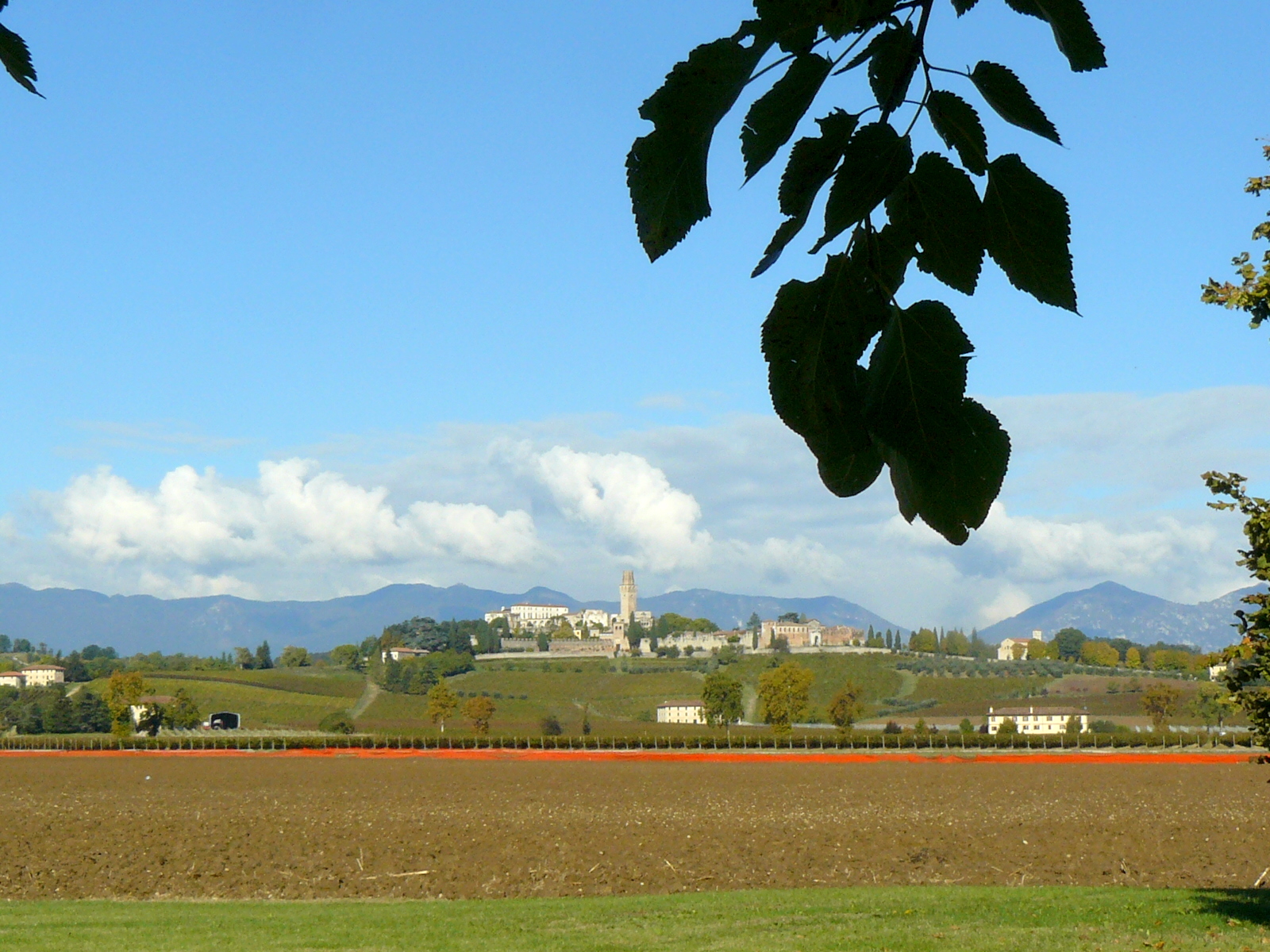
Castello San Salvatore tops the village of Susegana, overlooking the Borgoluce estate

SUSEGANA, Italy--Call it "Field-to-Plate" or "Farm-to-Fork," it's a literal KM-0 meal, kilometer zero.

You can only do this when you're actually having lunch and dinner on the farm, eating what comes out of the ground, off the fields, and from the livestock. You don't feel guilty wasting the planet's resources because these two related farms, Collalto and Bertoluce, here in the Veneto region of northeastern Italy, produce literally everything they serve: flour for bread and pasta, vegetables, meat, cheese, chestnuts, even the power needed to keep the lights on. (An earlier post describes the biomass co-generation process, which literally turns a daily ton of buffalo dung into a daily megawatt of power.) The properties have been in the Collalto family for literally a thousand years, part of a princely estate based at the Castello San Salvatore that dominates the adjacent village of Susanega.

The family's most recent leader, Prince Manfredo di Collalto, by all accounts a brilliant diplomat, instilled in his five daughters a spirit of humble yet forward-looking stewardship that has kept the 4,000-acre farm intact and prosperous. (All of King County has only 50,000 acres of farmland, spread between 1,800 properties, less than 30 acres apiece.) Where others might have sold off acreage to restore the family castle, say, Collalto has remained intact. In fact, it is a model of a vertically integrated farm, with wood chips from its forests used for fuel; grapes from its vineyards used for the region's prestigious Prosecco di Conegliano DOCG; herds of pigs and beef; butchering and cheese-making operations; mushrooms, chestnuts, walnuts, all from this Garden of Venice.

Prince Manfredo died prematureily in 2004, leaving the estate to his widow, Princess Maria de la Trinidad di Collalto, Castillo y Moreno and their five daughters. The Collalto estate is run by Maria's oldest daughter Isabella, who gave up a career in international relations with the European Union to assume hands-on management. The Bertoluce property is run by LOdovico Giustiniani, husband of the youngest daughter and an agronomist by training (and with a noble heritage of his own; one of his ancestors held the title of Doge of Venice). It's clearly an enterprise that occupies the entire family.

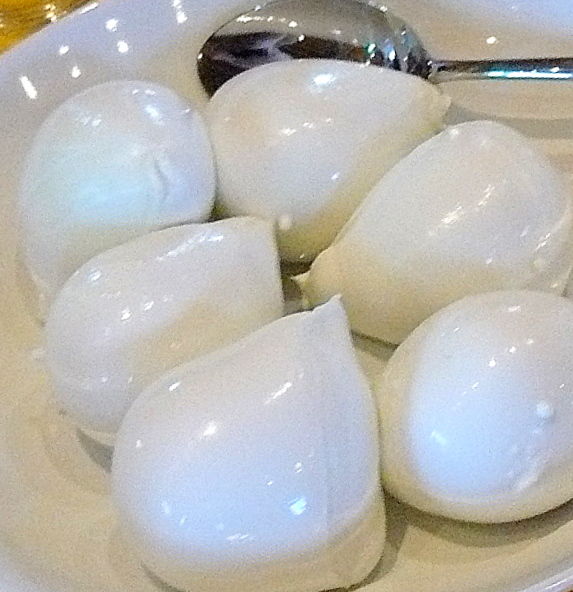
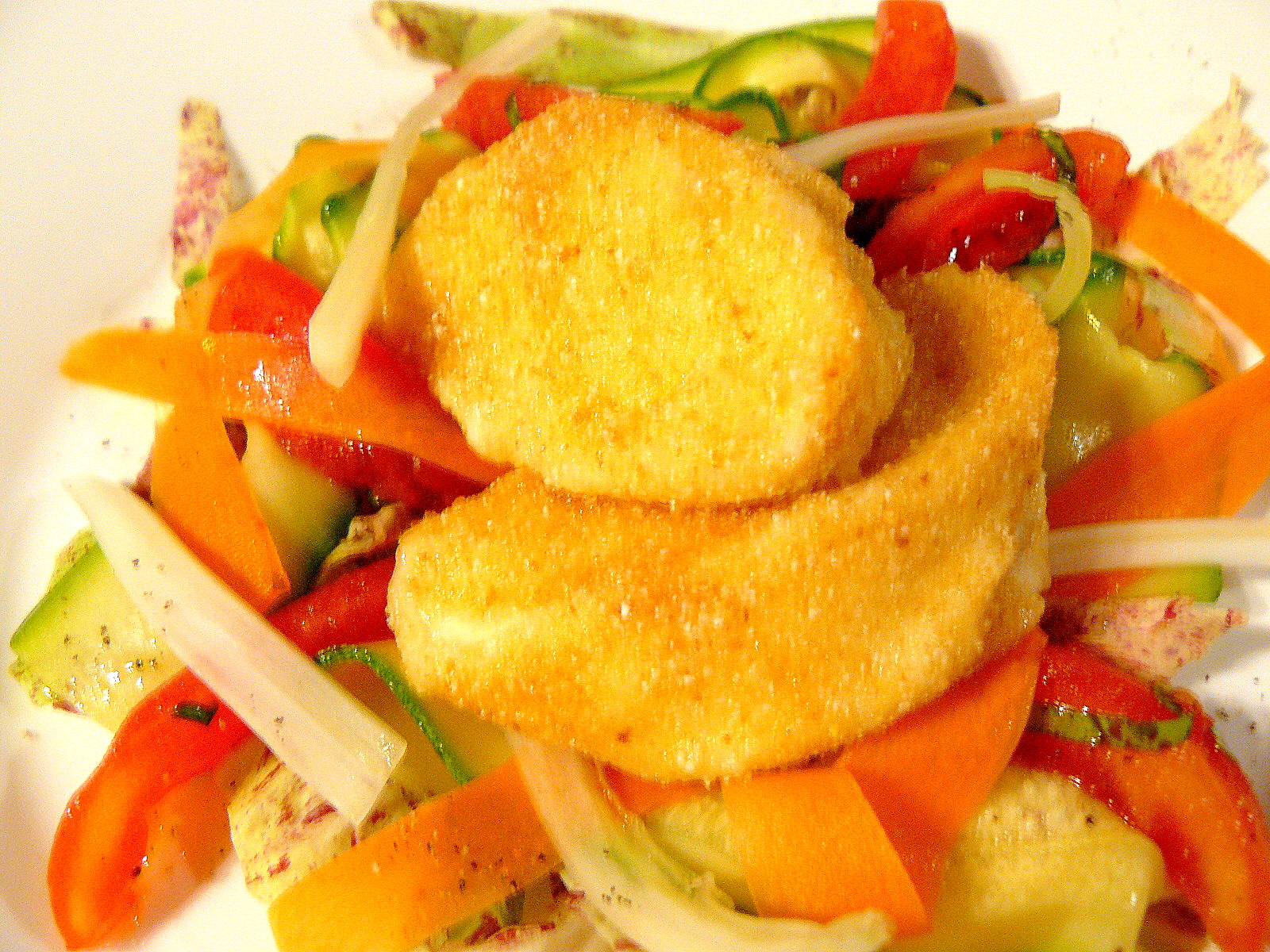
Mozzarella di Bufala.JPGSo what's for dinner? We start with a rich "cappuccino" of chestnuts, two swallows and it's gone. Then some mozzarella di bufala, stuffed with an anchovy, breaded with polenta and quickly fried. It has a superb delicacy and a chewy, elastic texture. Then a pumpkin soup enriched with a dollop of ricotta, followed by a pork tenderloin with chestnuts, and, finally, a typical local dessert, invented in Treviso in the 1960s, tiramisù.

"We did't want to bring the so-called industrial model to agriculture," Giustiniani tells me. "Instead, we intend to maintain the diversity of this property. With everything we do here, we communicate the landscape and respect the earth."

Stuffed buffalo mozzarella.JPGHow exactly does one "communicate the landscape"? Well, with farmhouse dinners like this, for example. Within the next year, Bertoluce will open its own Locanda, or country restaurant, and will serve meals like this to the general public for an all-inclusive price (wine, taxes, service) for $40 to $50. It's not big-city haute cuisine, of course, but healthy and hearty, astonishingly fresh, and incredibly tasty.

The only holdup: running upgraded electric service into the ancient stone building which will house the Locanda. The public utility--the same outfit that buys a megawatt of power a day from Bertoluce's biomass co-generation plant --has given its approval. And because Bertoluce is reliable supplier and a solid citizen, the Italian bureaucracy promised to expedite the installation of the new power lines "within the next 12 months."

Can anything be done to nudge the bureaucracy and speed up the locanda's construction? Giustiniani is far too polished a diplomat to divulge his strategy. But it doesn't hurt that the farm is one of the most popular shopping destinations in the area, with a steady stream of cars pulling up in front of Borgoluce's farmhouse store to buy cryovac cuts of pork and beef (everything from traditional steaks and chops to organ meats), bottles of prosecco, flour, nuts, and the semingly endless styles of cheese from that dairy herd of buffalo.

Thursday, October 27, 2011

Buffalo Dung Keeps the Lights On


You're looking at a herd of 200 water buffalo on a remarkable property in the hills north of Venice. The best vineyards for sparkling wine are just up the road, at Conegliano, in the region known as Prosecco DOCG. The Collalto family have 215 hectares of vines (over 500 acres) planted mostly to the prolific Glera grapes, part of a much larger diversified operation known as Borgoluce, and open to the public as a "didactic" or educational farm.

More about the farm and the family in future posts. First, though, let's look at the buffalo. Like all female bovines, buffalos give milk. A particularly desirable milk, for its rich flavors and high fat content, yet these curious, friendly beasts are not particularly generous. Compared with a standard dairy cow that gives some 9 gallons of milk a day, you're lucky to get the stingy water buffalo to produce a quarter of that. But what milk! And what cheese you can wring from that milk, the world-famous mozzarella di bufala. A ball of fresh cheese sells for the equivalent of $9 a pound at the farmhouse shop, twice that in stores. In the US, restaurants and cheesemongers have shipments flown in directly from Italy and charge a small fortune. The official DOP Mozzarella di Bufala zone is actually in Campania, the region of Naples, but there have long been herds of cheese-producing buffalo in the north as well, here in the rolling hills of the Veneto.

The animals are fed grain and hay grown on the property, which, in addition to vines, includes woods, pasture, row crops, a pig farm, walnut trees, and a variety of grains, and several buildings with bedrooms for paying guests. (There's a fabulous castle as well, San Salvatore, in the village of Susgana.) It's a vast property, almost 4,000 acres altogether.

Each thousand-pound animal, having contentedly munched all day, does what animals do: poop. Bovines generally poop about ten percent of their body weight every day, which means there's a lot of buffalo crap for the farm to deal with. A ton or so every day, in fact.

The waste is scraped into enormous tanks, mixed with silage from nearby fields (like corn husks) and pumped into giant cone-shaped digesters. The sludge produces methane gas, which in turn is converted (by an Austrian co-generating machine that runs 24 hours a day) into electricity. A full megawatt every day. The farm only needs five percent of that megawatt to run every piece of equipment on the farm, so it sells the surplus to the government-run electric utility. It's enough surplus power to supply 250 homes.

Under a European Union mandate to produce more energy from renewable sources the utility pays Collalta twice the going rate of 14 cents per kilowatt hour. It's not a boondoggle; Collalta's managers figure they spend 18 to 20 cents to produce one KWH. Even so, they're still making a nice profit by doing the right thing. That is, the buffalo are doing the right thing, the only thing they can do. And we get to turn the lights on.

- Posted using BlogPress from my iPad.

Location:Conegliano, Italy

Tuesday, October 25, 2011

Living a Doge's Life in Venice


VENICE--If home is the Palazzo Loredan dell'Ambasciatore on the Grand Canal, it's like having a penthouse on Park Avenue or a villa in Tuscany. Can't beat the view, great for parties, but a lot of upkeep.

Roll back the clock 350 years or so, Francesco Loredan, the doge of Venice at the time, offers this palazzo rent-free to the newly named ambassador of the Holy Roman Empire, in exchange for what were termed "extensive renovations." (Hence its current name, Palazzo Loredan d'Ambasciatore.) The owner today is Filippo Gaggia, and he has found a lively business opportunity in renovating and renting out luxury lodgings throughout La Serenissima.

Salon on piano nobile.JPGGaggia's company, Views on Venice, offers more than 70 properties, from a studio to a piano nobile (the elegant "main floor" above the waterside entrance) to an entire palazzo. Luxury can be rented at the great hotels of Venice, of course (the Danieli, the Gritti Palace, the Bauer, the Europa,the Cipriani, and so on), many of which may have started out as private palazzi but have long since been overhauled  Gaggia's princely accommodations were not only designed for princes, the princes and their families are still living in the private family quarters of many of the palaces and renting out a few elegant salons. (That's a salon in Gaggia's own palazzo in the photo.)

There's no Trump Tower in Venice, no real estate on which a developer could build so much as a Motel 6, which explains the stratospheric prices of five-star hotel rooms as well as the glut of 3,000-passenger cruise ships that tie up at Tronchetto, just off the Piazzale Roma, and disgorge their budget-vacation daytrippers into the souvenir shops along the Rialto Bridge.

There's a certain advantage to the relative anonymity of a luxury hotel, just as there's an advantage to the privacy of a rented palazzo. It's not much of an issue if you can afford it: a suite at the Danielli with a view of the lagoon is $3,000 a night in high season. Even with a staff, the palazzo's not going to be as costly, and you get to bring your entire entourage.

Our introduction to the Palazzo Loredan was courtesy of Marco Giol, whose Private Luxury Accommodation Network recently hosted a workshop in Venice for international tour operators.